
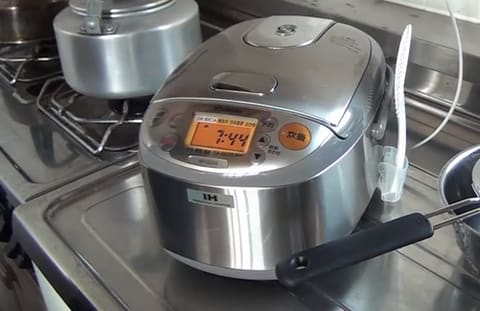
Kitchen equipment · Rice cooker
Rice cooker
An electric pot that cooks rice automatically and switches to keep-warm when the water is absorbed.
Useful to have · Electric · 11 recipes
Photo: Quiet Hut, via Wikimedia Commons (CC-BY-2.0)
What it is
A heated base holding a removable non-stick bowl with a lid. It boils rice and water, then senses when the water has been absorbed (the temperature starts to rise) and switches to warm. Advanced models use fuzzy logic or induction and have settings for brown rice, sushi rice or porridge. Many include a steaming tray.
What it’s for: Consistent, hands-off rice and grain cooking.
How to use it
- Rinse rice until the water runs nearly clear.
- Add rice and water to the marked lines or the ratio for your rice.
- Close the lid and start the cycle; do not lift the lid while cooking.
- Let it rest on warm for 10 minutes, then fluff with a paddle.
Good to know
- Tasks
- cooking rice, cooking quinoa and other grains, making congee, steaming vegetables or dumplings
- Cooking methods
- Boiled, Steamed, Simmered
- Materials
- non-stick bowl, stainless steel bowl, plastic housing
- Care and cleaning
- Wash the inner bowl with a soft sponge; use the plastic paddle to protect the coating. Wipe the lid and steam vent.
- Limitations
- Mostly single-purpose and takes up counter space.
Safety
- Cooked rice can carry spores that survive cooking: do not hold it warm for very long, cool leftovers quickly and eat within a day.
If you don’t have one
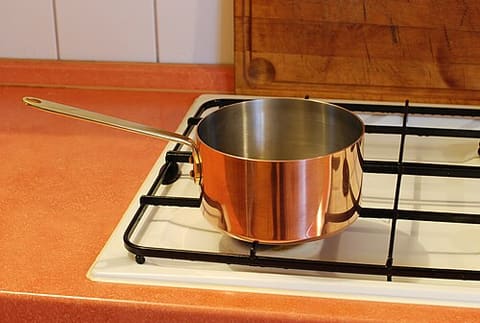
- Saucepan — Use the absorption method with a tight-fitting lid.
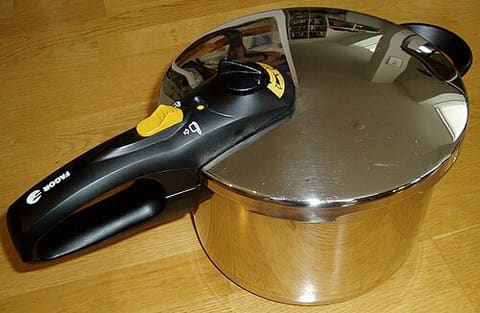
- Pressure cooker — Faster; rice texture is a little softer.
Equipment guide
How it works: A heating plate heats the pot until the water boils. Once all free water is absorbed or evaporated, the base temperature rises above 100 °C; a thermostat detects this and switches to keep-warm. Fuzzy-logic and induction models adjust heat through soaking, cooking and resting phases.
| Material | Good | Watch out |
|---|---|---|
| Non-stick (PTFE or ceramic sol-gel coating on aluminium) | Eggs, fish and pancakes release with little fat; easy to clean; forgiving for beginners. | Coatings wear out (ceramic often faster than PTFE); PTFE should not be heated empty or above about 260 °C; poor at building fond; needs non-metal utensils. |
| Stainless steel | Durable, non-reactive, dishwasher-safe, does not hold smells. | Can scratch non-stick pans; conducts heat, so all-metal handles get hot. |
| Ceramic-coated or multi-layer pot | Even heating in premium models. | Coatings wear. |
- Basic on/off rice cooker
- Simple and reliable.
- Fuzzy-logic (microcomputer) cooker
- Programmes for white, brown, sushi rice and porridge.
- Induction rice cooker
- Heats the whole pot for very even rice.
Buying guidance
Starting out: A basic 1-litre (about 5-cup) cooker with keep-warm.
Keen cook: A fuzzy-logic cooker if you cook several types of rice or porridge.
- Capacity in uncooked cups (a rice-cooker cup is about 180 ml)
- Power: about 300–1,000 W
- Keep-warm function
- Removable inner pot with water lines
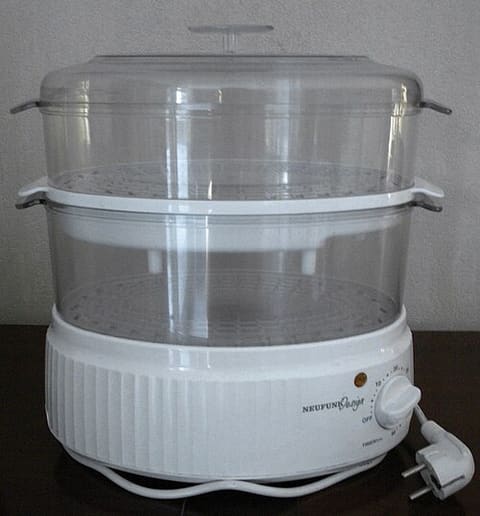
- Steaming basket
No brands or prices — check current reviews before buying.
Techniques:BoilingSteamingBatch cooking
Related tools
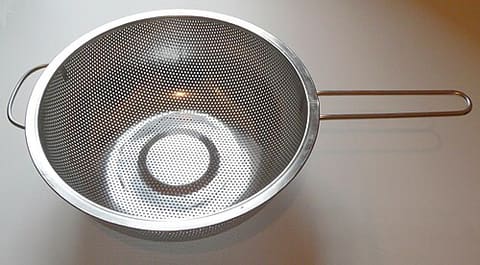
Recipes that use it
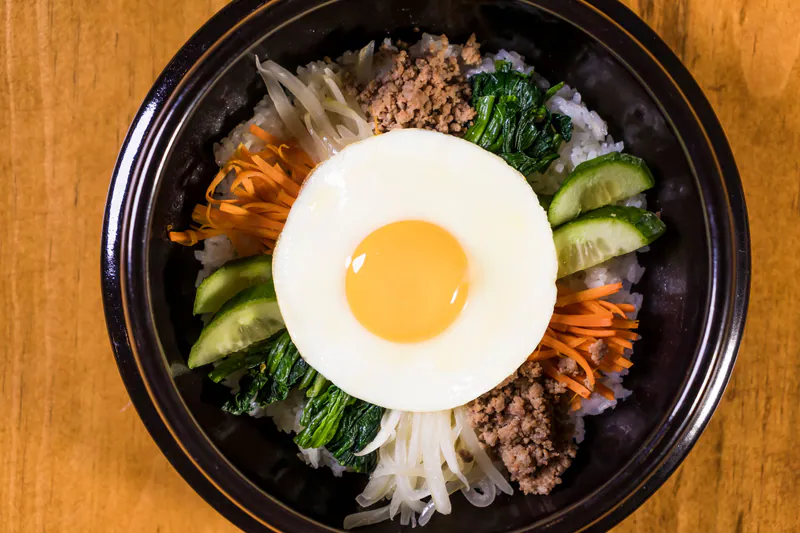
Bibimbap
 Korean · 1 h · 657 kcal
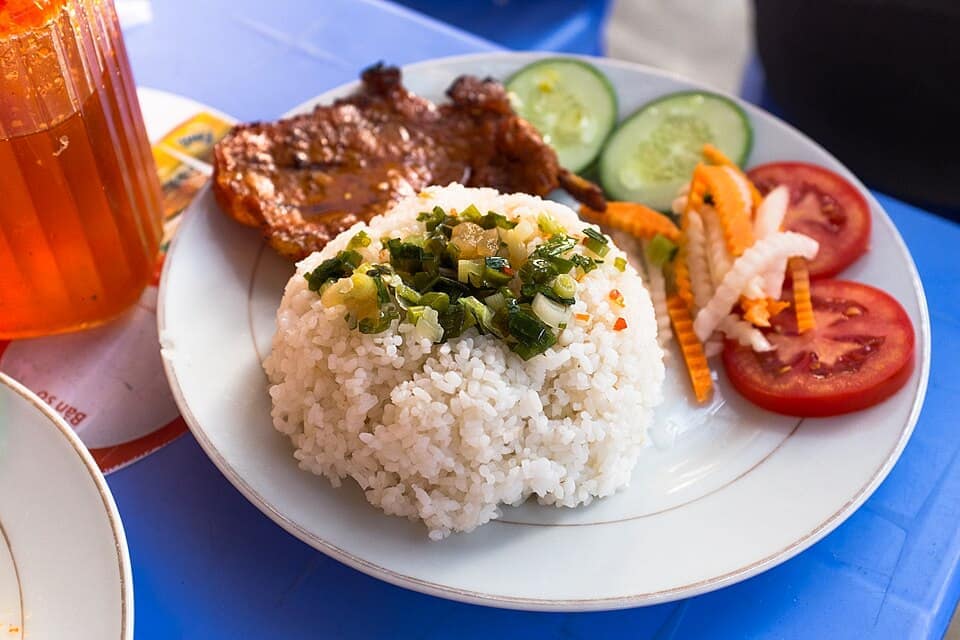
Cơm tấm sườn nướng
 Vietnamese · 1 h 50 min · 852 kcal
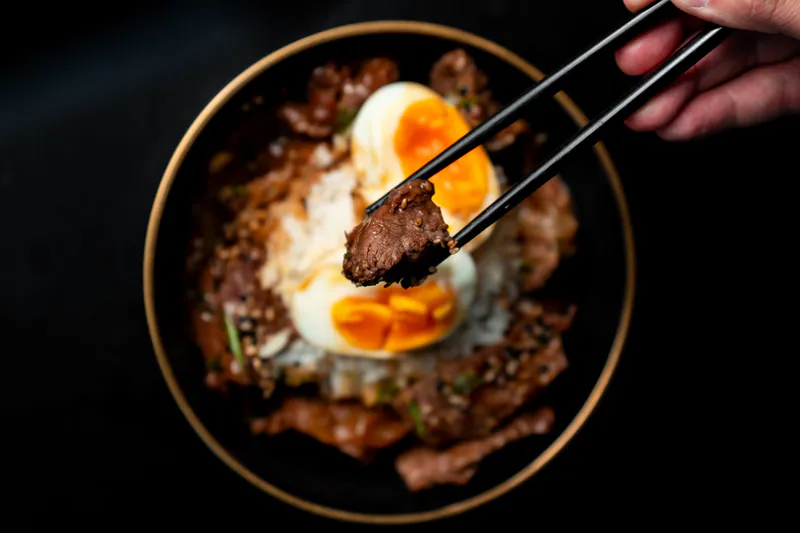
Gyudon
 Japanese · 25 min · 548 kcal
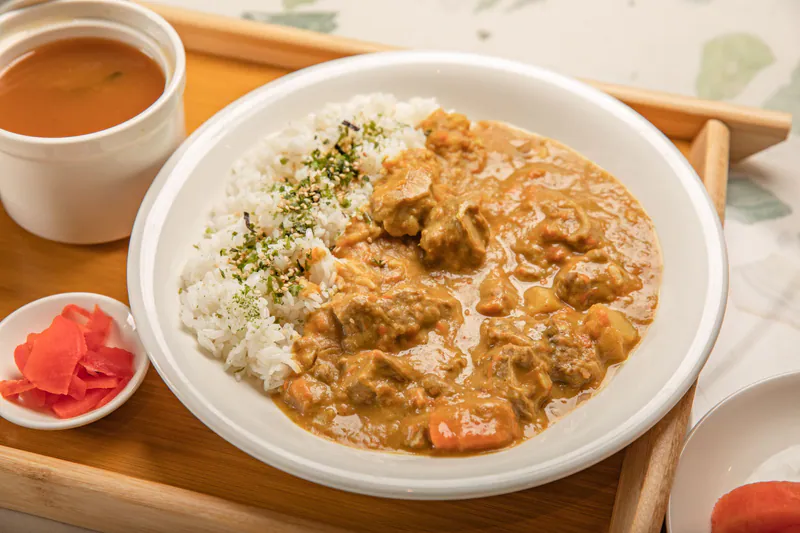
Japanese curry rice
Japanese · 1 h 5 min · 748 kcal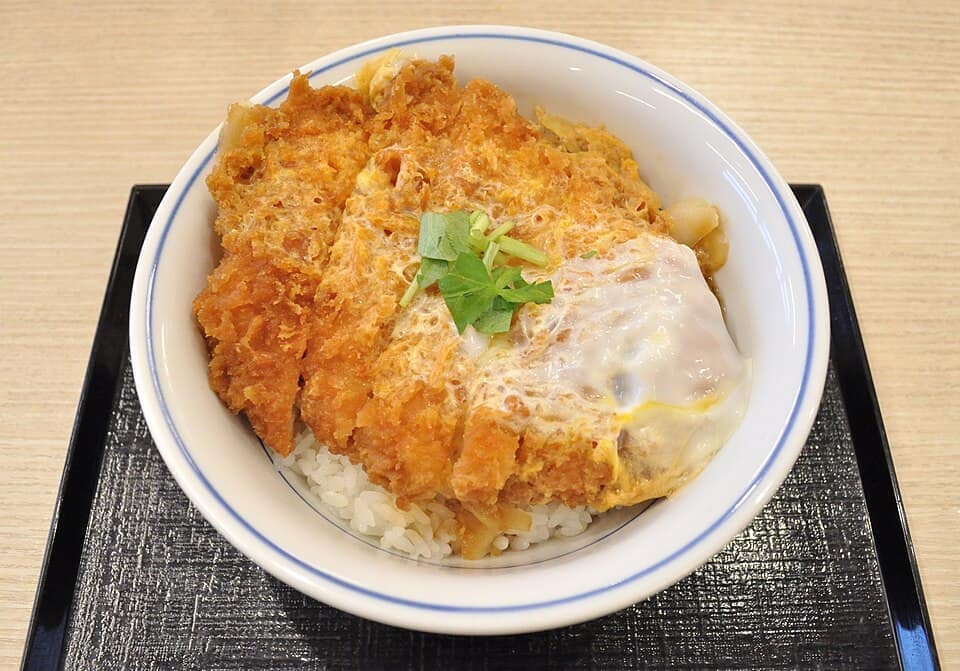
Katsudon
Japanese · 40 min · 1003 kcal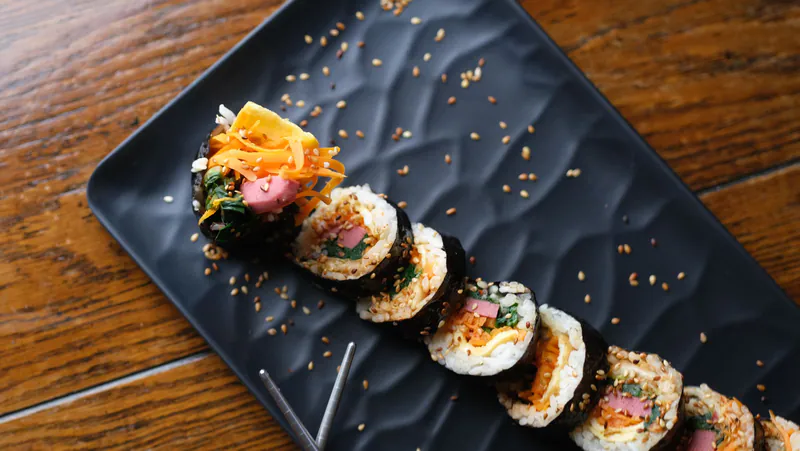
Kimbap
Korean · 1 h · 384 kcal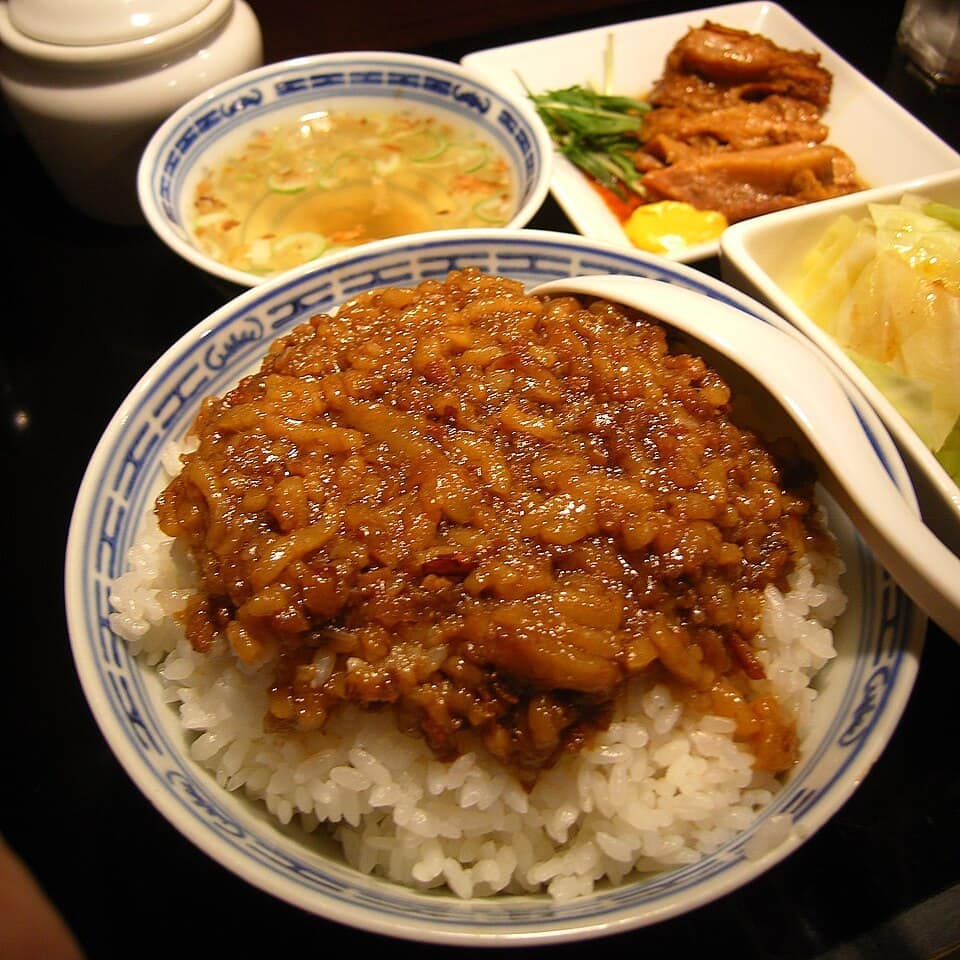
Lu rou fan (Taiwanese braised pork rice)
 Taiwanese · 2 h · 779 kcal
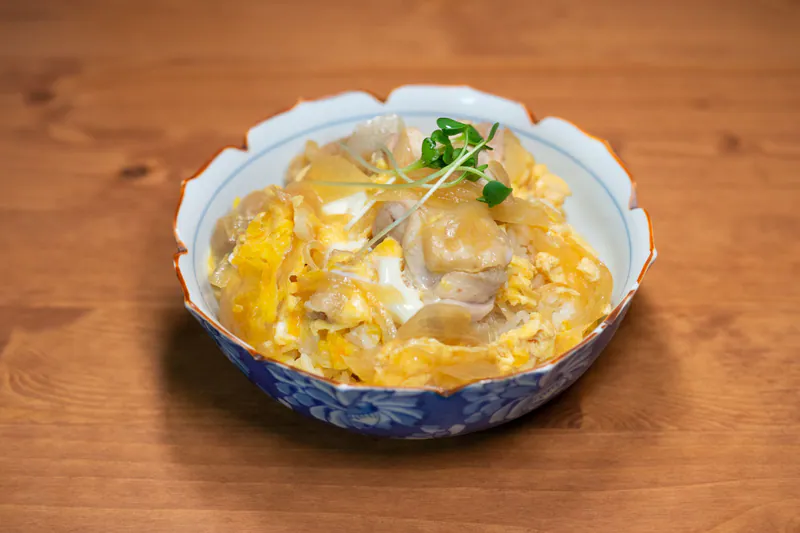
Oyakodon
Japanese · 25 min · 598 kcalSalmon onigiri
Japanese · 1 h · 232 kcalSikhye (Korean sweet rice drink)
Korean · 10 h · 105 kcal · Vegan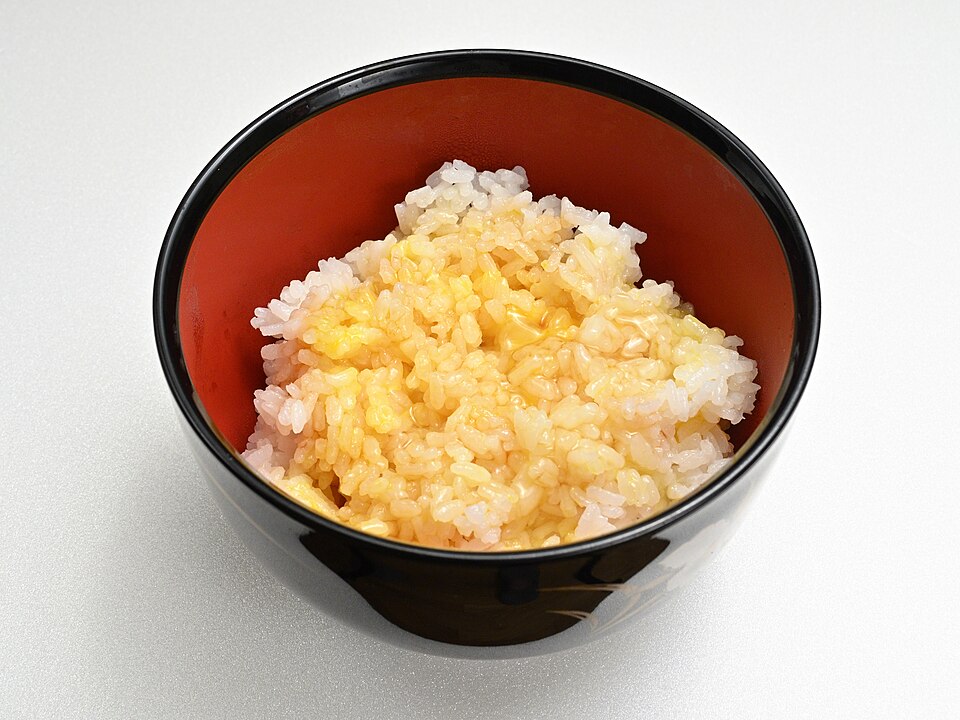
Tamago kake gohan (egg on rice)
Japanese · 32 min · 343 kcal