
 South Indian · Indian · Sri Lankan · Malaysian · Noodles
Idiyappam (string hoppers)
Vegetarian
இடியாப்பம் · iṭiyāppam
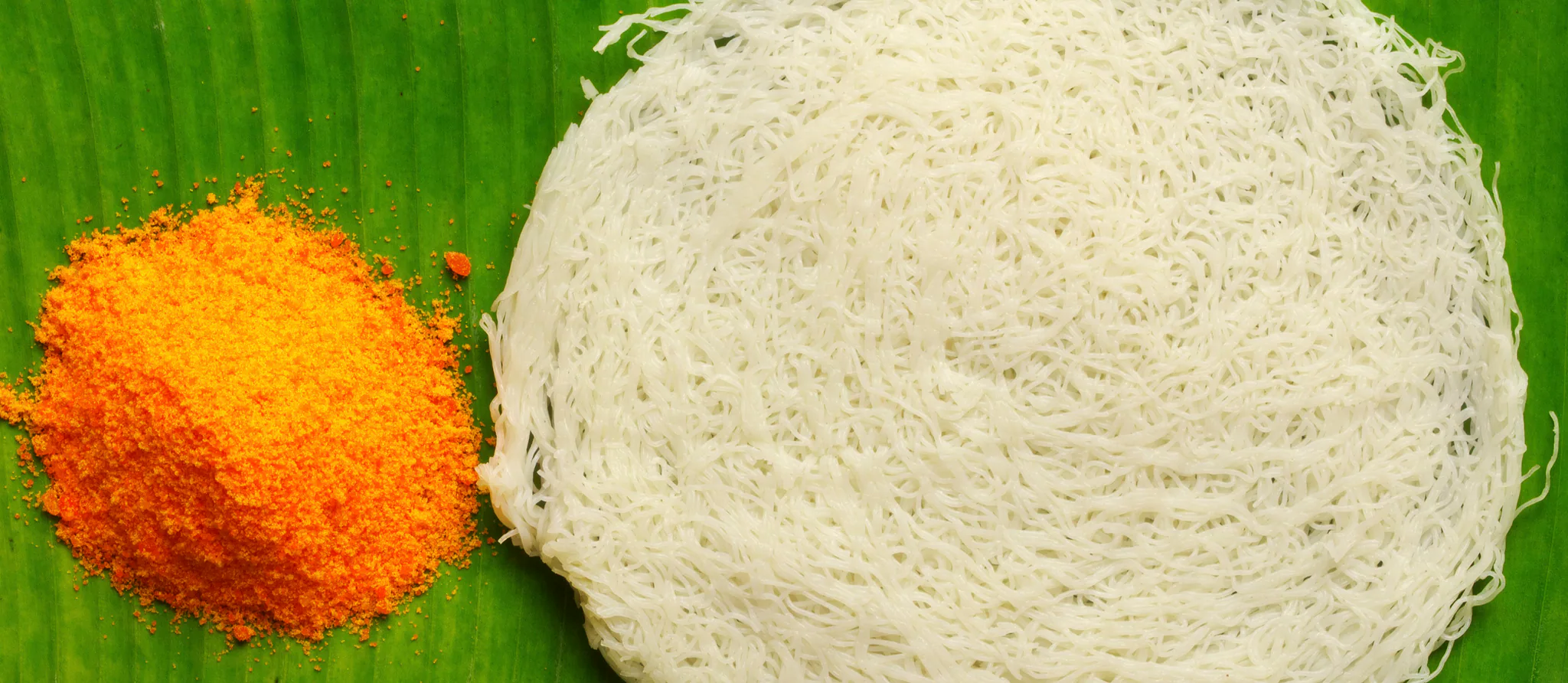
Delicate nests of steamed rice noodles, made by pressing a soft dough of roasted rice flour and hot water through a perforated press. South Indians and Sri Lankans eat them with curries or coconut milk, while in Malaysia, Singapore and Indonesia the same noodles are sold as putu mayam, topped with grated coconut and palm sugar.
Idiyappam (string hoppers) is a South Indian noodle dish, ready in about 45 minutes and made with rice flour and coconut. It serves 4 and is rated intermediate to cook.
- Prep
- 25 min
- Cook
- 20 min
- Total
- 45 min
- Serves
- 4
- Level
- Intermediate
- Calories
- 310
Main ingredients
Ingredients
For the noodles
For the topping
Method
Noodles
8 minStep 1
Put the rice flour (opens in a new tab), salt and coconut oil (opens in a new tab) in a bowl. Pour in the boiling water a little at a time, stirring with a wooden spoon (opens in a new tab), until the flour comes together as a soft, non-sticky dough. Cover and leave until cool enough to handle.
Food safety: The dough is very hot at first; knead it only once you can comfortably touch it.
Step 2
Knead the warm dough for 2 minutes until smooth. It should press easily through the idiyappam mould; add a spoon of hot water if it is stiff.
- 3 min

How it looks · Photo: Klaus Nielsen on Pexels
Topping
24 minStep 3
Grease the steamer (opens in a new tab) plates or idli trays. Fill an idiyappam press (sev press with the finest disc) with dough and squeeze it in circles onto each plate to form loose nests. Sprinkle a little grated coconut (opens in a new tab) over each nest if you like.
- 12 min
Fill the press only halfway; it is much easier to squeeze.
Step 4
Steam over boiling water for 8–10 minutes until the noodles look glossy and are no longer sticky to the touch.
- 10 min
- medium-high heat
- Steamer (opens in a new tab)
Step 5
Serve hot. For putu mayam, top each nest with more grated coconut (opens in a new tab) and palm sugar (opens in a new tab).
- 2 min

How it looks · Photo: Willians Huerta on Pexels
At a glance
1 · Noodles in a pot
 Rice flour
 Salt
 Coconut oil
then grease
2 · Topping in a bowl
 Coconut
 Jaggery / palm sugar
About this dish
- Origin
- Tamil Nadu and Kerala, Tamil Nadu, India · Commonly attributedClaimed by both Tamil Nadu and Kerala (where it is called noolappam); Tamil migrants took it to Sri Lanka (indiappa) and South-East Asia, where it became the street snack putu mayam.Also popular in Sri Lanka, Malaysia, Singapore, IndonesiaMore food from India
India - Dish
- Breakfast · Dinner · Noodles · Breakfast dishes · Pancakes & crêpes
- Cooking method
- Steamed
- Taste
- mild, sweet, nutty
- Diet
- Vegan · No gluten ingredients · Dairy-free · No nut ingredientsWithout the optional extras: No added sugarWorked out from the ingredients. How labels work
All labels
Vegan · Plant-based · Vegetarian (lacto-ovo) · Eggetarian · Lacto-vegetarian · Ovo-vegetarian · Pescatarian · Flexitarian-friendly · No gluten ingredients · Dairy-free · Egg-free · No nut ingredients · Alcohol-free · Pork-free · Beef-free - Good for
- Everyday
- Cook more with
- Rice flour · Coconut · Coconut oil
Allergens
None of the 14 major allergens appear in the listed ingredients.
Based on typical versions of these ingredients and not verified allergen-free. Brands differ and cross-contact happens, so always check labels. For severe allergies, follow your clinician’s advice.
Nutrition
310 kcal per serving
Calculated1 serving ≈ 178 g · recipe makes 4
Where the energy comes from
- Protein 6%
- Carbohydrate 69%
- Fat 25%
| Nutrient | Per serving | Per 100 g* |
|---|---|---|
| Energy | 310 kcal | 174 kcal |
| Protein | 4.4 g | 2.5 g |
| Carbohydrate | 53.1 g | 29.8 g |
| Net carbohydrate | 49.8 g | 28 g |
| Sugars | 1.3 g | 0.7 g |
| Added sugars | 0 g | 0 g |
| Fibre | 3.3 g | 1.9 g |
| Fat | 8.7 g | 4.9 g |
| Saturated fat | 7.1 g | 4 g |
| Trans fat | — | — |
| Cholesterol | 0 mg | 0 mg |
| Sodium | 297 mg | 167 mg |
| Salt equivalent | 0.7 g | 0.4 g |
Vitamins & minerals per serving
- Potassium
- 119 mg
- Calcium
- 19 mg
- Iron
- 0.7 mg
- Magnesium
- 30 mg
- Vitamin A (RAE)
- 0 µg
- Vitamin C
- 1 mg
- Vitamin D
- 0 µg
- Vitamin B12
- 0 µg
- Folate (DFE)
- 8 µg
How these numbers were made
- Calculated from USDA FoodData Central (SR Legacy) per-100 g values and the listed quantities.
- *Per 100 g of combined raw ingredients; the cooked dish may weigh more or less.
- Optional ingredients are not included: jaggery / palm sugar.
- “—” means the value isn’t known for enough of the ingredients; it is never zero by default.
- Values are estimates for guidance, not for medical dosing. U.S. Department of Agriculture, Agricultural Research Service. FoodData Central, 2019. fdc.nal.usda.gov.
Good to know
Tips
- In Malaysia and Singapore the noodles are steamed on rattan or bamboo mats, which gives them a faint woody aroma.
Common mistakes
- Using cold water — rice flour needs boiling water to gelatinise and hold together.
Serve with
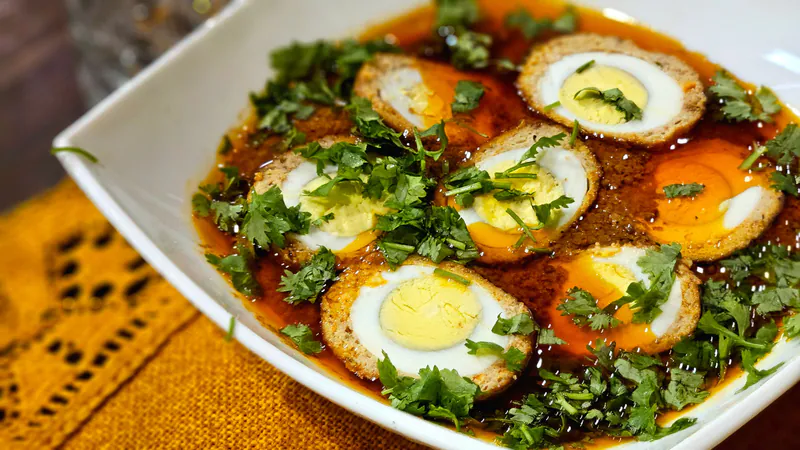
- Serve with Kerala vegetable stew, egg curry or kadala curry; or with sweetened coconut milk.
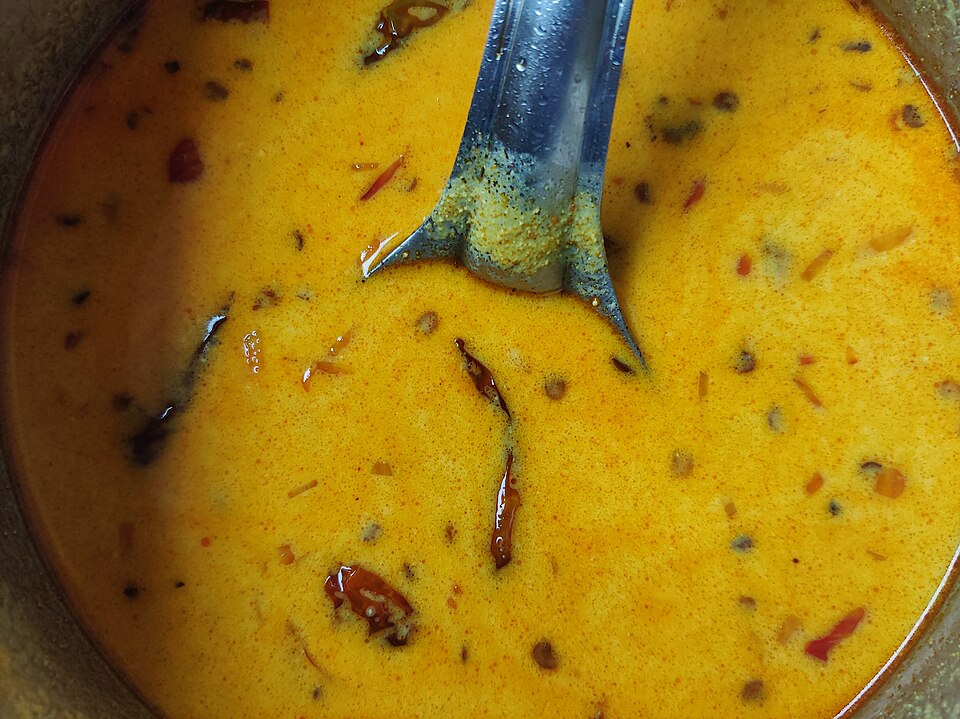
- In Sri Lanka, eat with pol sambol and kiri hodi (coconut milk gravy).
Storage
- Keeps 1 day refrigerated, covered.
Reheating
- Re-steam for 3–4 minutes until soft.
Variations
- Putu mayam (Malaysia, Singapore, Indonesia) (Malaysia): Sweet street-food version topped with grated coconut and gula melaka, sometimes tinted with pandan.
- Idiyappam upma / sevai: Leftover noodles broken up and stir-fried with mustard seeds, curry leaves and lemon.
Original editorial recipe · FriendsPantry editorial · source: TasteAtlas (dish facts) · Not yet independently reviewed · Added
Recipe DNA
How this dish is built
Built from the recipe’s own sections. Each band’s width is its share of the dish by weight. Choose a component to see what it does.
Added at the end for aroma, freshness and richness
For the topping
- Coconut, freshly grated80 g
- Jaggery / palm sugar, grated palm sugar (gula melaka) or sugar (optional)40 g
Reviews & corrections
Reviews come from signed-in cooks and appear after a moderator checks them. We never show made-up ratings.
You might also like
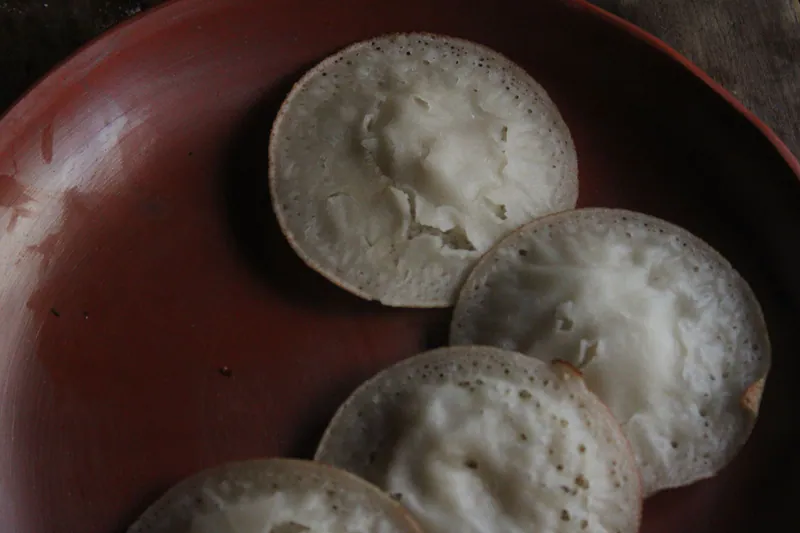
Appam
South Indian · 45 min · 358 kcal · Vegan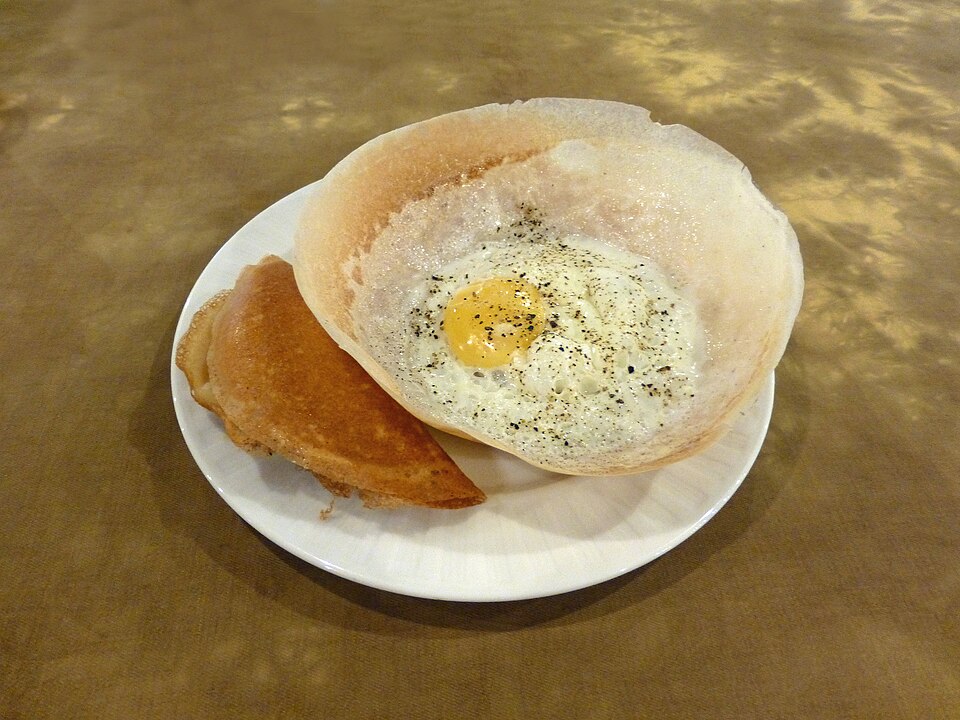
Egg hoppers
 Sri Lankan · 8 h 55 min · 382 kcal · Contains egg
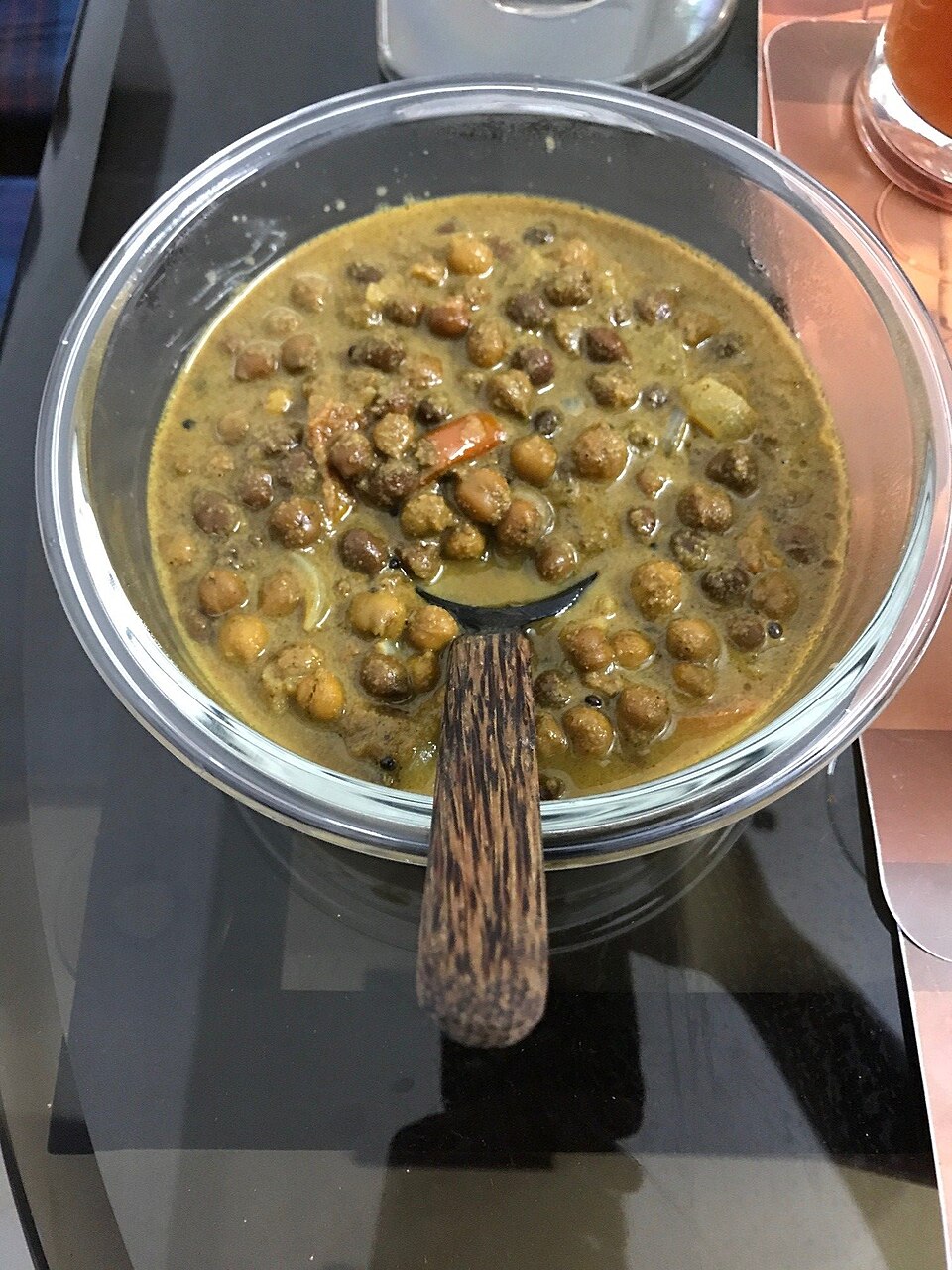
Kadala curry
South Indian · 1 h 5 min · 439 kcal · Vegan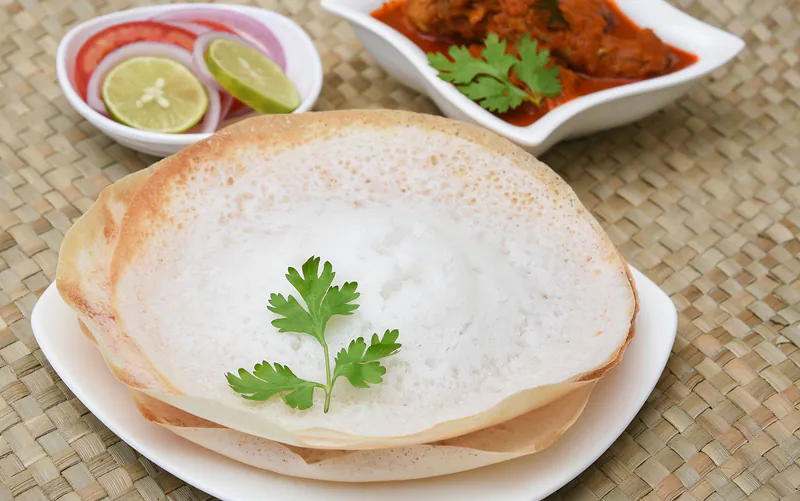
Kallappam (toddy-style coconut rice pancakes)
Sri Lankan · 6 h 50 min · 571 kcal · Vegan