
Gyūtan (Sendai salt-grilled beef tongue)
Non-vegetarian
牛タン · gyūtan
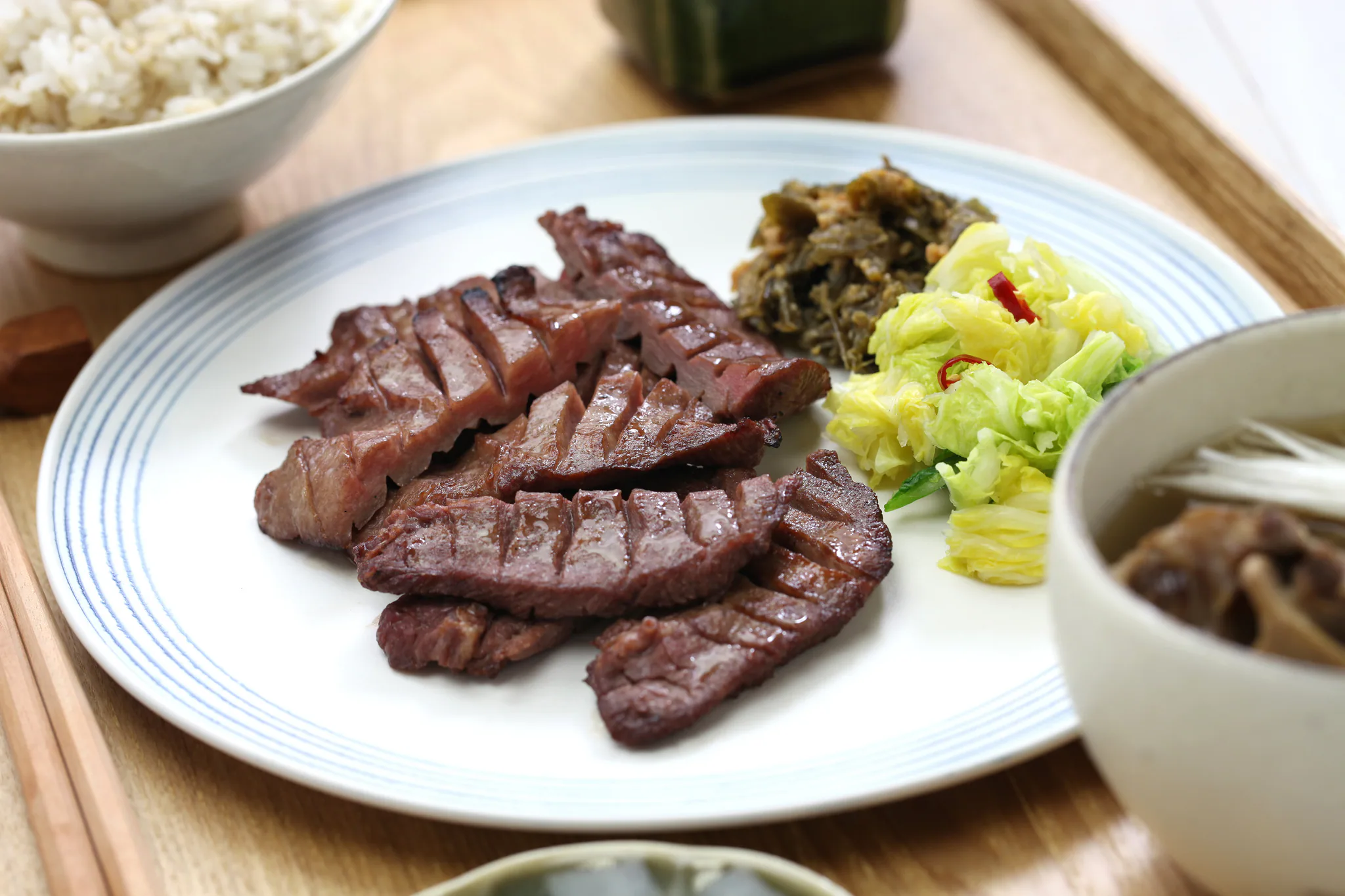
Thick slices of beef tongue scored, seasoned with salt and pepper and seared over charcoal until crisp at the edges and pleasantly chewy within. In Sendai it is served as a set with barley rice, pickles and oxtail soup.
Gyūtan (Sendai salt-grilled beef tongue) is a Japanese grilled dish, ready in about 2 hours 5 minutes and made with beef tongue and salt. It serves 4 and is rated intermediate to cook.
- Prep
- 20 min
- Cook
- 45 min
- Rest
- 1 h
- Total
- 2 h 5 min
- Serves
- 4
- Level
- Intermediate
- Calories
- 417
Main ingredients
Ingredients
For the seasoning
For the barley rice (mugi gohan)
To serve
Method
Barley rice (mugi gohan)
45 minStep 1
If the tongue is whole, freeze it for an hour, then peel off the rough skin with a sharp knife and cut the thick part into 8 mm slices (save the thin tip for stews). Score each slice on both sides with a few shallow cuts.
Scoring stops the slices curling and makes them easier to bite.
Step 2
Rinse the rice and barley (opens in a new tab), soak for 30 minutes in the water, then cook in a rice cooker (opens in a new tab) or covered pan over low heat for 15 minutes and rest for 10 minutes.
Food safety: Cooked rice can carry Bacillus cereus spores that survive cooking; cool leftover rice quickly and refrigerate it within an hour.
Seasoning
13 minStep 3
Season the tongue slices with salt and pepper (opens in a new tab) (and a few drops of sesame oil (opens in a new tab), if using) and leave for 30 minutes in the fridge so the salt penetrates.
- 3 min
Food safety: Wash hands, boards and knives after handling raw meat, and keep it apart from salad and other ready-to-eat food.
Step 4
Grill over very hot charcoal or in a smoking-hot griddle pan for 1–2 minutes a side until browned with crisp edges and just cooked through.
- 10 min
- high heat
- Grill / barbecue (opens in a new tab)
- Grill pan (opens in a new tab)
- Tongs (opens in a new tab)
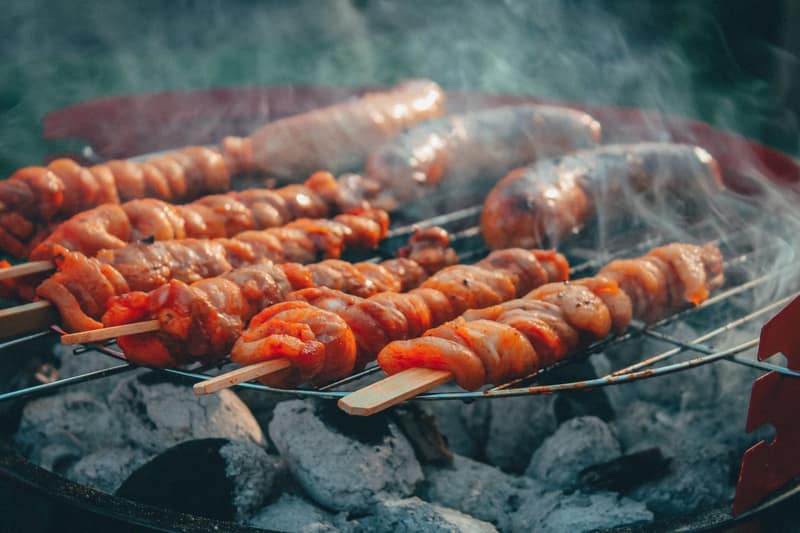
How it looks · Photo: Malte Luk on Pexels
To serve
2 minStep 5
Serve the tongue with the barley (opens in a new tab) rice, spring onion (opens in a new tab) and lemon (opens in a new tab) wedges.
- 2 min

How it looks · Photo: Willians Huerta on Pexels
At a glance
1 · Barley rice (mugi gohan) in a pot
 Short-grain rice
 Pearl barley
then season
2 · Seasoning in a pan
 Salt
 Black pepper
 Toasted sesame oil
then serve
3 · To serve in a bowl
 Lemon
 Spring onion
About this dish
- Origin
- Sendai, Miyagi Prefecture, Japan · Well documentedSaid to have been created in 1948, when a Sendai yakitori cook began specialising in grilled beef tongue; it is now the city's signature dish.More food from Japan
Japan - Dish
- Lunch · Dinner · Grills & kebabs · Main courses
- Cooking method
- Grilled, Boiled
- Taste
- savoury, smoky, salty, peppery
- Diet
- Dairy-free · No nut ingredients · High-proteinWorked out from the ingredients. How labels work
All labels
Non-vegetarian · Dairy-free · Egg-free · No nut ingredients · No added sugar · Alcohol-free · Pork-free · High-protein · Low-fat · Calorie-conscious - Good for
- Festive & celebration
- Cook more with
- Beef tongue · Short-grain rice · Pearl barley · Lemon · Spring onion
- Techniques
- Grilling · Charcoal grilling · Boiling · Dhungar (charcoal smoking)
Allergens
- Contains: Glutenfrom pearl barley
- Contains, can be adapted: Sesamefrom toasted sesame oil
Based on typical versions of these ingredients and not verified allergen-free. Brands differ and cross-contact happens, so always check labels. For severe allergies, follow your clinician’s advice.
Nutrition
417 kcal per serving
Estimated1 serving ≈ 331 g · recipe makes 4
Where the energy comes from
- Protein 27%
- Carbohydrate 61%
- Fat 12%
| Nutrient | Per serving | Per 100 g* |
|---|---|---|
| Energy | 417 kcal | 126 kcal |
| Protein | 28.1 g | 8.5 g |
| Carbohydrate | 62 g | 18.8 g |
| Net carbohydrate | — | — |
| Sugars | — | — |
| Added sugars | 0 g | 0 g |
| Fibre | — | — |
| Fat | 5.5 g | 1.7 g |
| Saturated fat | 1.9 g | 0.6 g |
| Trans fat | — | — |
| Cholesterol | 155 mg | 47 mg |
| Sodium | 711 mg | 215 mg |
| Salt equivalent | 1.8 g | 0.5 g |
Vitamins & minerals per serving
- Potassium
- 508 mg
- Calcium
- 38 mg
- Iron
- 6.6 mg
- Magnesium
- 60 mg
- Vitamin A (RAE)
- —
- Vitamin C
- 15 mg
- Vitamin D
- —
- Vitamin B12
- 10.7 µg
- Folate (DFE)
- 19 µg
How these numbers were made
- Calculated from USDA FoodData Central (SR Legacy) per-100 g values and the listed quantities.
- *Per 100 g of combined raw ingredients; the cooked dish may weigh more or less.
- Optional ingredients are not included: toasted sesame oil.
- Beef tongue: Raw beef heart (FDC 168625) used as a stand-in; both are lean-to-moderately fatty beef variety meats, though tongue is somewhat higher in fat.
- “—” means the value isn’t known for enough of the ingredients; it is never zero by default.
- Values are estimates for guidance, not for medical dosing. U.S. Department of Agriculture, Agricultural Research Service. FoodData Central, 2019. fdc.nal.usda.gov.
Good to know
Tips
- Thick slices are the Sendai style: chewy and juicy rather than thin and crisp.
Common mistakes
- Grilling over low heat, which steams the tongue and makes it rubbery.
Serve with
- Serve as a teishoku with mugi gohan, hakusai or cucumber pickles, a little miso-pickled green chilli and clear oxtail soup.
- Leftover slices make an excellent gyūtan don over rice.
Food safety
- Wash hands, boards and knives after handling raw meat, and keep it apart from salad and other ready-to-eat food.
- Cooked rice can carry Bacillus cereus spores that survive cooking; cool leftover rice quickly and refrigerate it within an hour.
Storage
- Raw seasoned slices keep 1 day refrigerated; cooked tongue is best eaten at once.
Variations
- Tare gyūtan: Marinated in a soy-sauce, sake and mirin tare before grilling.
- Gyūtan curry: Slow-cooked tongue served in Japanese curry sauce with rice.
Original editorial recipe · FriendsPantry editorial · source: TasteAtlas (dish facts) · Not yet independently reviewed · Added
Recipe DNA
How this dish is built
Built from the recipe’s own sections. Each band’s width is its share of the dish by weight. Choose a component to see what it does.
What the dish is built around
Main ingredient
- Beef tongue, peeled, from the thicker back half of the tongue, cut into 8 mm slices500 g
Reviews & corrections
Reviews come from signed-in cooks and appear after a moderator checks them. We never show made-up ratings.
You might also like
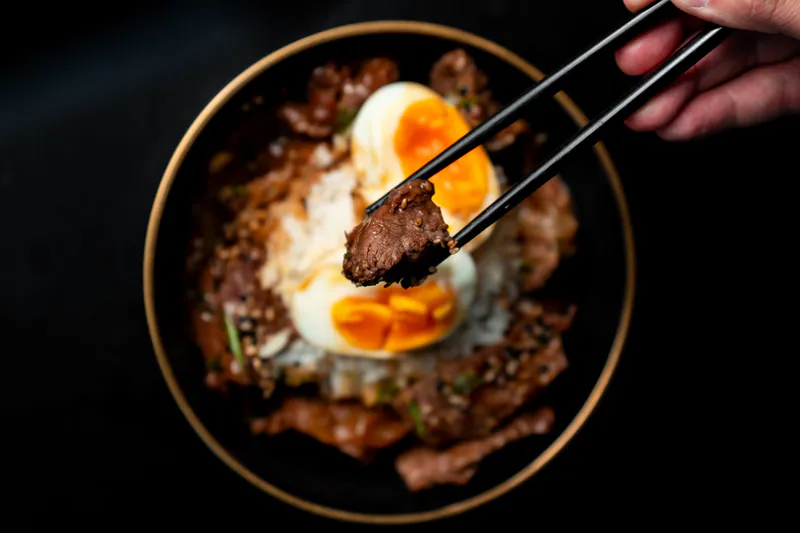
Gyudon
 Japanese · 25 min · 548 kcal
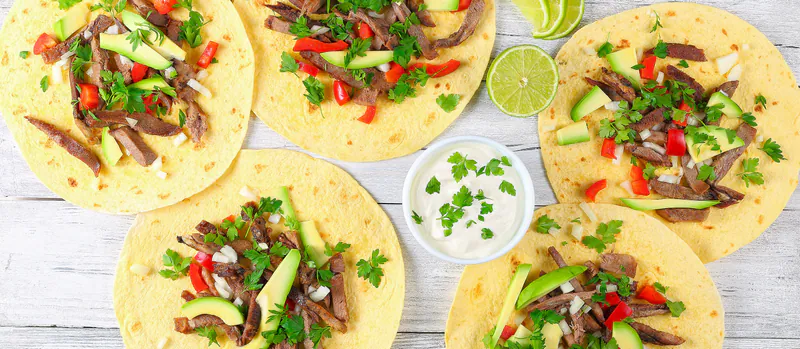
Tacos de lengua (beef tongue tacos)
 Mexican · 3 h 55 min · 683 kcal
Katsu karē (Japanese katsu curry)
Japanese · 1 h 10 min
Butadon (Obihiro pork rice bowl)
Japanese · 1 h 20 min · 686 kcal