
Cocido madrileño (Madrid chickpea and meat stew)
Non-vegetarian
Cocido madrileño
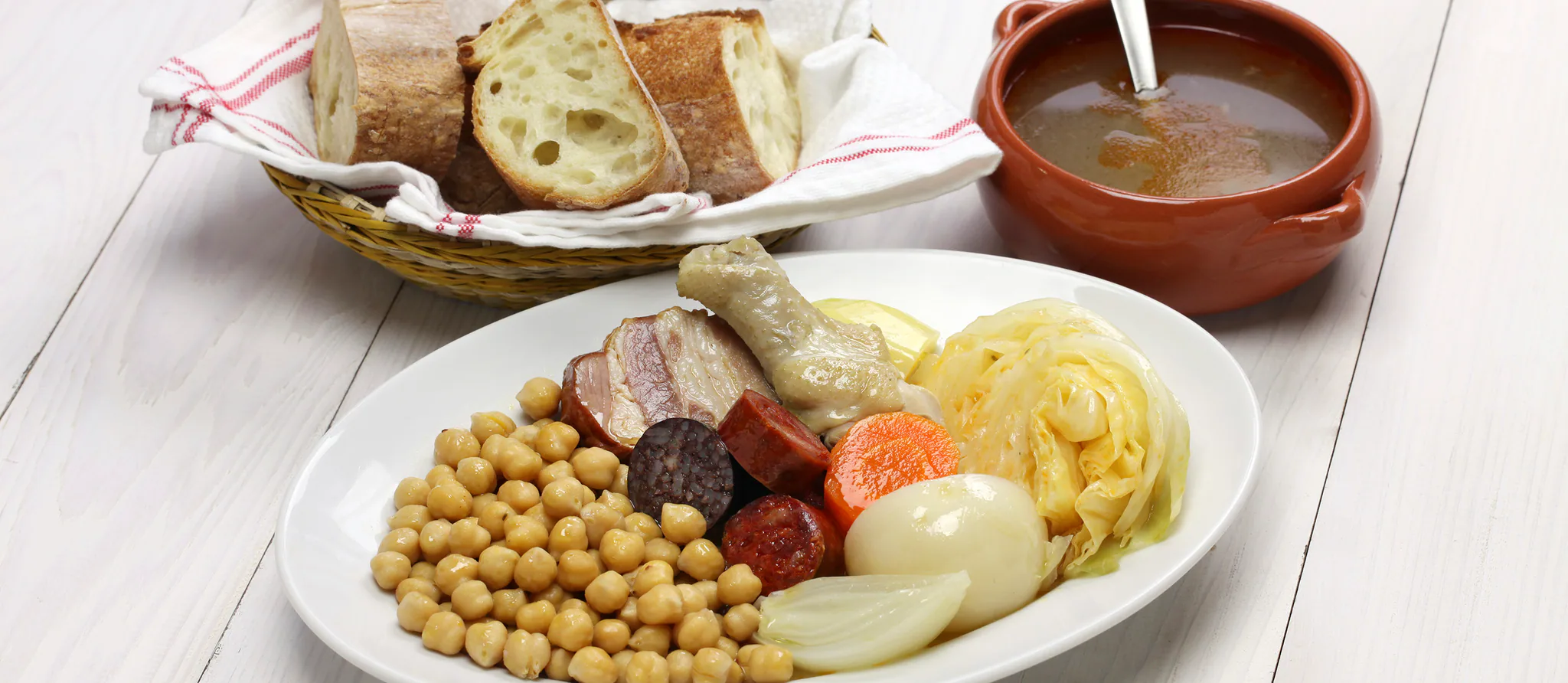
Chickpeas simmered slowly with beef shank, chicken, pork belly, ham, chorizo and morcilla, plus potatoes, carrots and cabbage, then served in courses: first the broth with fine noodles, then the chickpeas and vegetables, then the meats. Madrid's great winter feast, eaten at long Sunday lunches.
Cocido madrileño (Madrid chickpea and meat stew) is a Spanish stew from Spain, ready in about 4 hours 30 minutes and made with dried chickpeas, beef shank (bone-in, cross-cut) and chorizo. It serves 8 and is rated intermediate to cook.
- Prep
- 30 min
- Cook
- 4 h
- Total
- 4 h 30 min
- Serves
- 8
- Level
- Intermediate
- Calories
- 857
Plus overnight soaking of the chickpeas.
Main ingredients
Ingredients
For the stew
For the sausages and cabbage
For the soup
Method
Stew
3 h 35 minStep 1
Put the beef shank (opens in a new tab), chicken, pork belly (opens in a new tab), ham and bones in a very large pot with the cold water. Bring slowly to the boil and skim off all the foam that rises.
- 20 min
- medium-high heat
- Stockpot / large pot (opens in a new tab)
- Slotted spoon (opens in a new tab)
Step 2
Add the drained chickpeas in a mesh bag or loose, plus the whole carrots (opens in a new tab), onion (opens in a new tab), garlic (opens in a new tab) head and peppercorns (opens in a new tab). When it returns to the boil, lower the heat and simmer very gently, partly covered, for about 2½–3 hours, until the chickpeas are tender. Top up with hot water if needed so everything stays covered.
- 165 min
- low heat
Always add hot, never cold, water: cold water shocks the chickpeas and toughens their skins.
Step 3
Add the potatoes (opens in a new tab) and salt and simmer 30 minutes more, until tender.
- 30 min
- low heat
Food safety: Cook chicken until the thickest part reaches 74 °C (165 °F) and the juices run clear.
Sausages and cabbage
35 minStep 4
Meanwhile, cook the chorizo (opens in a new tab), morcilla (opens in a new tab) and cabbage (opens in a new tab) together in a separate pan of simmering water for 30 minutes (this keeps the broth from turning red and greasy). Drain the cabbage, then fry it briefly in the olive oil (opens in a new tab) with the sliced garlic (opens in a new tab) and paprika (opens in a new tab).
Soup
16 minStep 5
Strain off about 2 litres of broth into a saucepan (opens in a new tab), bring to the boil and cook the fideos in it for 3–4 minutes. Serve this soup first.
- 6 min
- medium-high heat
- Saucepan (opens in a new tab)
- Sieve / strainer (opens in a new tab)
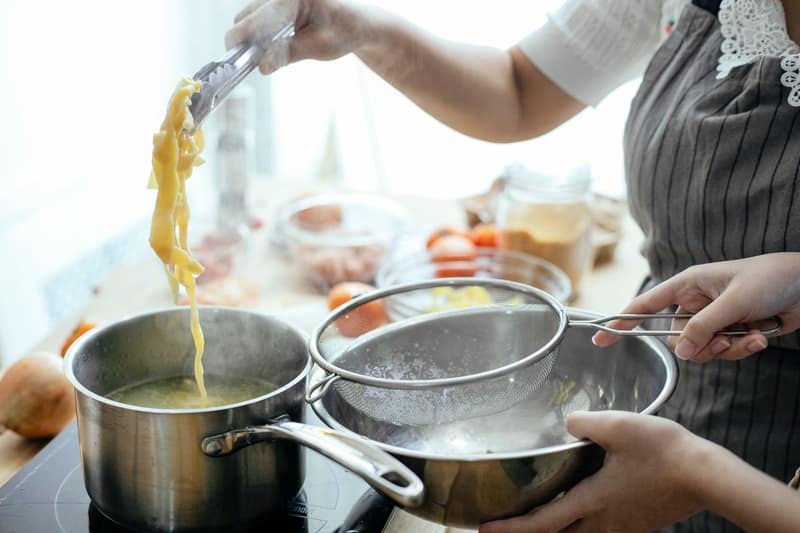
How it looks · Photo: Katerina Holmes on Pexels Step 6
For the second course, serve the chickpeas with the potatoes (opens in a new tab), carrots (opens in a new tab) and cabbage (opens in a new tab). Then slice the meats and sausages onto a platter for the third course.
- 10 min
At a glance
1 · Stew in a pot
 Dried chickpeas
 Beef shank (bone-in, cross-cut)
 Chicken thigh
 Pork belly
 Prosciutto / dry-cured ham
 Pork bones (trotters and neck bones)
 Carrot
 Onion
 Garlic
 Black peppercorns
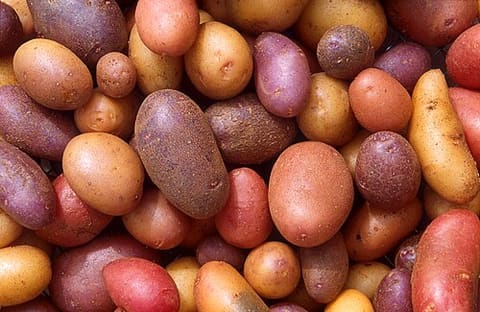 Potato
 Salt
then cook
2 · Sausages and cabbage in a pan
 Chorizo
 Blood sausage
 Cabbage
 Olive oil
- Garlic
 Paprika
then strain
3 · Soup in a pot
 Dried pasta
About this dish
- Origin
- Madrid, Spain · Commonly attributedDescended from medieval one-pot stews such as olla podrida and, many historians argue, the Sephardic Sabbath stew adafina, to which pork was added after 1492. It is served in three 'vuelcos' (tippings out).More food from Spain
Spain - Dish
- Lunch · Stews & braises · Soups · Main courses
- Cooking method
- Simmered, Boiled, Sautéed
- Taste
- savoury, rich, smoky, garlicky
- Diet
- Dairy-free · No nut ingredients · High-proteinWorked out from the ingredients. How labels work
All labels
Non-vegetarian · Dairy-free · Egg-free · No nut ingredients · No added sugar · Alcohol-free · High-protein - Good for
- One-pot · Batch cooking · Festive & celebration · Uses leftovers
- Cook more with
- Dried chickpeas · Beef shank (bone-in, cross-cut) · Chorizo · Chicken thigh · Pork belly · Prosciutto / dry-cured ham
Allergens
- May contain: Eggsfrom dried pasta
- Contains: Wheatfrom blood sausage, dried pasta
- Contains: Glutenfrom blood sausage, dried pasta
- May contain: Sulphitesfrom chorizo
Based on typical versions of these ingredients and not verified allergen-free. Brands differ and cross-contact happens, so always check labels. For severe allergies, follow your clinician’s advice.
Nutrition
857 kcal per serving
Estimated1 serving ≈ 623 g · recipe makes 8
Where the energy comes from
- Protein 25%
- Carbohydrate 30%
- Fat 45%
| Nutrient | Per serving | Per 100 g* |
|---|---|---|
| Energy | 857 kcal | 138 kcal |
| Protein | 53 g | 8.5 g |
| Carbohydrate | 65.1 g | 10.4 g |
| Net carbohydrate | 54.1 g | 8.7 g |
| Sugars | — | — |
| Added sugars | 0 g | 0 g |
| Fibre | 11 g | 1.8 g |
| Fat | 43 g | 6.9 g |
| Saturated fat | 13.3 g | 2.1 g |
| Trans fat | — | — |
| Cholesterol | 150 mg | 24 mg |
| Sodium | 1014 mg | 163 mg |
| Salt equivalent | 2.5 g | 0.4 g |
Vitamins & minerals per serving
- Potassium
- 1536 mg
- Calcium
- 134 mg
- Iron
- 7.6 mg
- Magnesium
- 115 mg
- Vitamin A (RAE)
- 198 µg
- Vitamin C
- 55 mg
- Vitamin D
- —
- Vitamin B12
- 3.5 µg
- Folate (DFE)
- 387 µg
How these numbers were made
- Calculated from USDA FoodData Central (SR Legacy) per-100 g values and the listed quantities.
- *Per 100 g of combined raw ingredients; the cooked dish may weigh more or less.
- Optional ingredients are not included: paprika.
- Prosciutto / dry-cured ham: Cured ham, lean and fat, unheated (FDC 167875) used as a stand-in for air-dried prosciutto/jamón; real dry-cured ham is drier and saltier.
- Pork bones (trotters and neck bones): Pork spareribs (FDC 167853) scaled down as a rough estimate of the meat, fat and collagen that boiled pork bones release into a broth.
- “—” means the value isn’t known for enough of the ingredients; it is never zero by default.
- Values are estimates for guidance, not for medical dosing. U.S. Department of Agriculture, Agricultural Research Service. FoodData Central, 2019. fdc.nal.usda.gov.
Good to know
Tips
- Leftover cocido is turned into ropa vieja: the meats and chickpeas fried together with garlic and tomato, or croquetas.
Common mistakes
- Boiling hard, which breaks the chickpeas and clouds the broth.
- Cooking the chorizo in the main pot, which colours and greases the soup.
Serve with
- Serve with crusty bread, pickled guindilla peppers, spring onions and a tomato-cumin sauce on the side for the meats.
- Drink a young red wine from Madrid.
Food safety
- Cook chicken until the thickest part reaches 74 °C (165 °F) and the juices run clear.
- Cool leftovers within 2 hours, refrigerate and eat within 3 days; reheat until steaming hot throughout.
Storage
- Keeps 3 days refrigerated; store the broth separately.
Reheating
- Reheat broth and meats until simmering hot.
Variations
- Cocido montañés (Spain): The Cantabrian version with white beans and collard greens.
- Cocido maragato: From León, served in reverse: meats first, then chickpeas, and the soup last.
- Adafina: The Sephardic Sabbath stew with chickpeas, beef and whole eggs, considered an ancestor of cocido.
Original editorial recipe · FriendsPantry editorial · source: TasteAtlas (dish facts) · Not yet independently reviewed · Added
Recipe DNA
How this dish is built
Built from the recipe’s own sections. Each band’s width is its share of the dish by weight. Choose a component to see what it does.
The body of the dish
For the stew
- Dried chickpeas, soaked overnight in salted water and drained400 g
- Beef shank (bone-in, cross-cut)500 g
- Chicken thigh, bone-in, skin removed500 g
- Pork belly200 g
- Prosciutto / dry-cured ham150 g
- Pork bones (trotters and neck bones)300 g
- Water4 l · 1200 g
- Carrot, peeled, left whole3 piece · 180 g
- Onion, peeled, left whole1 piece · 110 g
- Garlic10 clove · 40 g
- Black peppercorns1 tsp · 3 g
- Potato, peeled, halved600 g
- Salt1 tsp · 6 g
Reviews & corrections
Reviews come from signed-in cooks and appear after a moderator checks them. We never show made-up ratings.
You might also like
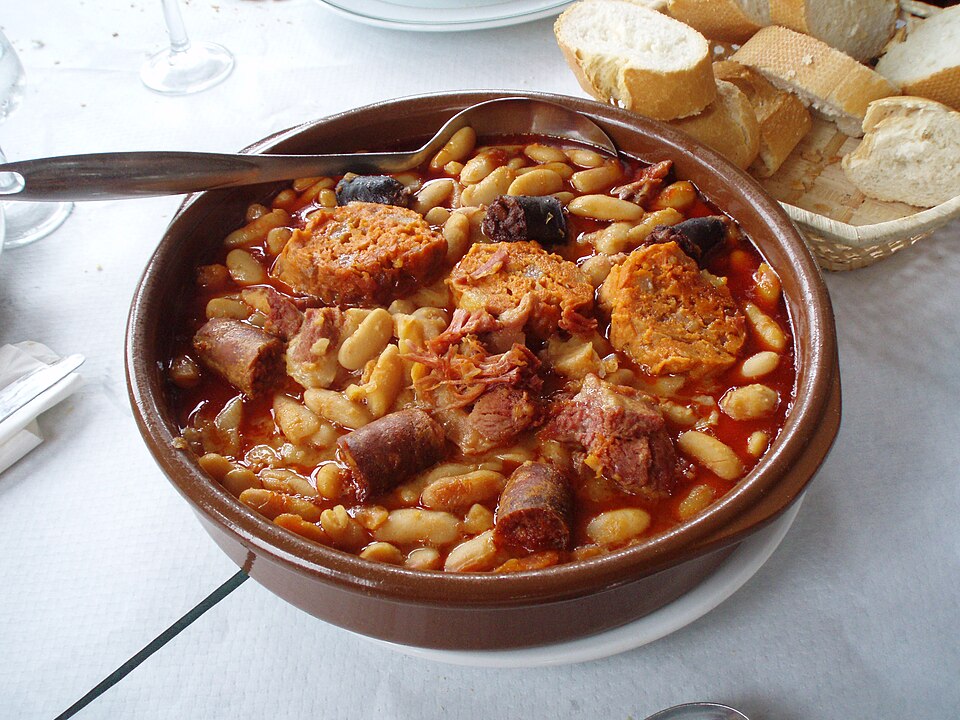
Fabada asturiana
 Spanish · 1 h 35 min · 581 kcal
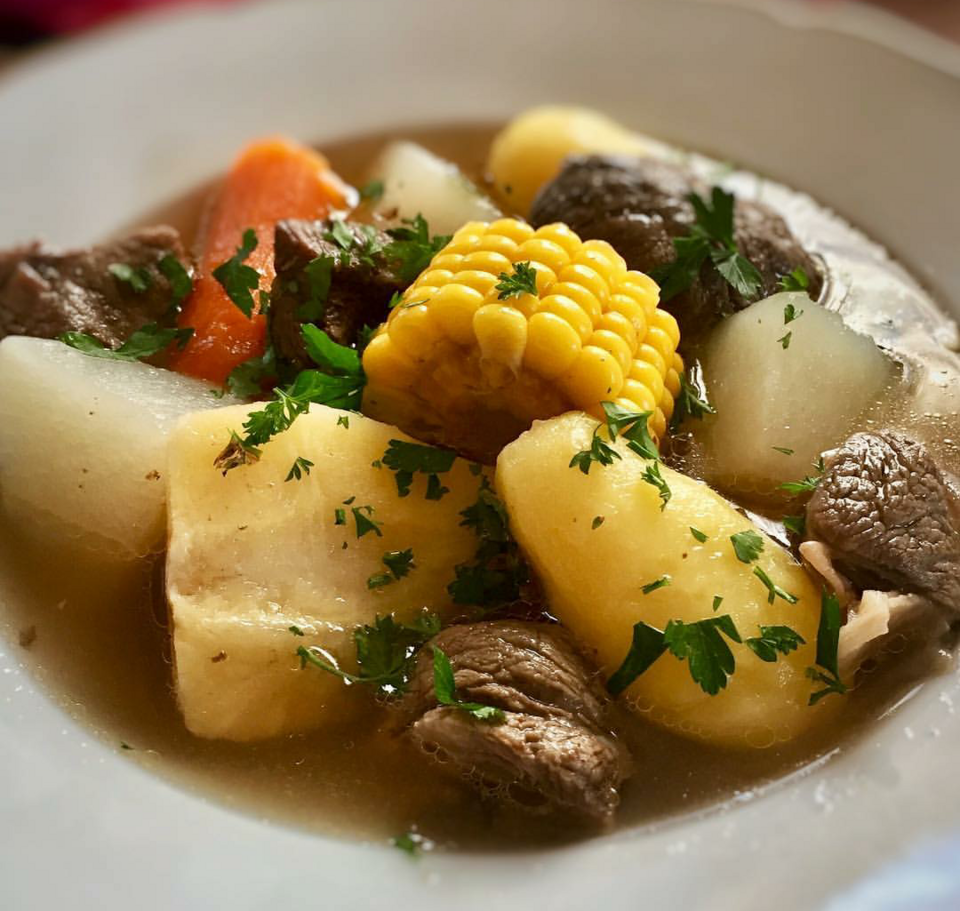
Olla de carne
 Costa Rican · 2 h 45 min · 365 kcal
Callos a la madrileña (Madrid-style tripe stew)
Spanish · 5 h 10 min · 1018 kcalPringá (Andalusian slow-cooked meat spread)
Spanish · 3 h 55 min · 774 kcal