
 Iraqi · Middle Eastern · Breads & flatbreads
Samoon (Iraqi diamond-shaped bread)
Vegetarian
صمون · ṣammūn
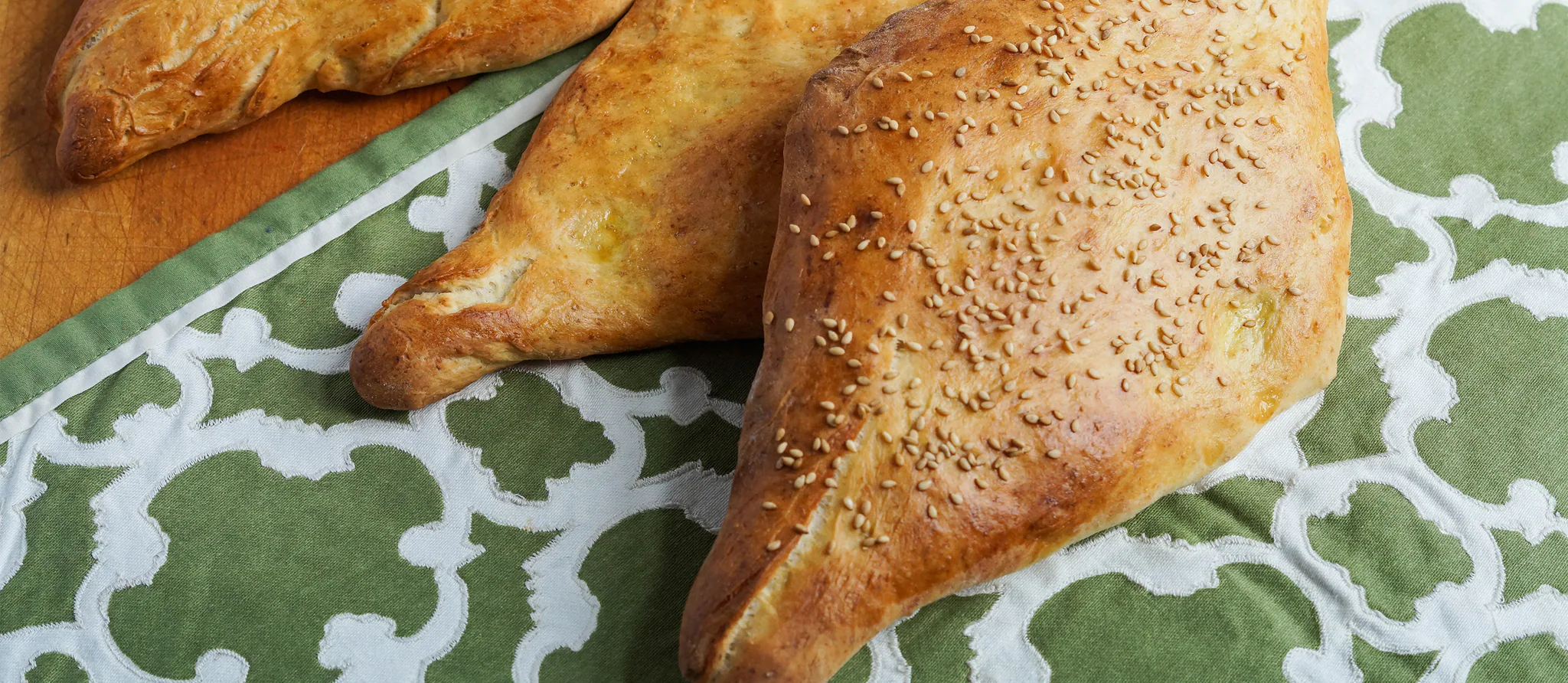
Iraq's everyday bakery bread: a diamond-shaped roll with pointed ends, a thin golden crust and a light, chewy crumb, split open by a deep slash along its back. Eaten warm with breakfast cheese and eggs, or stuffed with falafel and kebab.
Samoon (Iraqi diamond-shaped bread) is an Iraqi bread, ready in about 2 hours 22 minutes and made with bread flour and instant yeast. It serves 8 and is rated intermediate to cook.
- Prep
- 25 min
- Cook
- 12 min
- Rest
- 1 h 45 min
- Total
- 2 h 22 min
- Serves
- 8
- Level
- Intermediate
- Calories
- 263
Main ingredients
Method
Step 1
Mix the flour, yeast, sugar (opens in a new tab) and salt in a bowl. Add the oil and lukewarm water and knead for 10 minutes by hand (6–7 in a stand mixer (opens in a new tab)) to a smooth, elastic, slightly tacky dough.
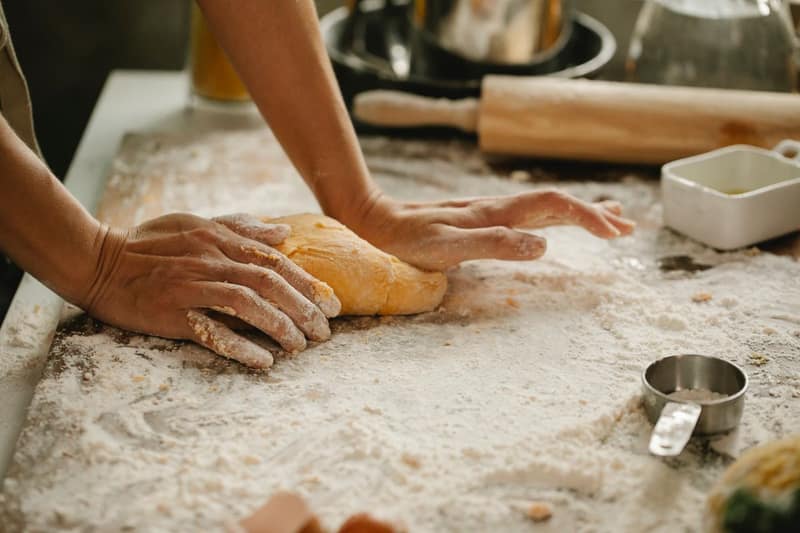
How it looks · Photo: Klaus Nielsen on Pexels Step 2
Cover and leave to rise in a warm place until doubled, about 1 hour.
Step 3
Divide the dough into 8 pieces and shape each into a tight ball. Rest for 10 minutes, then roll each into an oval about 15 cm long and pinch and taper both ends into points, like a fat diamond or rugby ball.
- 12 min
Step 4
Lay the rolls on a floured tray, cover and leave to rise for 30–35 minutes until puffy. Meanwhile heat the oven (opens in a new tab) to 240 °C with a baking stone or heavy upturned tray on the middle shelf.
Step 5
Cut one deep slash along the length of each roll, brush or mist lightly with water and slide them onto the hot stone. Bake for 10–12 minutes until risen with pointed tips and light golden all over.
- 12 min
- 240°C
- Bread lame (opens in a new tab)
- Baking tray / sheet (opens in a new tab)
- Oven (opens in a new tab)
A tray of boiling water on the oven floor for the first 5 minutes helps the slash open wide.
Step 6
Cool on a rack for 10 minutes before splitting; samoon is at its best eaten warm the same day.
At a glance
1 · Dough in a bowl
 Bread flour
 Instant yeast
 Sugar
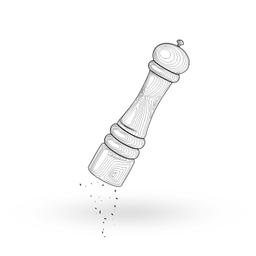 Salt
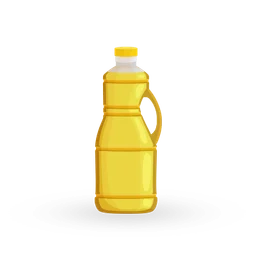 Neutral vegetable oil
then
2 · Baking in a bowl
About this dish
- Origin
- Iraq (Baghdad), Iraq · Commonly attributedBaked in tannour-style ovens by neighbourhood bakeries across Iraq; similar rolls are sold in Kuwait and the Gulf.Also popular in KuwaitMore food from Iraq
Iraq - Dish
- Breakfast · Lunch · Dinner · Breads & flatbreads
- Cooking method
- Oven-baked
- Taste
- mild, savoury
- Diet
- Vegan · Dairy-free · No nut ingredientsWorked out from the ingredients. How labels work
All labels
Vegan · Plant-based · Vegetarian (lacto-ovo) · Eggetarian · Lacto-vegetarian · Ovo-vegetarian · Pescatarian · Flexitarian-friendly · Dairy-free · Egg-free · No nut ingredients · Alcohol-free · Pork-free · Beef-free · DASH-style - Good for
- Everyday · Freezer-friendly · Portable / lunchbox
- Cook more with
- Bread flour · Instant yeast · Sugar
- Techniques
- Baking · Kneading · Fermentation
Allergens
- Contains: Wheatfrom bread flour
- Contains: Glutenfrom bread flour
Based on typical versions of these ingredients and not verified allergen-free. Brands differ and cross-contact happens, so always check labels. For severe allergies, follow your clinician’s advice.
Nutrition
263 kcal per serving
Calculated1 serving ≈ 113 g · recipe makes 8
Where the energy comes from
- Protein 12%
- Carbohydrate 72%
- Fat 16%
| Nutrient | Per serving | Per 100 g* |
|---|---|---|
| Energy | 263 kcal | 233 kcal |
| Protein | 7.8 g | 6.9 g |
| Carbohydrate | 46.9 g | 41.6 g |
| Net carbohydrate | 45.2 g | 40.1 g |
| Sugars | 1.4 g | 1.3 g |
| Added sugars | 1.3 g | 1.1 g |
| Fibre | 1.7 g | 1.5 g |
| Fat | 4.5 g | 4 g |
| Saturated fat | 0.4 g | 0.4 g |
| Trans fat | — | — |
| Cholesterol | 0 mg | 0 mg |
| Sodium | 439 mg | 389 mg |
| Salt equivalent | 1.1 g | 1 g |
Vitamins & minerals per serving
- Potassium
- 71 mg
- Calcium
- 14 mg
- Iron
- 2.8 mg
- Magnesium
- 17 mg
- Vitamin A (RAE)
- 0 µg
- Vitamin C
- 0 mg
- Vitamin D
- 0 µg
- Vitamin B12
- 0 µg
- Folate (DFE)
- 200 µg
How these numbers were made
- Calculated from USDA FoodData Central (SR Legacy) per-100 g values and the listed quantities.
- *Per 100 g of combined raw ingredients; the cooked dish may weigh more or less.
- “—” means the value isn’t known for enough of the ingredients; it is never zero by default.
- Values are estimates for guidance, not for medical dosing. U.S. Department of Agriculture, Agricultural Research Service. FoodData Central, 2019. fdc.nal.usda.gov.
Good to know
Tips
- Don't let the rolls brown deeply — Iraqi samoon is pale gold with a thin crust.
Common mistakes
- Baking in an oven that is not hot enough; the rolls spread instead of springing up.
Serve with
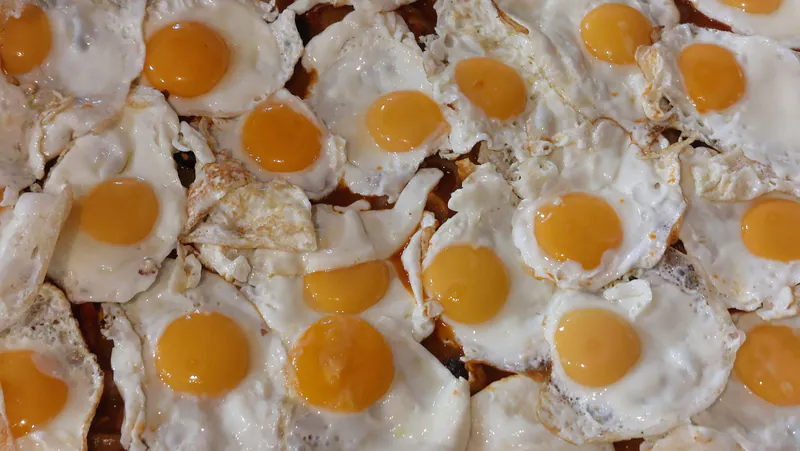
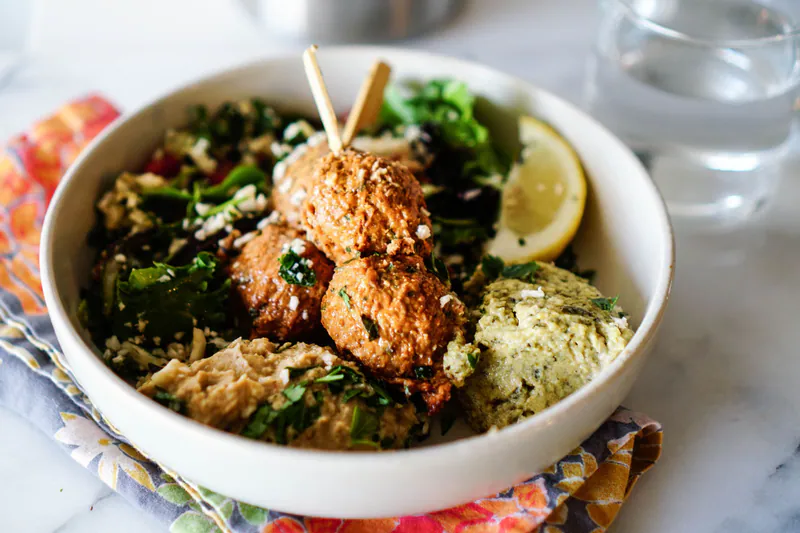
- Split and fill with fried eggs and amba, or with falafel, salad and tahini.
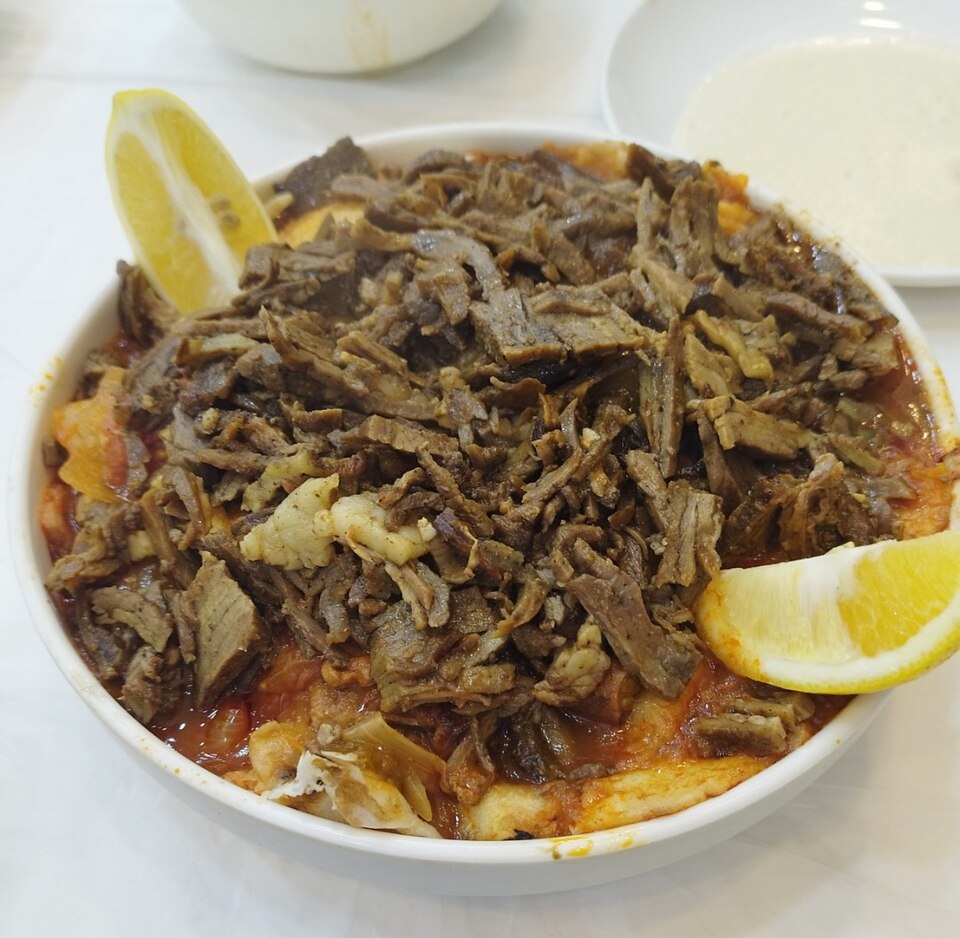
- Serve alongside kebab, tikka or a bowl of tashreeb.
Storage
- Best the day it is baked; freeze extras in a bag for up to 1 month.
Reheating
- Warm frozen or day-old samoon in a hot oven for 4–5 minutes.
Variations
- Samoon hajiri: A denser, rounder roll baked in a stone oven, sometimes topped with sesame.
- Samoon with nigella: The tops are brushed with water and scattered with nigella or sesame seeds before baking.
Original editorial recipe · FriendsPantry editorial · source: TasteAtlas (dish facts) · Not yet independently reviewed · Added
Recipe DNA
How this dish is built
Built from the recipe’s own sections. Each band’s width is its share of the dish by weight. Choose a component to see what it does.
Structure
For the dough
- Bread flour500 g
- Instant yeast7 g
- Sugar10 g
- Salt9 g
- Neutral vegetable oil2 tbsp · 27 g
- Water, lukewarm320 ml · 320 g
Reviews & corrections
Reviews come from signed-in cooks and appear after a moderator checks them. We never show made-up ratings.
You might also like
Naan (home-oven method)
 Indian · 3 h · 272 kcal · Vegetarian
Afghan naan
 Afghan · 2 h 20 min · 344 kcal · Vegan
Kahi and geymar (Iraqi flaky pastry with clotted cream and date syrup)
Iraqi · 2 h · 660 kcal · Vegetarian
Pita (pocket bread)
Middle Eastern · 2 h 15 min · 246 kcal · Vegan