
Porchetta di Ariccia (rolled roast pork with rosemary and garlic)
Non-vegetarian
Porchetta di Ariccia
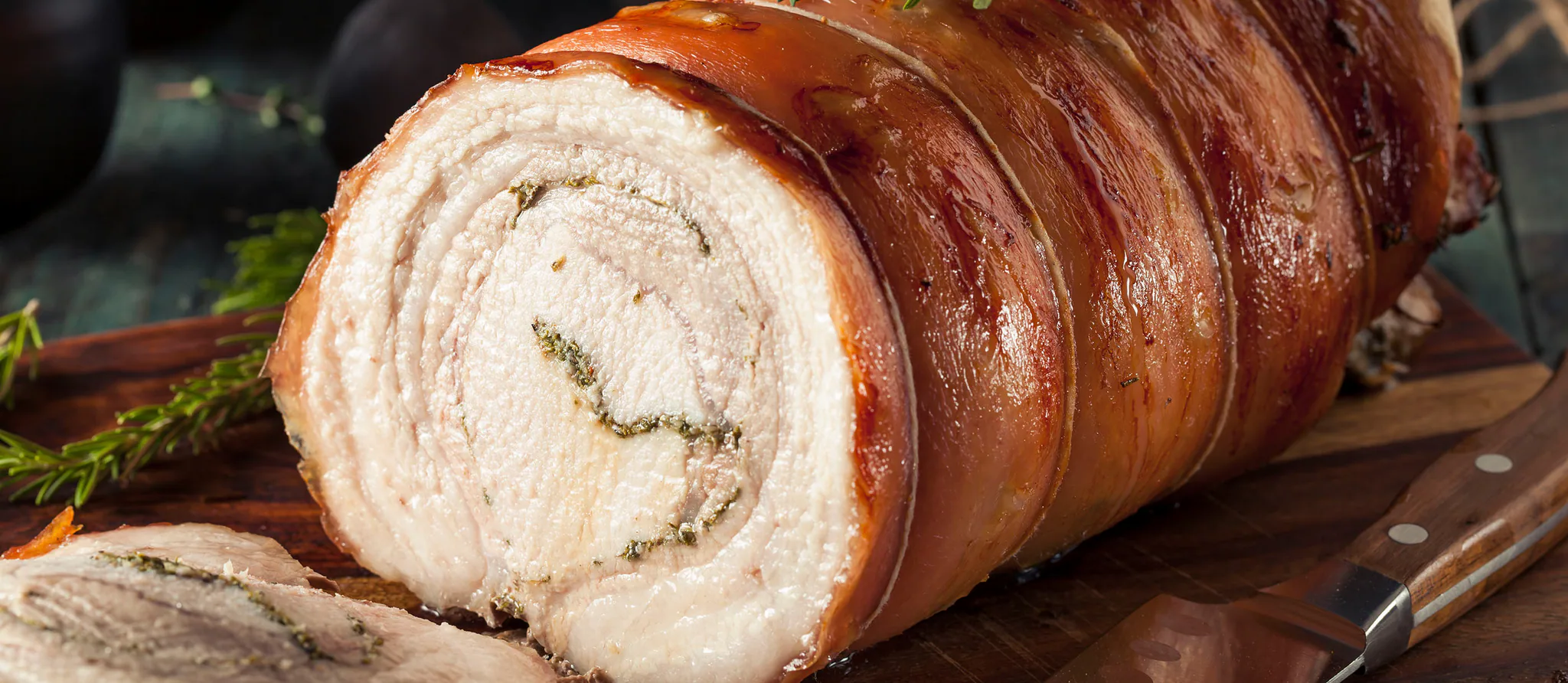
A boneless slab of pork belly and loin rubbed with garlic, rosemary, black pepper and plenty of salt, rolled and slow-roasted until the meat is juicy and the skin shatters like glass. This home version of the Castelli Romani classic is sliced thick and eaten warm or at room temperature, on its own or in a crusty roll.
Porchetta di Ariccia (rolled roast pork with rosemary and garlic) is an Italian main course from Italy, ready in about 4 hours 55 minutes and made with pork belly, salt and garlic. It serves 10 and is rated intermediate to cook.
- Prep
- 40 min
- Cook
- 3 h 45 min
- Rest
- 30 min
- Total
- 4 h 55 min
- Serves
- 10
- Level
- Intermediate
- Calories
- 1603
Plus 12–24 hours uncovered in the fridge to dry the skin.
Main ingredients
Ingredients
For the porchetta
For the roasting pan
Method
Porchetta
35 minStep 1
Lay the pork skin-side down. Score the meat side in a shallow 2 cm diamond pattern, and cut into the thick loin so the slab opens out to an even thickness without cutting through.
Step 2
Mix the salt, garlic (opens in a new tab), rosemary (opens in a new tab), pepper (opens in a new tab), fennel and chilli flakes (opens in a new tab) (if using) with the olive oil (opens in a new tab) to a paste. Rub it hard into every cut of the meat side.
- 8 min
Step 3
Roll the slab up tightly from the loin edge so the skin wraps all the way round. Tie with kitchen string every 3 cm. Pat the skin completely dry, prick it all over with a skewer or the tip of a knife, and rub in a little extra salt.
- 15 min
Food safety: Wash hands, boards and knives after handling raw meat, and keep it apart from salad and other ready-to-eat food.
Step 4
Set the roll on a rack over a tray and leave it uncovered in the fridge for 12–24 hours so the skin dries out; this is what makes it crackle.
- 2 min
Take it out 1 hour before roasting so the centre is not fridge-cold.
Roasting pan
3 h 40 minStep 5
Heat the oven (opens in a new tab) to 160 °C. Put the porchetta on the rack in a roasting pan (opens in a new tab) and pour the wine and water into the pan. Roast for about 3 hours, adding a splash of water if the pan dries, until the centre reads 68–70 °C.
- 180 min
- 160°C
- Oven (opens in a new tab)
- Roasting pan (opens in a new tab)
- Food thermometer (opens in a new tab)
Food safety: Cook pork until it reaches at least 63 °C in the centre and refrigerate leftovers within 2 hours.
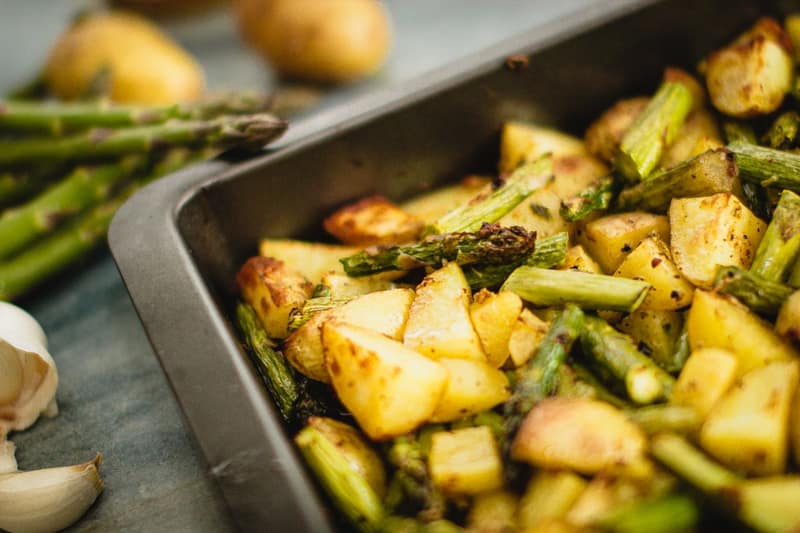
How it looks · Photo: locrifa on Pexels Step 6
Raise the oven (opens in a new tab) to 240 °C and roast for another 25–40 minutes, turning the pan now and then, until the skin is puffed, blistered and golden all over. Watch closely at the end.
- 35 min
- 240°C
- Oven (opens in a new tab)
If one patch stays leathery, finish it under a hot grill for a minute or two.
Step 7
Rest the porchetta for at least 30 minutes, then snip off the string and slice it 1 cm thick with a serrated knife. Spoon over a little of the skimmed pan juices.
At a glance
1 · Porchetta in a bowl
 Pork belly
 Salt
 Garlic
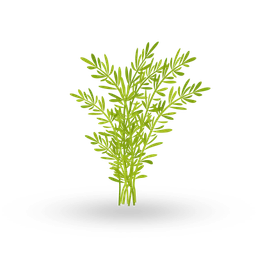 Rosemary (fresh)
 Black pepper
 Fennel seeds
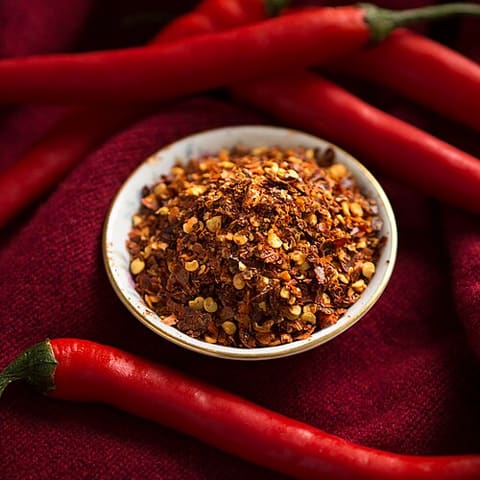 Red chilli flakes
 Olive oil
then heat
2 · Roasting pan in a pan
 Dry white wine
About this dish
- Origin
- Ariccia, Castelli Romani (Lazio), Italy · Commonly attributedWhole spit-roasted pigs are an old Central Italian festival food; Ariccia claims porchetta as its own, holds a porchetta festival every September and has an IGP for its version, seasoned mainly with garlic, rosemary and pepper.Also popular in United StatesMore food from Italy
Italy - Dish
- Lunch · Dinner · Main courses · Street food
- Cooking method
- Roasted
- Taste
- savoury, garlicky, herby, rich
- Diet
- No gluten ingredients · Dairy-free · No nut ingredients · Keto-style · Low-carb · High-proteinWorked out from the ingredients. How labels work
All labels
Non-vegetarian · Whole-food focused · Paleo-style · No gluten ingredients · Dairy-free · Egg-free · No nut ingredients · No added sugar · Beef-free · Keto-style · Low-carb · High-protein - Good for
- Festive & celebration · Make-ahead · Uses leftovers
- Cook more with
- Pork belly · Garlic · Rosemary (fresh) · Dry white wine
- Techniques
- Roasting
Allergens
- Contains: Sulphitesfrom dry white wine
Based on typical versions of these ingredients and not verified allergen-free. Brands differ and cross-contact happens, so always check labels. For severe allergies, follow your clinician’s advice.
Nutrition
1603 kcal per serving
Calculated1 serving ≈ 352 g · recipe makes 10
Where the energy comes from
- Protein 7%
- Carbohydrate 1%
- Fat 92%
| Nutrient | Per serving | Per 100 g* |
|---|---|---|
| Energy | 1603 kcal | 455 kcal |
| Protein | 28.4 g | 8.1 g |
| Carbohydrate | 2.3 g | 0.7 g |
| Net carbohydrate | 1.9 g | 0.5 g |
| Sugars | 0.2 g | 0.1 g |
| Added sugars | 0 g | 0 g |
| Fibre | 0.5 g | 0.1 g |
| Fat | 161.8 g | 46 g |
| Saturated fat | 58.4 g | 16.6 g |
| Trans fat | — | — |
| Cholesterol | 216 mg | 61 mg |
| Sodium | 1649 mg | 469 mg |
| Salt equivalent | 4.1 g | 1.2 g |
Vitamins & minerals per serving
- Potassium
- 602 mg
- Calcium
- 34 mg
- Iron
- 1.9 mg
- Magnesium
- 18 mg
- Vitamin A (RAE)
- 11 µg
- Vitamin C
- 2 mg
- Vitamin D
- —
- Vitamin B12
- 2.5 µg
- Folate (DFE)
- 5 µg
How these numbers were made
- Calculated from USDA FoodData Central (SR Legacy) per-100 g values and the listed quantities.
- *Per 100 g of combined raw ingredients; the cooked dish may weigh more or less.
- Optional ingredients are not included: fennel seeds, red chilli flakes.
- “—” means the value isn’t known for enough of the ingredients; it is never zero by default.
- Values are estimates for guidance, not for medical dosing. U.S. Department of Agriculture, Agricultural Research Service. FoodData Central, 2019. fdc.nal.usda.gov.
Good to know
Tips
- A 3 kg roll gives generous slices for 10; leftovers are as good cold in sandwiches the next day.
- Salt the meat side generously: porchetta is meant to be well seasoned, as it is often eaten cold.
Common mistakes
- Skipping the drying time — wet skin turns chewy instead of crackling.
- Leaving loose ends of skin underneath when rolling, which stops them crisping.
Serve with
- Slice into a crusty white roll for the classic panino con la porchetta.
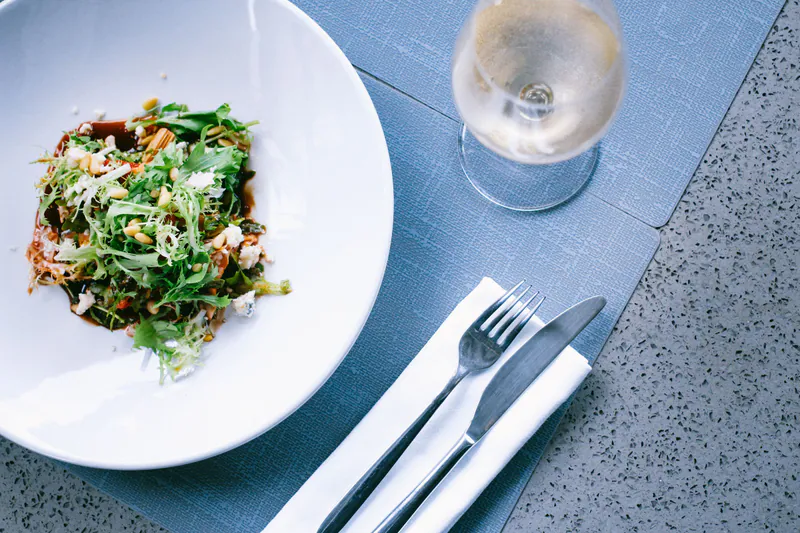
- Serve with a glass of young Castelli Romani white wine and a sharp green salad.
Food safety
- Wash hands, boards and knives after handling raw meat, and keep it apart from salad and other ready-to-eat food.
- Cook pork until it reaches at least 63 °C in the centre and refrigerate leftovers within 2 hours.
Storage
- Keeps 4 days wrapped in the fridge. The crackling softens once chilled.
Reheating
- Best at room temperature; to re-crisp the skin, warm slices skin-side up in a 220 °C oven for 6–8 minutes.
Variations
- Porchetta umbra: The Umbrian style, from Norcia and nearby towns, uses wild fennel pollen or fronds generously alongside garlic and pepper.
- Porchetta di Ariccia with herbs and liver: Some porchettari tuck chopped pork liver and extra herbs into the roll before tying.
History
Spit-roasting whole boned pigs for feasts is an old tradition of central Italy. Ariccia's porchettari became famous in the twentieth century, and the town's festival, first held in 1950, helped make its porchetta the best known; it gained EU protected status in 2011.
Confidence: Commonly attributed
Original editorial recipe · FriendsPantry editorial · source: TasteAtlas (dish facts) · Not yet independently reviewed · Added
Recipe DNA
How this dish is built
Built from the recipe’s own sections. Each band’s width is its share of the dish by weight. Choose a component to see what it does.
For the porchetta
- Pork belly, one boneless, skin-on slab with the loin still attached, about 30 × 40 cm3 kg · 3000 g
- Salt40 g
- Garlic, finely chopped8 clove · 32 g
- Rosemary (fresh), leaves only, finely chopped (about 4 large sprigs)15 g
- Black pepper, coarsely ground1 tbsp · 7.2 g
- Fennel seeds, lightly crushed (optional)2 tsp · 3.9 g
- Red chilli flakes (optional)0.5 tsp · 0.9 g
- Olive oil2 tbsp · 27 g
Reviews & corrections
Reviews come from signed-in cooks and appear after a moderator checks them. We never show made-up ratings.
You might also like
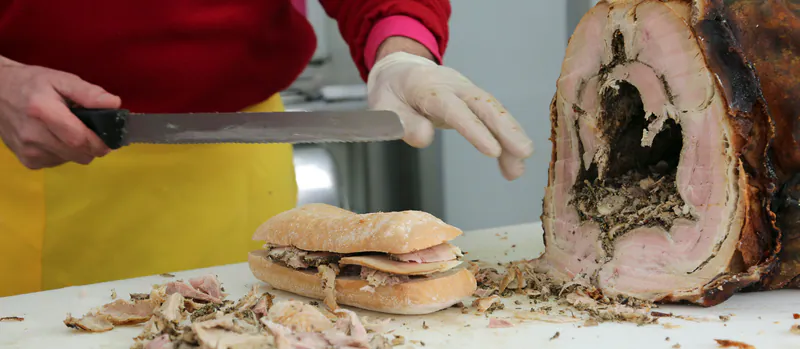
Porchetta sandwich (panino con la porchetta)
 Italian · 4 h 40 min · 1896 kcal
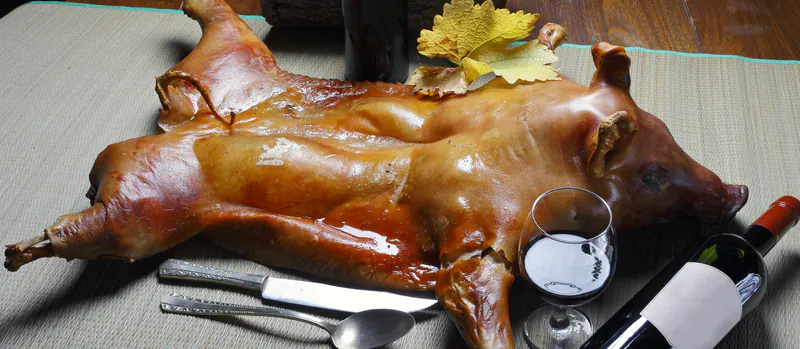
Cochinillo asado (Segovian roast suckling pig)
 Spanish · 3 h 15 min · 717 kcal
Risotto ai funghi porcini (porcini risotto)
Italian · 1 h 20 min · 619 kcal · Vegetarian
Trapizzino (Roman pizza pocket with chicken cacciatora)
Italian · 4 h 35 min · 473 kcal