
Limbă cu măsline (Romanian beef tongue with olives)
Non-vegetarian
Limbă cu măsline
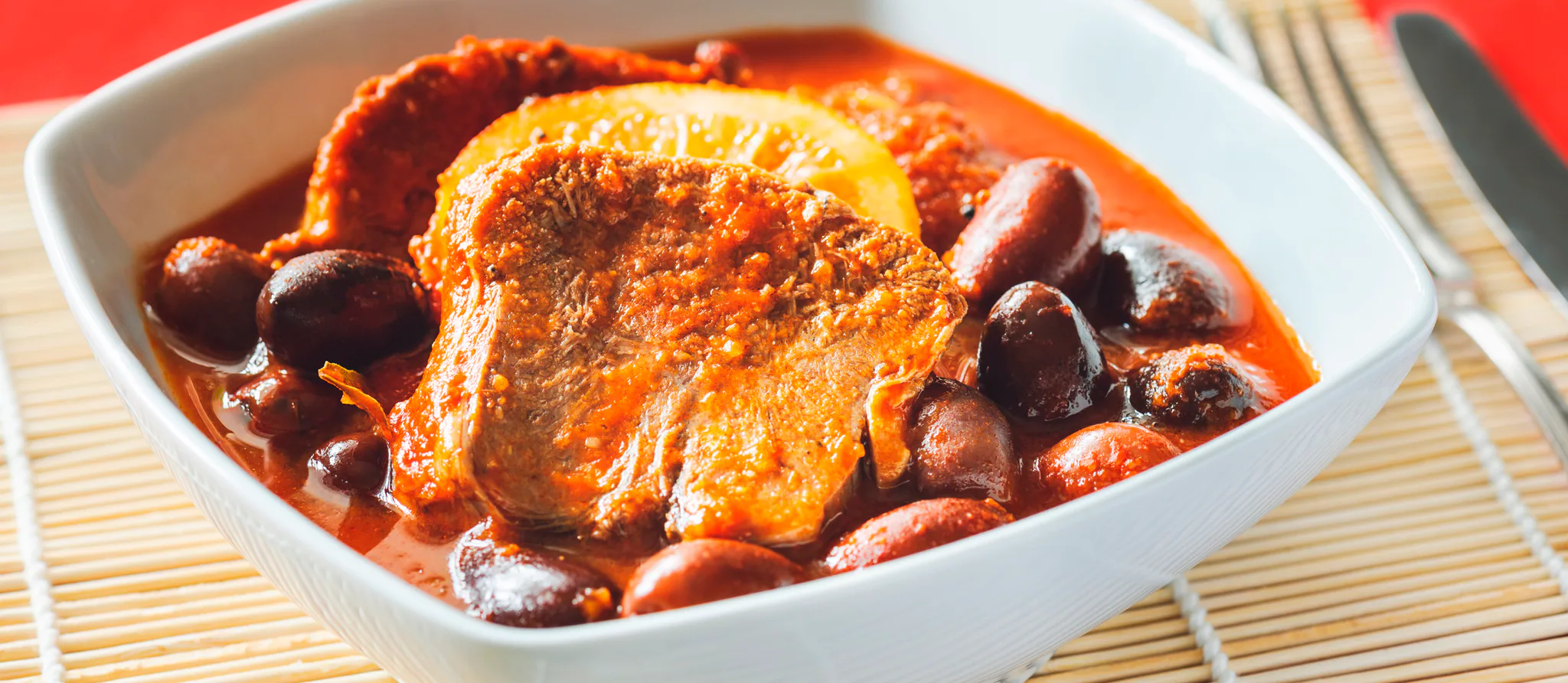
Slices of slowly simmered beef tongue stewed in a tomato and onion sauce with plenty of black olives, sharpened with lemon and finished with parsley and chives. A festive Romanian dish served warm or cold, especially around New Year.
Limbă cu măsline (Romanian beef tongue with olives) is a Romanian stew, ready in about 3 hours 50 minutes and made with beef tongue, tomato passata and black olives. It serves 6 and is rated intermediate to cook.
- Prep
- 20 min
- Cook
- 3 h 20 min
- Rest
- 10 min
- Total
- 3 h 50 min
- Serves
- 6
- Level
- Intermediate
- Calories
- 393
Main ingredients
Ingredients
For cooking the tongue
For the sauce
To finish
Method
Cooking the tongue
3 hStep 1
Put the tongue in a large pot with the onion (opens in a new tab) halves, carrot (opens in a new tab), celery (opens in a new tab), bay leaves (opens in a new tab), peppercorns (opens in a new tab), salt and water. Bring to the boil, skim, then simmer gently, partly covered, for 2½–3 hours until a skewer slides easily into the thickest part.
- 170 min
- low heat
- Stockpot / large pot (opens in a new tab)
Step 2
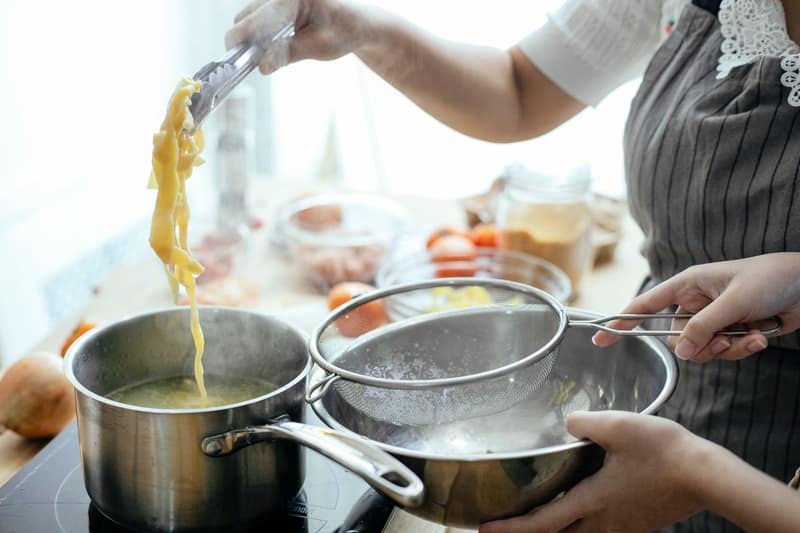
Lift out the tongue and, while it is still hot, slit and peel off the thick skin; it comes away easily when warm. Trim any gristle and fat from the root end. Strain and keep 300 ml of the broth.
Food safety: Hold the hot tongue with a cloth or fork while peeling.
How it looks · Photo: Katerina Holmes on Pexels
Sauce
37 minStep 3
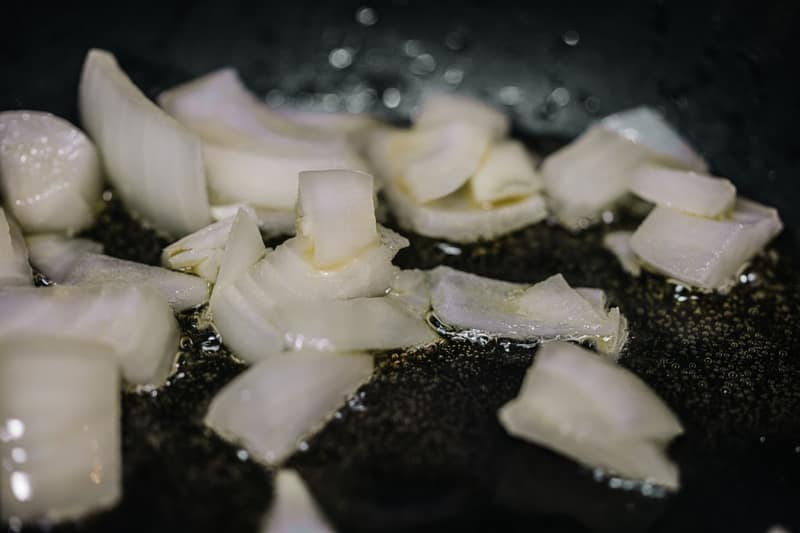
For the sauce, soften the chopped onions (opens in a new tab) in the oil for 10 minutes without colouring. Stir in the flour and tomato paste (opens in a new tab) for 1 minute, then add the passata, reserved broth, bay leaf (opens in a new tab), thyme (opens in a new tab), sugar (opens in a new tab) and pepper (opens in a new tab). Simmer for 10 minutes.
- 22 min
- medium-low heat
- Dutch oven / casserole pot (opens in a new tab)
How it looks · Photo: Magda Ehlers on Pexels Step 4
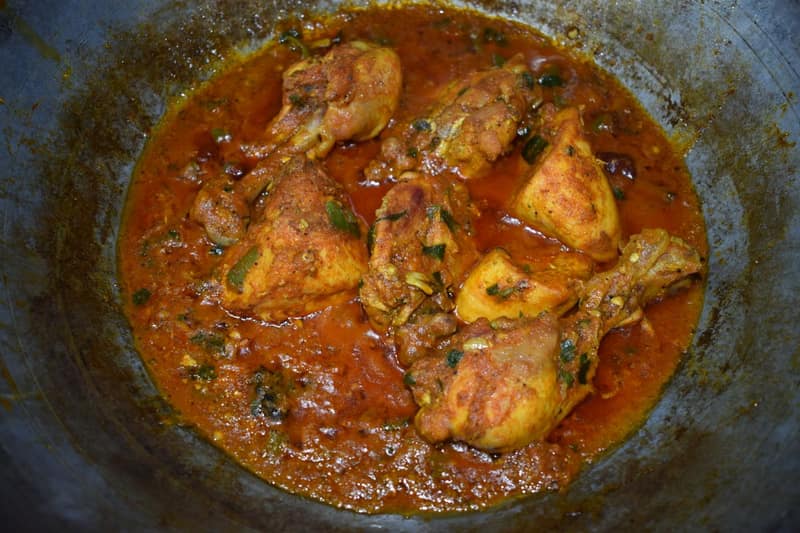
Cut the tongue into 1 cm slices. Add them to the sauce with the olives (opens in a new tab) and simmer gently for 15 minutes so the flavours mingle. Stir in the lemon juice (opens in a new tab) and taste for salt.
- 15 min
- low heat
- Chopping board (opens in a new tab)
How it looks · Photo: Bachir Mamud on Pexels
To finish
2 minStep 5
Scatter with parsley (opens in a new tab) and chives (opens in a new tab). Serve warm, or cool and chill to serve cold as a festive starter.
- 2 min
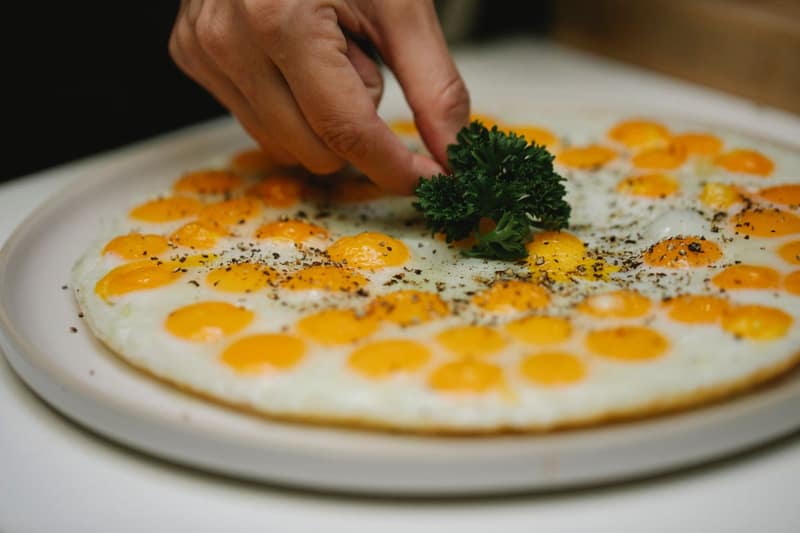
How it looks · Photo: Klaus Nielsen on Pexels
At a glance
1 · Cooking the tongue in a pan
 Beef tongue
 Onion
 Carrot
 Celery
 Bay leaves
 Black peppercorns
 Salt
then soften
2 · Sauce in a pan
 Sunflower oil
- Onion
 All-purpose flour
 Tomato paste
 Tomato passata
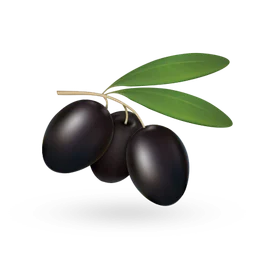 Black olives
- Bay leaves
- Dried thyme
 Sugar
- Black pepper
 Lemon juice
then scatter
3 · To finish in a bowl
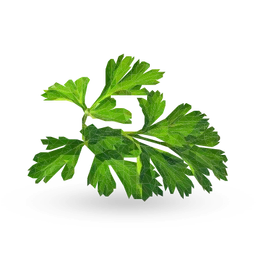 Parsley
 Chives
About this dish
- Origin
- Romania · Well documentedA classic of Romanian holiday tables and restaurants; similar tongue-and-olive dishes are made in Moldova.Also popular in MoldovaMore food from Romania
Romania - Dish
- Lunch · Dinner · Stews & braises · Appetizers & starters · Main courses
- Cooking method
- Simmered, Stewed
- Taste
- savoury, tangy, salty, rich
- Diet
- Dairy-free · No nut ingredients · Low-carb · High-proteinWorked out from the ingredients. How labels work
All labels
Non-vegetarian · Dairy-free · Egg-free · No nut ingredients · Alcohol-free · Pork-free · Low-carb · High-protein · Low-fat · Calorie-conscious - Good for
- Festive & celebration · Make-ahead
- Cook more with
- Beef tongue · Tomato passata · Black olives · Onion · Carrot · Celery
Allergens
- Contains: Wheatfrom all-purpose flour
- Contains: Glutenfrom all-purpose flour
- Contains: Celeryfrom celery
Based on typical versions of these ingredients and not verified allergen-free. Brands differ and cross-contact happens, so always check labels. For severe allergies, follow your clinician’s advice.
Nutrition
393 kcal per serving
Estimated1 serving ≈ 902 g · recipe makes 6
Where the energy comes from
- Protein 39%
- Carbohydrate 19%
- Fat 43%
| Nutrient | Per serving | Per 100 g* |
|---|---|---|
| Energy | 393 kcal | 44 kcal |
| Protein | 38.2 g | 4.2 g |
| Carbohydrate | 18.6 g | 2.1 g |
| Net carbohydrate | 14.8 g | 1.6 g |
| Sugars | 7.8 g | 0.9 g |
| Added sugars | 0.7 g | 0.1 g |
| Fibre | 3.8 g | 0.4 g |
| Fat | 18.7 g | 2.1 g |
| Saturated fat | 4.3 g | 0.5 g |
| Trans fat | 0.4 g | 0 g |
| Cholesterol | 248 mg | 27 mg |
| Sodium | 1658 mg | 184 mg |
| Salt equivalent | 4.1 g | 0.5 g |
Vitamins & minerals per serving
- Potassium
- 1108 mg
- Calcium
- 139 mg
- Iron
- 12.7 mg
- Magnesium
- 83 mg
- Vitamin A (RAE)
- 128 µg
- Vitamin C
- 23 mg
- Vitamin D
- —
- Vitamin B12
- 17.1 µg
- Folate (DFE)
- 41 µg
How these numbers were made
- Calculated from USDA FoodData Central (SR Legacy) per-100 g values and the listed quantities.
- *Per 100 g of combined raw ingredients; the cooked dish may weigh more or less.
- Beef tongue: Raw beef heart (FDC 168625) used as a stand-in; both are lean-to-moderately fatty beef variety meats, though tongue is somewhat higher in fat.
- “—” means the value isn’t known for enough of the ingredients; it is never zero by default.
- Values are estimates for guidance, not for medical dosing. U.S. Department of Agriculture, Agricultural Research Service. FoodData Central, 2019. fdc.nal.usda.gov.
Good to know
Tips
- The tongue can be cooked a day ahead and kept in its broth in the fridge.
- Use the leftover broth for soup.
Common mistakes
- Letting the tongue cool before peeling; the skin then sticks stubbornly.
Serve with
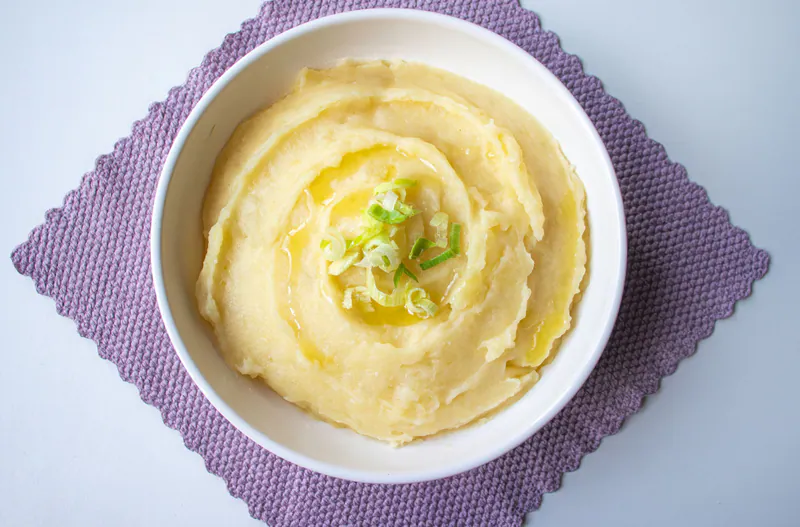
- Serve with mashed potatoes, mămăligă (polenta), rice or crusty bread.
Food safety
- Cool the cooked dish quickly and refrigerate within 2 hours.
Storage
- Keeps 3 days in the fridge; it improves overnight.
Reheating
- Warm gently in a covered pan until steaming hot.
Variations
- Limbă cu sos de măsline și vin: A splash of dry white wine is added to the sauce with the passata.
- Pork or veal tongue: Smaller tongues cook in about 1½ hours.
Original editorial recipe · FriendsPantry editorial · source: TasteAtlas (dish facts) · Not yet independently reviewed · Added
Recipe DNA
How this dish is built
Built from the recipe’s own sections. Each band’s width is its share of the dish by weight. Choose a component to see what it does.
The body of the dish
For the sauce
- Sunflower oil3 tbsp · 41 g
- Onion, finely chopped2 piece · 220 g
- All-purpose flour1 tbsp · 7.8 g
- Tomato paste2 tbsp · 33 g
- Tomato passata400 ml · 416 g
- Black olives, black olives, pitted; Kalamata or Greek-style200 g
- Bay leaves1 leaf · 0.2 g
- Dried thyme0.5 tsp · 0.5 g
- Sugar1 tsp · 4.2 g
- Black pepper0.5 tsp · 1.2 g
- Lemon juice1 tbsp · 15 g
Reviews & corrections
Reviews come from signed-in cooks and appear after a moderator checks them. We never show made-up ratings.
You might also like
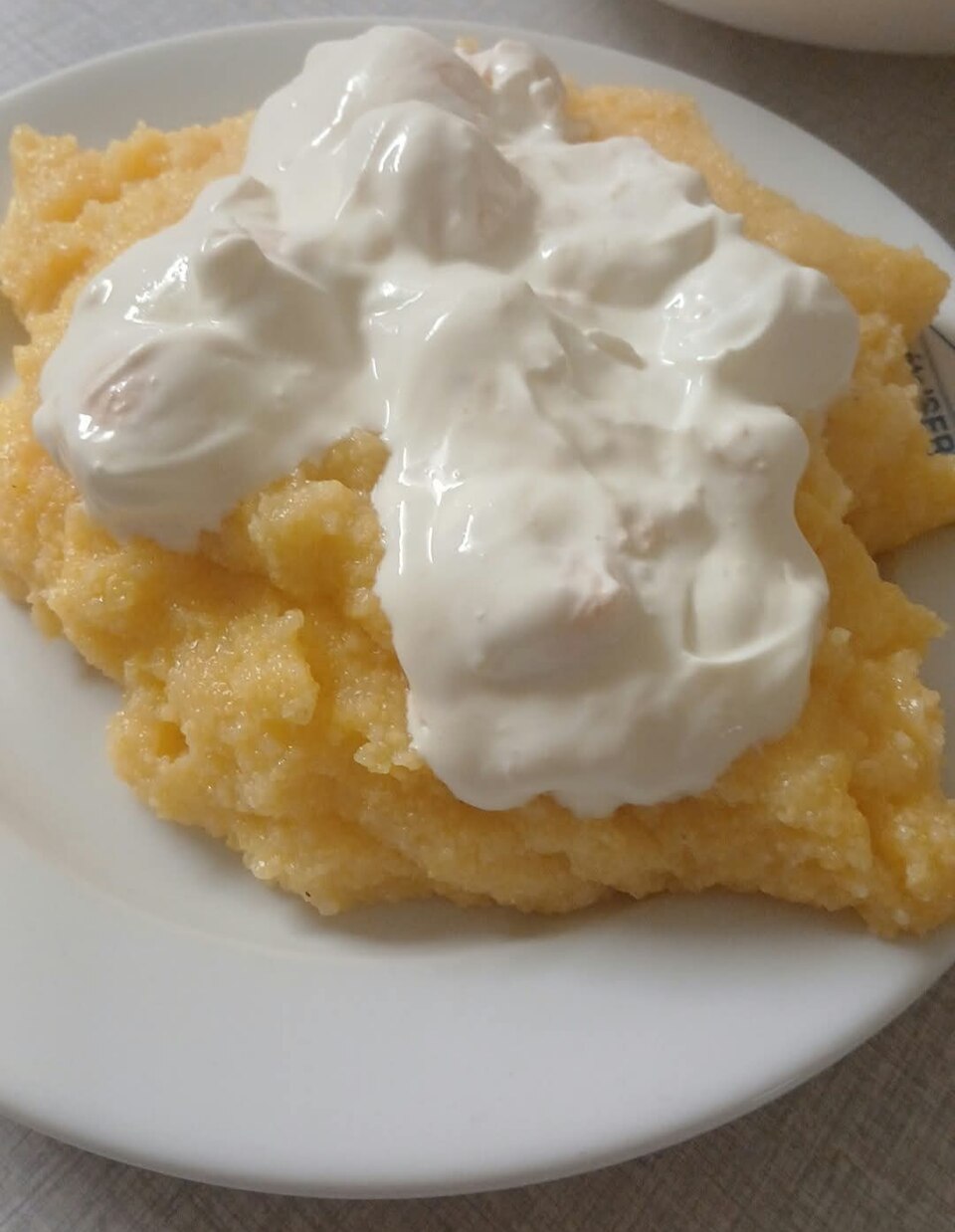
Mămăligă cu brânză și smântână
 Romanian · 35 min · 512 kcal · Egg optional
Sarmale
Romanian · 4 h · 453 kcal
Tacos de lengua (beef tongue tacos)
 Mexican · 3 h 55 min · 683 kcal
Fasole cu cârnați (Romanian beans with smoked sausages)
Romanian · 2 h 25 min · 697 kcal