
Onsen tamago (hot-spring eggs)
Non-vegetarian
温泉卵 · onsen tamago
Eggs held in water at about 64 °C until the yolk becomes thick and custardy while the white stays barely set and silky, served in a little seasoned dashi.
Onsen tamago (hot-spring eggs) is a Japanese egg dish, ready in about 50 minutes and made with egg and dashi. It serves 4 and is rated easy to cook.
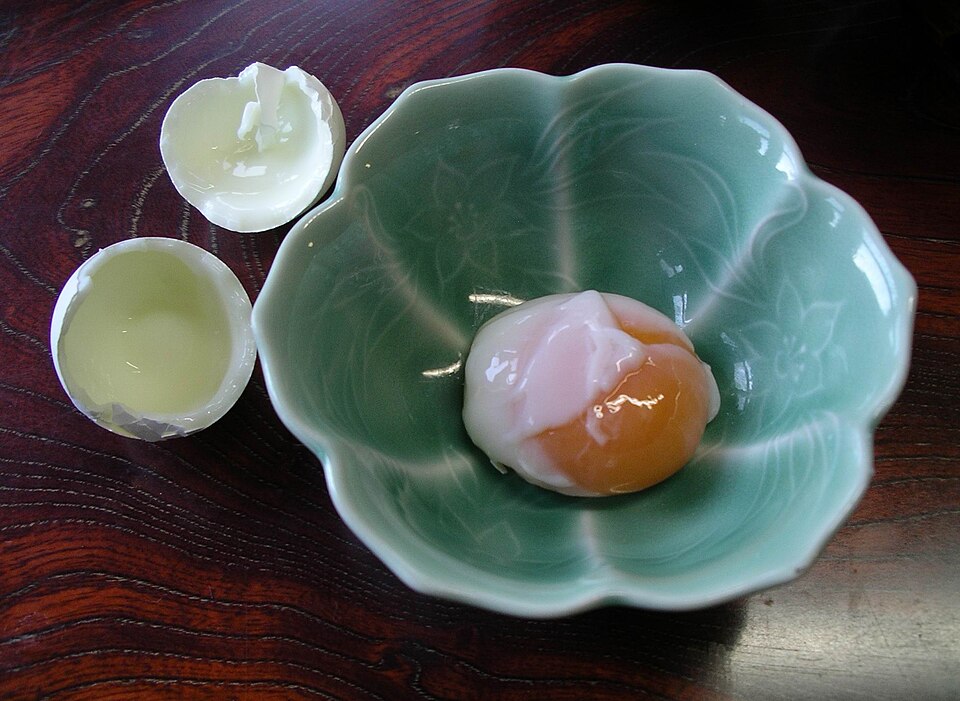
- Prep
- 5 min
- Cook
- 45 min
- Total
- 50 min
- Serves
- 4
- Level
- Easy
- Calories
- 81
Method
Step 1
Warm the dashi (opens in a new tab), soy and mirin (opens in a new tab) together, then cool to room temperature.
Step 2
Heat a large pan of water to 64–65 °C. Lower in the whole eggs (opens in a new tab) in their shells and hold the water at that temperature for 40–45 minutes, adjusting the heat or adding a splash of cold water as needed (a sous-vide circulator makes this easy).
- 45 min
- 64°C · hold 64–65 °C
- Food thermometer (opens in a new tab)
Use a thermometer — a few degrees higher sets the yolk firm.
Step 3
Crack each egg (opens in a new tab) gently into a small bowl; the loose outer white can be poured off. Spoon over the dashi (opens in a new tab) and top with spring onion (opens in a new tab).
- 2 min
About this dish
- Origin
- Japan · Well documentedNamed after the eggs traditionally cooked in the water of Japanese hot springs (onsen).More food from Japan
- Dish
- Breakfast · Lunch · Dinner · Egg dishes · Side dishes
- Cooking method
- Poached, Sous vide
- Taste
- umami, creamy, mild
- Diet
- Pescatarian · Dairy-free · No nut ingredients · Low-carbWorked out from the ingredients. How labels work
All labels
Pescatarian · Non-vegetarian · Flexitarian-friendly · Dairy-free · No nut ingredients · Pork-free · Beef-free · Low-carb
Allergens
- Contains: Eggsfrom egg
- Contains: Fishfrom dashi
- Contains: Wheatfrom soy sauce
- Contains: Glutenfrom soy sauce
- Contains: Soyfrom soy sauce
Based on typical versions of these ingredients and not verified allergen-free. Brands differ and cross-contact happens, so always check labels. For severe allergies, follow your clinician’s advice.
Nutrition
81 kcal per serving
Estimated1 serving ≈ 85 g · recipe makes 4
Where the energy comes from
- Protein 38%
- Carbohydrate 3%
- Fat 59%
| Nutrient | Per serving | Per 100 g* |
|---|---|---|
| Energy | 81 kcal | 95 kcal |
| Protein | 7.2 g | 8.4 g |
| Carbohydrate | 0.6 g | 0.7 g |
| Net carbohydrate | 0.6 g | 0.7 g |
| Sugars | 0.2 g | 0.2 g |
| Added sugars | — | — |
| Fibre | 0 g | 0 g |
| Fat | 5 g | 5.9 g |
| Saturated fat | 1.6 g | 1.9 g |
| Trans fat | — | — |
| Cholesterol | 186 mg | 218 mg |
| Sodium | 274 mg | 320 mg |
| Salt equivalent | 0.7 g | 0.8 g |
Vitamins & minerals per serving
- Potassium
- 125 mg
- Calcium
- 30 mg
- Iron
- 0.9 mg
- Magnesium
- 10 mg
- Vitamin A (RAE)
- 81 µg
- Vitamin C
- 0 mg
- Vitamin D
- 1 µg
- Vitamin B12
- 0.7 µg
- Folate (DFE)
- 24 µg
How these numbers were made
- Calculated from USDA FoodData Central (SR Legacy) per-100 g values and the listed quantities.
- *Per 100 g of combined raw ingredients; the cooked dish may weigh more or less.
- Optional ingredients are not included: spring onion.
- Dashi: Home-prepared fish stock (FDC 172885) used as a stand-in for katsuobushi-kombu dashi; both are very low in energy.
- Mirin: Sake (FDC 167723) used as a stand-in; true mirin is sweeter, so sugar is underestimated.
- “—” means the value isn’t known for enough of the ingredients; it is never zero by default.
- Values are estimates for guidance, not for medical dosing. U.S. Department of Agriculture, Agricultural Research Service. FoodData Central, 2019. fdc.nal.usda.gov.
Good to know
Tips
- Serve on hot rice, udon or a salad; the yolk becomes the sauce.
Food safety
- Runny or lightly cooked eggs: the UK Food Standards Agency says hen eggs with the British Lion mark or from the Laid in Britain scheme can be eaten lightly cooked by everyone, including young children, pregnant people and older adults (but not people who are severely immunocompromised). Otherwise — and following USDA advice in the US — cook eggs until white and yolk are firm for vulnerable groups, or use pasteurised eggs. Duck, goose and quail eggs should always be cooked through.
- Holding at 64 °C does not make eggs reliably safe for vulnerable groups — use pasteurised or British Lion eggs.
Storage
- Cool in iced water and refrigerate in the shell for up to 2 days; warm in 50 °C water for 10 minutes to serve.
Original editorial recipe · FriendsPantry editorial · Not yet independently reviewed · Added · Updated
Recipe DNA
How this dish is built
Reviews & corrections
Reviews come from signed-in cooks and appear after a moderator checks them. We never show made-up ratings.
You might also like
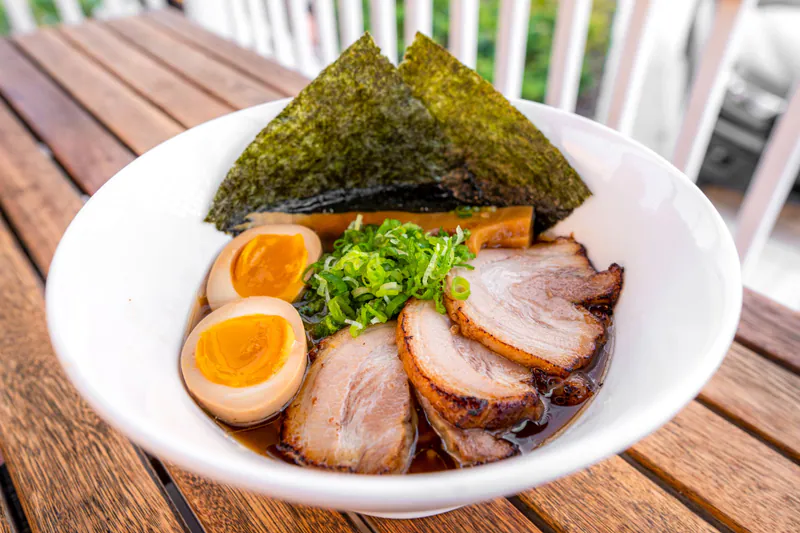
Ajitsuke tamago (ramen eggs)
 Japanese · 6 h 20 min · 116 kcal · Contains egg
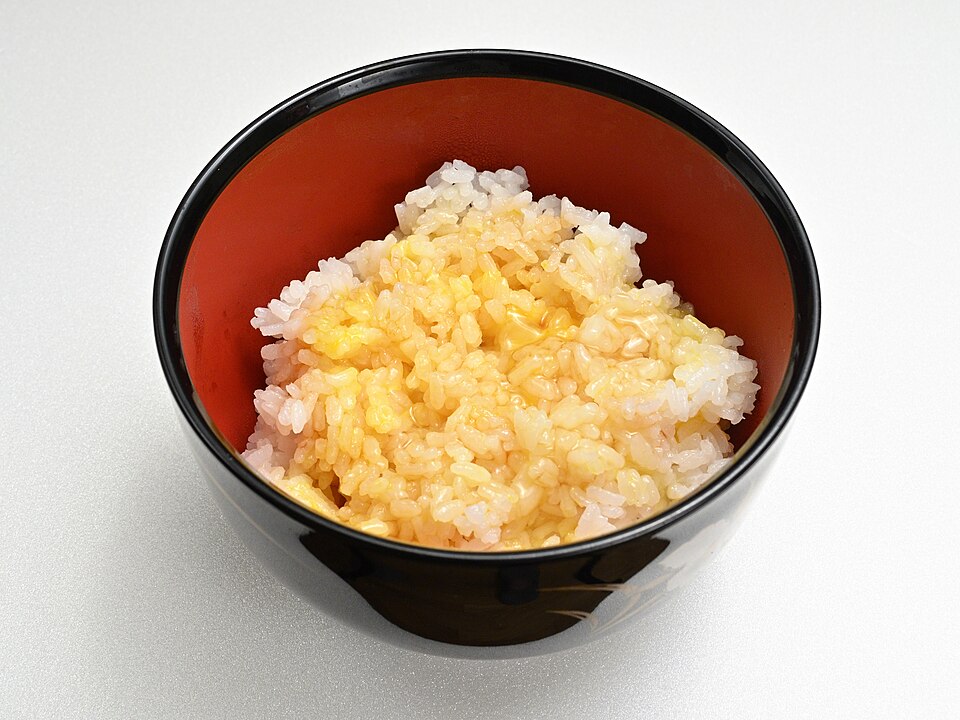
Tamago kake gohan (egg on rice)
Japanese · 32 min · 343 kcal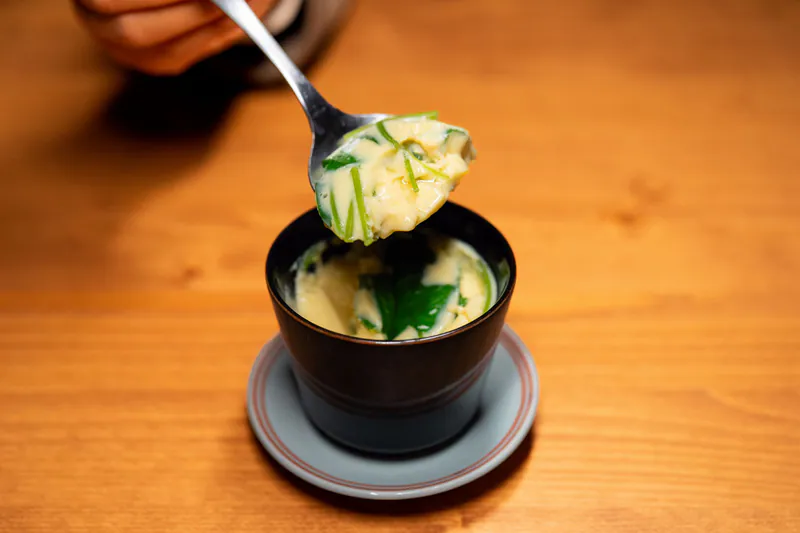
Chawanmushi
Japanese · 30 min · 105 kcal
Tamagoyaki
Japanese · 15 min · 228 kcal