
Advanced & modernist · intermediate
Gelification
Also: gelling, setting with agar or gelatine
Turning liquids into gels with gelatine, agar or other gelling agents.
What it is
Gelification sets liquids into solids of different firmness: jellies, panna cotta, terrines, fluid gels and fruit 'caviar'. Gelatine (from animal collagen) gives soft, melt-in-the-mouth gels; agar (from seaweed, vegetarian) gives firmer, heat-stable gels; others include gellan, carrageenan and pectin.
Why cooks use it: Gels hold flavour in new shapes and textures, from wobbly desserts to sliceable jellies and warm gels that keep their shape.
The science
Long molecules (proteins in gelatine, polysaccharides in agar) dissolve in hot liquid, then link into a network as they cool, trapping water. Agar must be boiled to dissolve, sets around 32–40 °C and does not melt again until about 85 °C. Gelatine dissolves at about 50–60 °C, sets in the fridge and melts near body temperature, which is why gelatine desserts melt in the mouth. Enzymes in raw pineapple, kiwi, papaya, fig and fresh ginger break down gelatine.
Molecular gastronomyFoams and gelsHydrocolloids: thickeners and gelling agentsChanging texture: tenderising and crisping
Step by step
Weigh the liquid and the gelling agent on a precise scale (0.1 g if possible).
Agar: disperse 0.5–1.5% agar by weight of liquid (5–15 g per litre) into cold liquid, bring to a boil and simmer 1–2 minutes, whisking.
Gelatine: bloom sheets or powder in cold water for 5–10 minutes, squeeze sheets, then dissolve in warm (not boiling) liquid at about 50–60 °C.
Pour into moulds; agar sets at room temperature in minutes, gelatine needs several hours in the fridge.
For a fluid gel, set an agar gel, then blend it smooth into a sauce-like gel.
Heat and timing
- Gelification 32–100 °C · Agar: boil to dissolve, sets about 32–40 °C, melts about 85 °C. Gelatine: dissolve at 50–60 °C (do not boil), sets below about 15 °C over hours, melts near 35 °C.
Time: Agar sets in 5–30 minutes; gelatine 2–6 hours (overnight for firm moulds).
How you know it’s right
- Agar mixture clear and smooth after boiling
- Gelatine fully dissolved, no granules
- Set gel wobbles but holds shape when unmoulded
Common mistakes
- Not boiling agar (it will not set)
- Boiling gelatine, which weakens it
- Raw pineapple, kiwi or papaya with gelatine
- Swapping agar and gelatine 1:1 by weight (agar is much stronger)
Troubleshooting
- Agar gel too firm or brittle
- Use less agar (toward 0.5%).
- Gelatine dessert did not set
- Check for raw protease fruits, allow more time, or increase gelatine.
- Agar weak in an acidic liquid
- Boil the agar in a less acidic part of the liquid and add the acid after it cools a little; use slightly more agar.
Restaurant DNA
How professionals do it
Modernist restaurants weigh hydrocolloids to 0.1 g as a percentage of liquid weight and combine them (for example agar with a little gelatine, or gellan) to fine-tune texture and heat stability.
At home
A 0.1 g jeweller's scale makes agar and gelatine reliable; start with 1% agar and adjust.
General professional practice — not any particular restaurant’s recipe.
Food safety
- Gelatine is an animal product: label it for vegetarians and for religious diets.
- Hot agar sets fast; handle hot liquid carefully.
Practise it
Alouda
 Mauritian · 1 h 15 min · 230 kcal · Vegetarian
Hong Kong-style mango pudding
 Cantonese · 4 h 18 min · 130 kcal
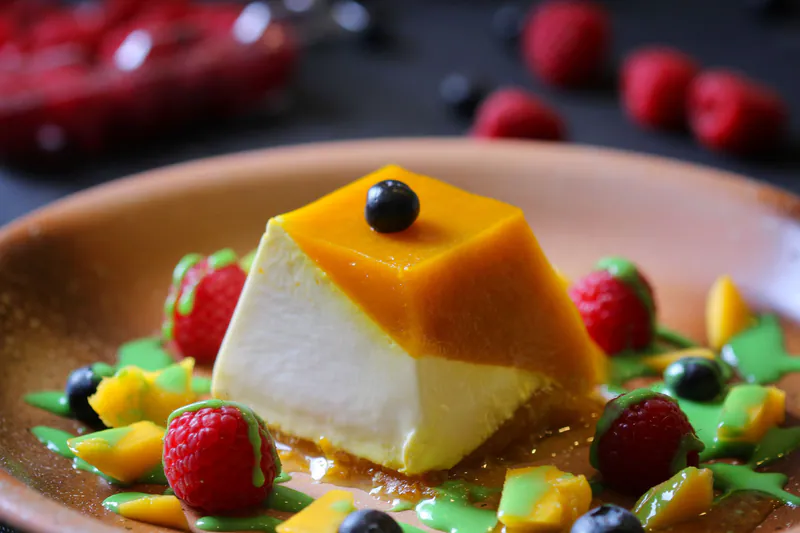
Panna cotta
 Italian · 4 h 20 min · 432 kcal
Salteñas
 Bolivian · 6 h 15 min · 646 kcal
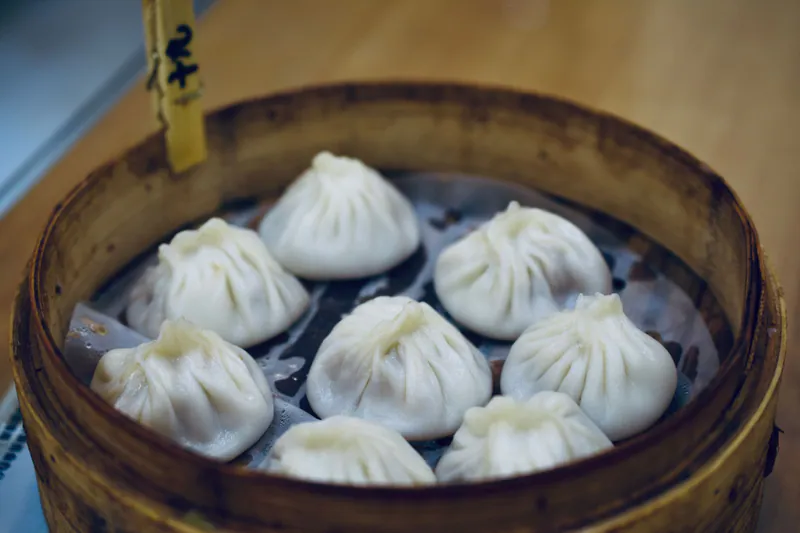
Xiaolongbao (soup dumplings)
Chinese · 3 h 25 min · 482 kcal