
Baking essentials · Baking aids
Gelatine
Animal-derived setting agent sold as powder or leaves; melts in the mouth and gives a soft, wobbly set.
Also called: gelatin, jelatin, leaf gelatine
What it is
Gelatine is a protein made from collagen in pork skin, beef bones and hides or fish. Powder and leaf (sheet) gelatine set liquids into soft, elastic gels that melt at about body temperature, giving a melt-in-the-mouth quality agar cannot match. Leaves come in strength grades (bronze, silver, gold, platinum), so the number needed varies. Raw pineapple, kiwi, papaya and fresh ginger contain enzymes that stop it setting unless cooked.
How it’s used
- Panna cotta and mousses
- Jellies and terrines
- Marshmallows and gummies
- Cheesecakes and bavarois
- Stabilising whipped cream
Characteristics
- Texture
- Soft, wobbly, melt-in-the-mouth set.
- When cooked
- Bloom in cold liquid first, then dissolve in warm (not boiling) liquid; boiling weakens it.
- Sold as
- powder
- Cooking uses
- Used for thickening, Used for binding
- Common in
- International, Italian, French, British, American
Storage
Pantry-stable. Keep dry and sealed; it keeps for a long time.
Diet, allergens and safety
No major allergens in typical versions.
- Vegetarian
- Vegan
- Dairy-free
- Egg-free
- Gluten-free
- Nut-free
- Soy-free
- Caffeine-free
- Made from animal parts (often pork): unsuitable for vegetarians and vegans, and check the source for halal or kosher diets.
Nutrition per 100 g
- Energy
- 335 kcal
- Protein
- 85.6 g
- Carbohydrate
- 0 g
- Fat
- 0.1 g
- Fibre
- 0 g
- Sugars
- 0 g
USDA FoodData Central: Gelatins, dry powder, unsweetened.
Substitutes
Optional — what works if you don’t have it, and how it changes the dish.
- Agar agar — Use much less (roughly 1/4 to 1/2 the weight of powdered gelatine), boil it to activate, and expect a firmer, more brittle set.
Related ingredients
Recipes with gelatine
Hong Kong-style mango pudding
 Cantonese · 4 h 18 min · 130 kcal
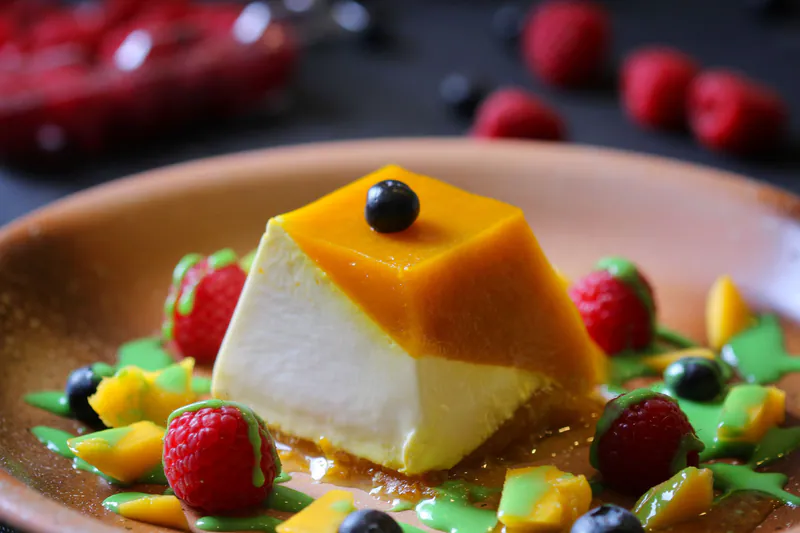
Panna cotta
 Italian · 4 h 20 min · 432 kcal
Salteñas
 Bolivian · 6 h 15 min · 646 kcal
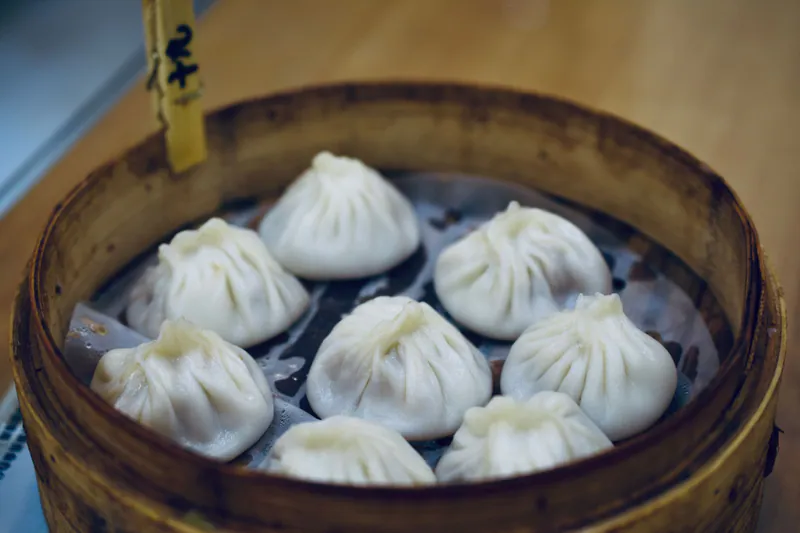
Xiaolongbao (soup dumplings)
Chinese · 3 h 25 min · 482 kcal
More baking aids
Baking aids
Agar agar
Plant-based setting agent from red seaweed; sets firm at room temperature and must be boiled to work.
1 recipe
Baking aids
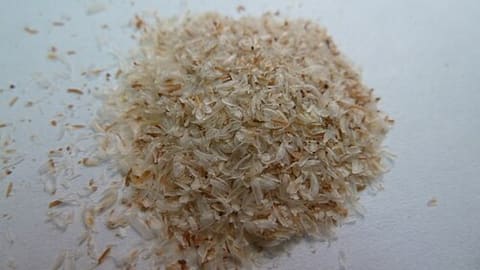
Psyllium husk
Seed husk that forms a thick gel with water; the binder that makes gluten-free bread rollable and springy.
2 recipes
Baking aids
Vital wheat gluten
Concentrated wheat protein powder used to strengthen bread doughs and to make seitan.
1 recipe
Baking aids
Gelatine
Gelatine powder or leaves made from animal collagen; sets mousses, jellies and panna cotta with a gentle wobble.
No recipes yet