
Heat and cooking · intermediate
How proteins set when cooked
Heat, acid, salt and beating unfold proteins, which then bond together: this is why eggs set, meat firms and milk curdles.
What happens
Proteins are long chains folded into precise shapes. Heat, acid, salt, alcohol or vigorous beating can unfold them (denaturation). Unfolded proteins then tangle and bond with each other (coagulation), turning a liquid into a solid or a soft solid into a firm one. Different proteins unfold at different temperatures, which is why food changes in stages. In egg white, one protein sets at about 62–65 °C to a tender jelly while the main protein, ovalbumin, firms at about 80 °C. In meat, the muscle protein myosin unfolds at about 50 °C, connective-tissue collagen shrinks at about 60–65 °C and squeezes out juice, and another protein, actin, sets at about 66–73 °C, after which meat gets noticeably drier and tougher.
Why it matters in the kitchen
Doneness is protein chemistry. A few degrees separate a juicy chicken breast from a dry one, a silky custard from a scrambled one, and soft paneer from rubbery paneer. Using temperature, not just time, gives control.
Temperatures and conditions
- Fish muscle proteins set; fish is moist and just opaque 50–60 °C · Food safety for fish is usually given as 63 °C; see the food-safety topic.
- Myosin unfolds; meat starts to firm 50–55 °C
- Egg white begins to set 62–65 °C
- Collagen shrinks and squeezes out juice 60–65 °C
- Egg yolk thickens, then sets 65–70 °C
- Actin sets; meat becomes dry and firm 66–73 °C
- Egg white fully firm from 80 °C
- Egg custards curdle 82–88 °C · Sugar and dilution raise the setting point; undiluted eggs scramble far lower.
In practice
- Boiled, poached and fried eggs.
- Paneer: hot milk curdled with lemon juice or vinegar, then pressed.
- Shrimp turning from translucent to opaque and curling.
- Ceviche, where lime juice turns raw fish opaque without heat.
- Yogurt splitting in a curry that boils too hard.
Myths and facts
Myth: Acid in ceviche or a lime marinade 'cooks' fish, so it is safe like cooked fish.
Fact: Acid denatures proteins so the fish looks cooked, but it does not reliably kill bacteria or parasites the way heat does. Use very fresh fish, ideally frozen first as food-safety agencies advise for raw fish.
Myth: Cooking destroys the protein in eggs or meat.
Fact: Denatured protein is still protein. Cooking generally makes egg protein easier to digest.
Myth: Long boiling makes meat tender.
Fact: Lean, tender cuts get tougher and drier the longer they cook past about 70 °C. Only cuts rich in collagen, like shank or shoulder, become tender with long, gentle cooking, because their collagen turns to gelatin.
Use it to cook better
- Use an instant-read thermometer and take lean meat off the heat a few degrees early: carry-over heat will finish it.
- Cook custards and kheer-style egg mixtures gently, stirring, and strain if a few lumps form.
- To stop yogurt splitting in a curry, use full-fat yogurt, whisk it smooth, temper it with some hot gravy, add it over low heat and stir; a little gram flour or cornflour whisked in also helps.
- For soft paneer, add the acid at a gentle simmer, stop as soon as the whey turns clear-green, and don't overpress.
- Brine or salt lean meat ahead: salt partly unfolds muscle proteins so they hold more water.
Try it at home
Eggs at different temperatures
You need: 4 eggs, A pot of water, A kitchen thermometer, A bowl of iced water
- Heat water to 63 °C and hold it there (adjust the flame or add cold water). Add 2 eggs in their shells for 45 minutes.
- Bring a second pot to a boil and cook 2 eggs for 10 minutes, then cool them in iced water.
- Crack one of each onto a plate and compare.
What you’ll see: At 63 °C the white is barely set and milky while the yolk is thick and spoonable; at 100 °C both are firm. Different proteins set at different temperatures.
Eggs held at 63 °C are not fully cooked. Use pasteurised eggs for this if anyone vulnerable (pregnant, very young, elderly or unwell) will eat them.
Going deeper
Coagulation temperature depends on the conditions. Sugar and water between protein molecules raise the setting point, so a custard sets at a higher temperature than a plain egg. Acid lowers it and salt changes it, which is how both curdle milk for paneer. Collagen is a special case: below about 60 °C it is tough, at about 60–65 °C it shrinks, and with long heating, faster above about 70 °C, it slowly dissolves into gelatin. That is why tough cuts need low-and-slow braising, while tender cuts need fast, precise cooking.
Ingredients it affects most
Techniques that rely on it
Worth double-checking
- Meat-protein denaturation temperatures vary by species and source by several degrees; the ranges shown are typical values from McGee and Serious Eats.
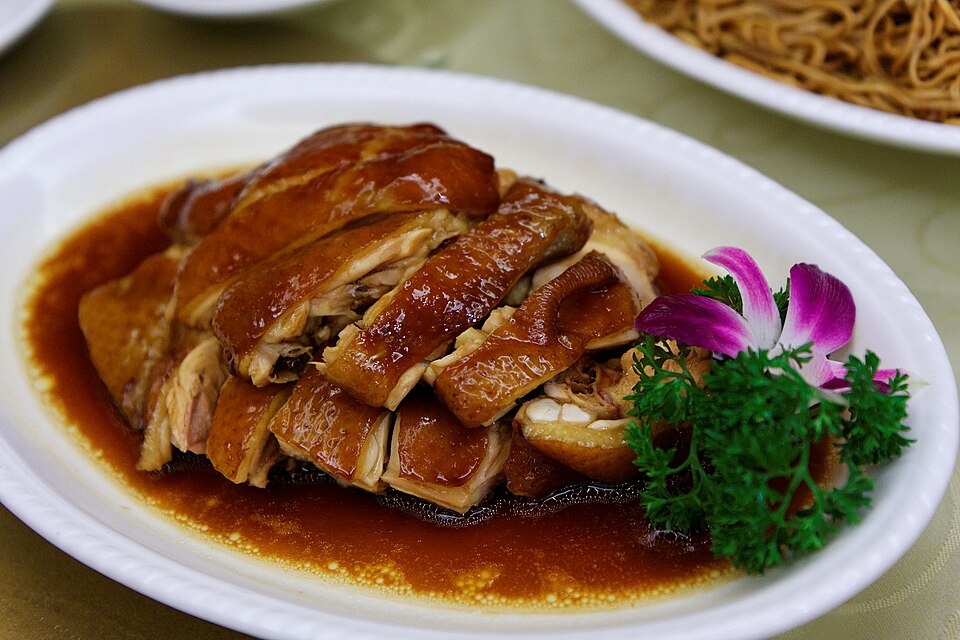
 Cantonese · 1 h 5 min · 466 kcal
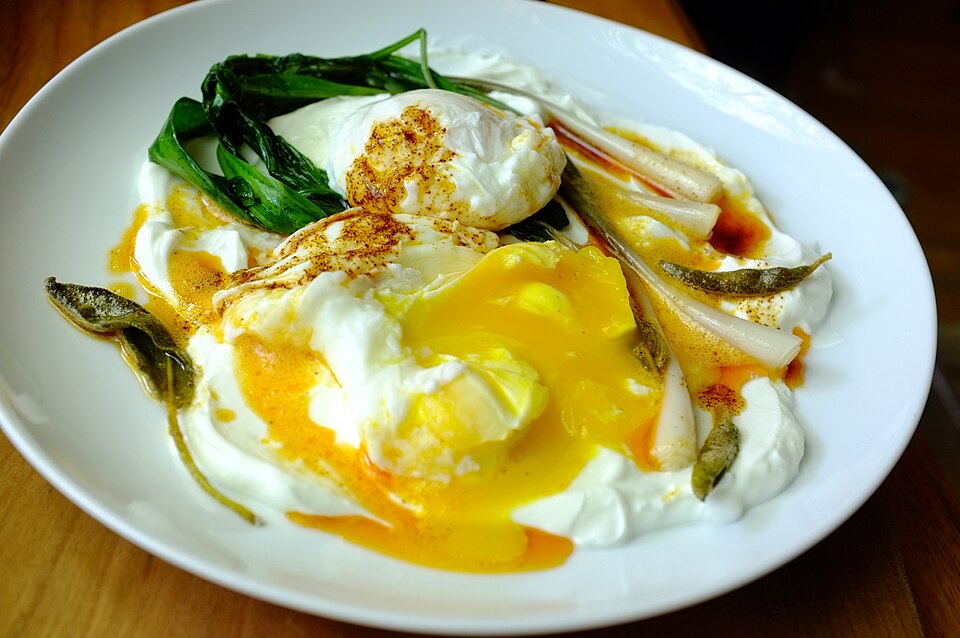
 Turkish · 15 min · 402 kcal ·
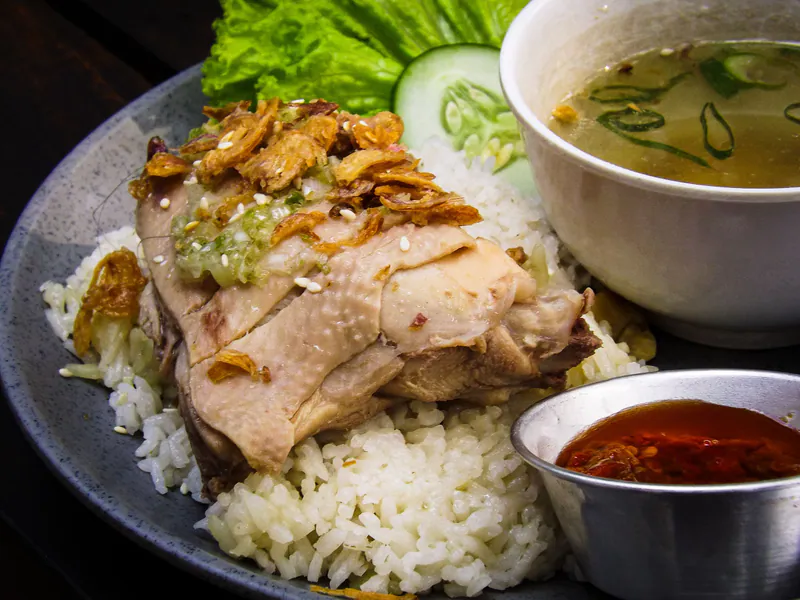
 Singaporean · 1 h 35 min · 803 kcal
 Finnish · 45 min · 638 kcal

 Burmese · 1 h 10 min · 688 kcal
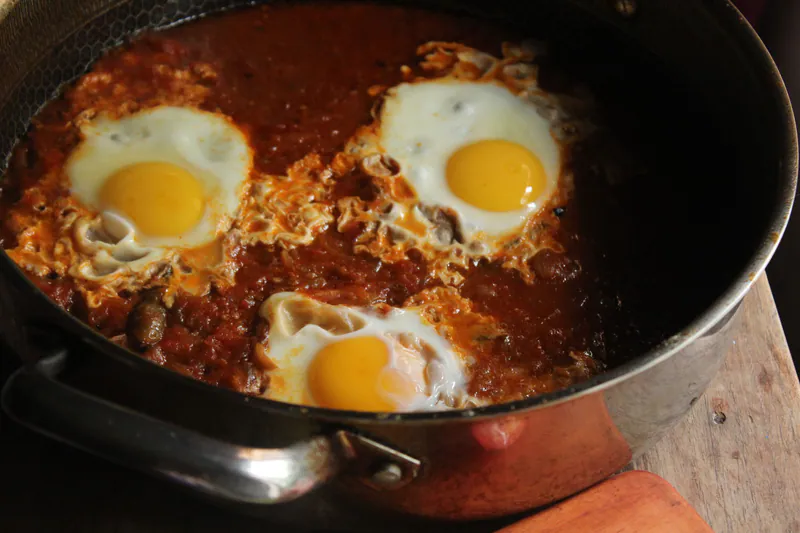
 Tunisian · 40 min · 337 kcal ·
 Australian · 12 min · 573 kcal ·