Cuisine
Ethiopian and Eritrean
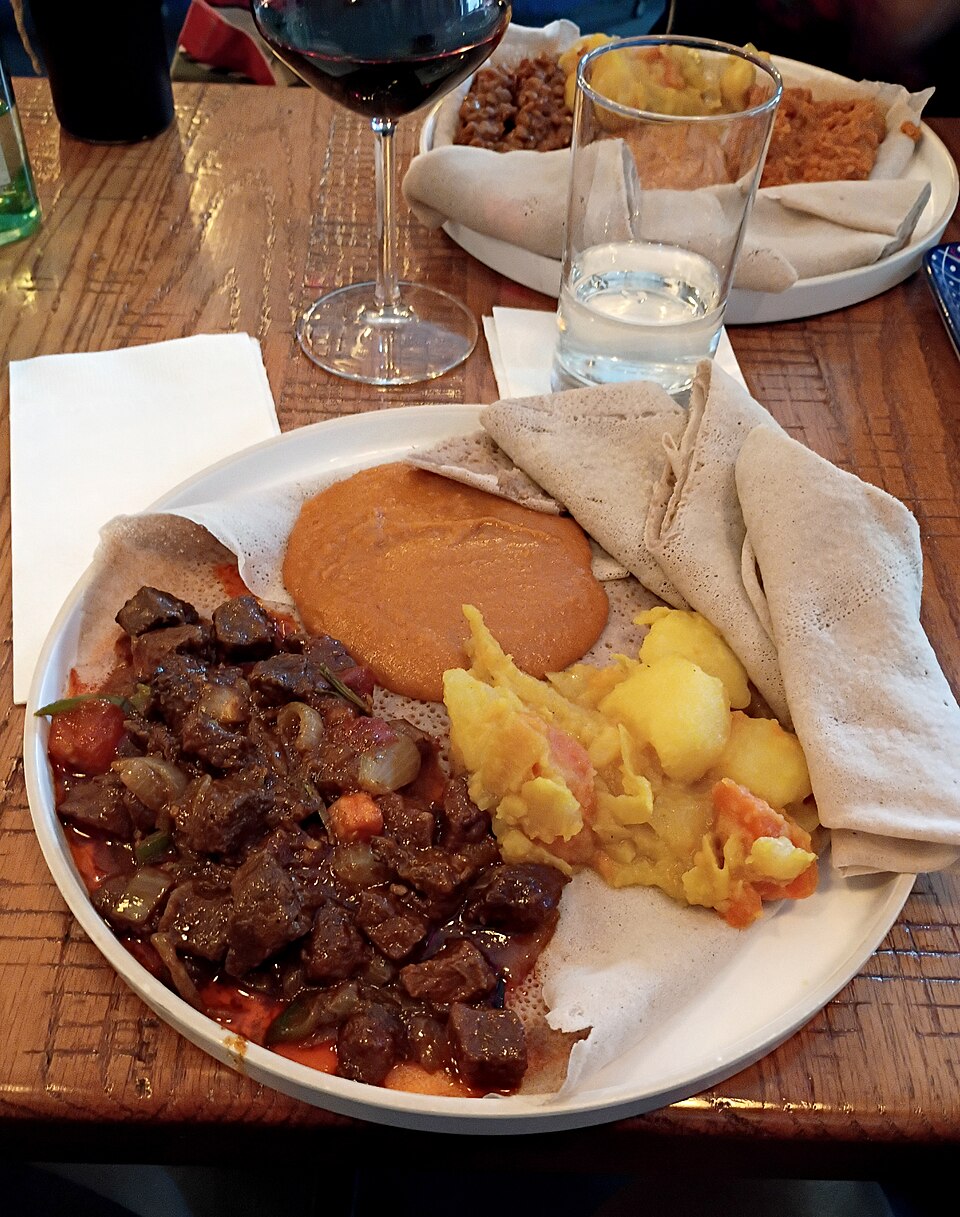
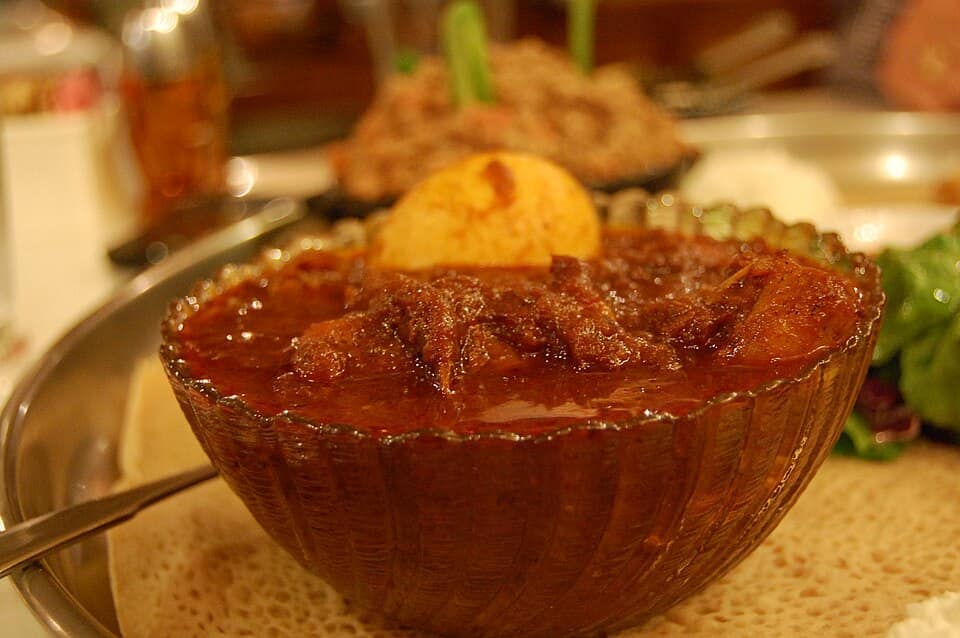
A highland cuisine of stews (wat) and sautés (tibs) eaten with injera, the spongy fermented teff flatbread, seasoned with berbere and spiced butter, with a large vegan repertoire for fasting days.
Flavour character: Deep, slow-cooked and warmly spiced: onions cooked down at length, berbere (chilli and warm spices), aromatic niter kibbeh, sour notes from fermented injera, and raw heat from mitmita and awaze.
History
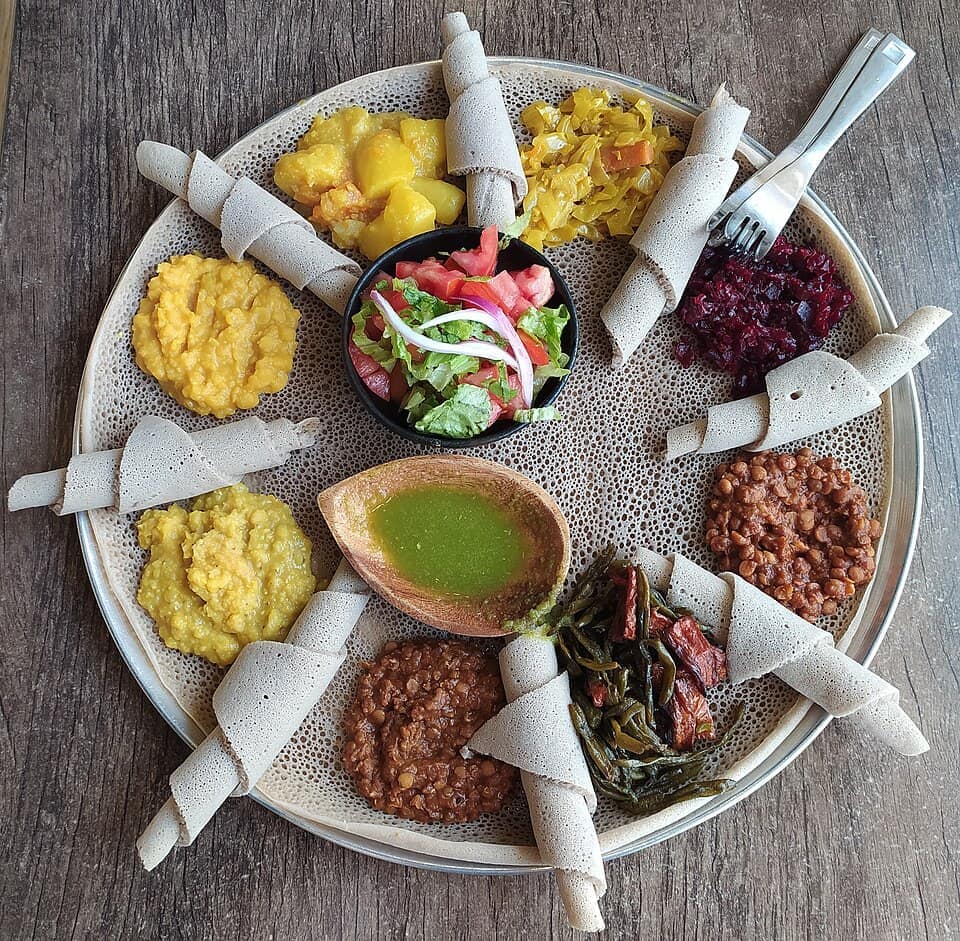
Teff was domesticated in the Ethiopian highlands and is still the grain for injera. Coffee (Coffea arabica) is native to south-western Ethiopia, and the coffee ceremony is central to hospitality. The Ethiopian and Eritrean Orthodox churches set many fasting days (Wednesdays, Fridays and long seasons such as Lent) when animal products are avoided, which produced a rich range of lentil, chickpea and vegetable dishes. Eritrea adds Italian influences from colonial rule (1890–1941).
Well documented
Geography and influences
High plateaus and mountains split by the Rift Valley, with lowlands towards Sudan, Somalia and the Red Sea: teff, barley, sorghum, pulses, cattle and coffee.
- Indigenous highland agriculture (teff, ensete, coffee)
- Orthodox Christian fasting
- Muslim communities (Harar)
- Red Sea and Indian Ocean spice trade
- Italian colonial period (Eritrea)
Regional variations
- Amhara and Tigray highlands
- Classic wat and injera cooking; Tigrayan tsebhi and ga'at.
- Gurage
- Kitfo (minced raw or lightly warmed beef) and kocho bread.
- Harar
- Muslim walled city with distinct spice use and coffee traditions.
- Eritrea
- Similar stews (called tsebhi) plus Italian pasta and coffee habits.
Festive and seasonal food
- Doro wat with eggs at Genna (Christmas) and Fasika (Easter), breaking the long fasts
- Kitfo at Meskel in Gurage areas
- Coffee ceremony at every gathering
Signature dishes
- Injera
- Doro wat
- Misir wot
- Shiro
- Beef tibs
- Kitfo
- Gomen
- Atkilt wat
- Zigni
- Azifa
- Tikil gomen
- Chechebsa
- Ethiopian coffee (jebena buna)
Not on the site yet: Beyaynetu (mixed fasting platter), Genfo, Dulet, Firfir
 Ethiopian · 55 min · 268 kcal ·