
 Estonian · Appetizers & starters
Sült (Estonian pork aspic)
Non-vegetarian
Sült
Pork hock, trotters and shoulder simmered for hours with onion, carrot and spices until the broth is rich in natural gelatine, then the meat is chopped, set in its own clear jelly and sliced cold. A fixture of the Estonian Christmas table, served with boiled potatoes, mustard and horseradish.
Sült (Estonian pork aspic) is an Estonian starter, ready in about 12 hours 40 minutes and made with pork knuckle (ham hock, fresh) and pig's trotters. It serves 8 and is rated intermediate to cook.
No licensed photograph of this dish yet.
- Prep
- 40 min
- Cook
- 4 h
- Rest
- 8 h
- Total
- 12 h 40 min
- Serves
- 8
- Level
- Intermediate
- Calories
- 887
Main ingredients
Ingredients
For the broth
To serve
Method
Broth
4 h 50 minStep 1
Put the hock, trotters and shoulder in a large pot, cover with cold water and bring to the boil. Boil for 5 minutes, drain, rinse the meat and clean the pot; this gives a clear jelly.
- 15 min
- high heat
- Stockpot / large pot (opens in a new tab)
Step 2
Return the meat to the pot with the 3.5 l water and bring slowly to a bare simmer. Skim well, then simmer very gently, uncovered or with the lid ajar, for 3½–4 hours until the meat falls off the bone. Add the onion (opens in a new tab), carrots (opens in a new tab), garlic (opens in a new tab), peppercorns (opens in a new tab), allspice (opens in a new tab) and bay leaves (opens in a new tab) for the last hour, and the salt for the last 30 minutes.
- 230 min
- low heat
Do not let it boil hard, or the broth turns cloudy.
Step 3
Lift out the meat and carrots (opens in a new tab). Strain the broth through a cloth-lined sieve and boil it down to about 1.2 litres. Test the set by chilling a spoonful on a saucer for 10 minutes; it should firm up. Taste for salt.
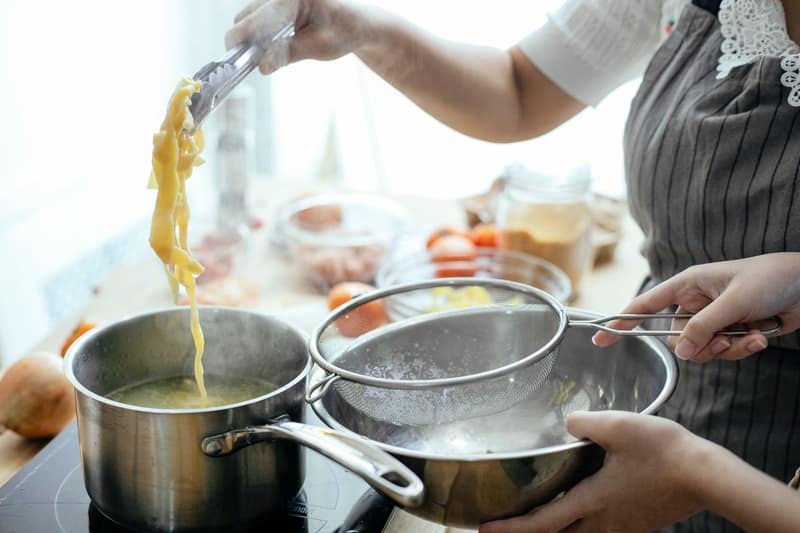
How it looks · Photo: Katerina Holmes on Pexels Step 4
When cool enough to handle, pick all the meat and some of the soft skin from the bones and chop finely. Slice the carrots (opens in a new tab) into rounds.
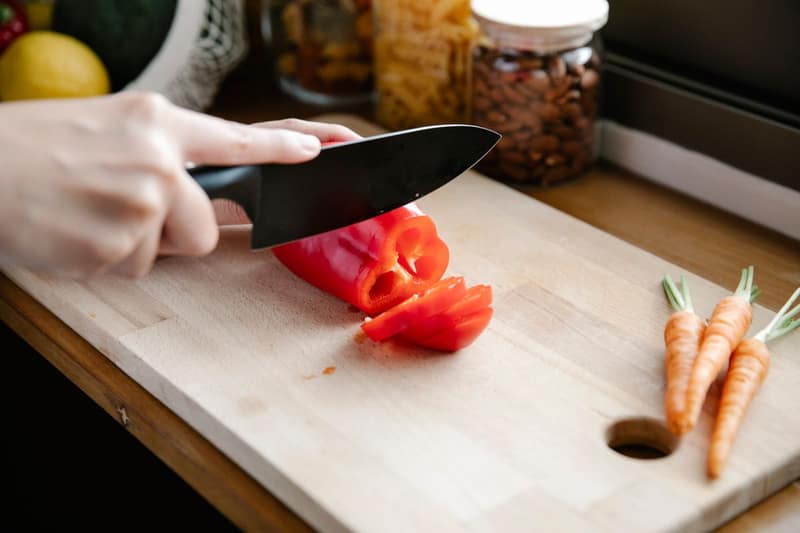
How it looks · Photo: Sarah Chai on Pexels Step 5
Arrange the carrot (opens in a new tab) rounds in the base of two loaf tins (opens in a new tab) or bowls, add the meat and pour over the hot broth to cover. Cool, then refrigerate for at least 8 hours or overnight until firmly set. Lift off any fat from the surface.
Food safety: Cool the broth and meat quickly and refrigerate within 2 hours.
To serve
5 minStep 6
Dip the tin briefly in hot water, turn out the sült and slice. Serve cold with mustard, horseradish (opens in a new tab) and warm boiled potatoes (opens in a new tab).
- 5 min
At a glance
1 · Broth in a pot
 Pork knuckle (ham hock, fresh)
- Pig's trotters
- Pork shoulder
 Onion
 Carrot
 Garlic
 Black peppercorns
 Allspice
 Bay leaves
 Salt
then dip
2 · To serve in a bowl
 Prepared mustard
 Prepared horseradish
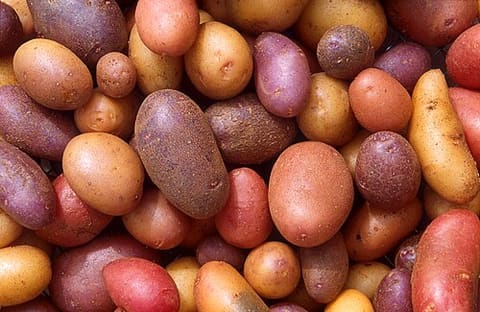 Potato
About this dish
- Origin
- Estonia · Well documentedSimilar meat jellies are made across the Baltic and Eastern Europe (kholodets, šaltiena, galerts); Estonian sült is usually pork-based, occasionally made with veal, chicken or fish.More food from Estonia
Estonia - Dish
- Lunch · Dinner · Appetizers & starters · Main courses
- Cooking method
- Simmered, Boiled
- Taste
- savoury, mild, peppery
- Diet
- No gluten ingredients · Dairy-free · No nut ingredients · High-proteinWorked out from the ingredients. How labels work
All labels
Non-vegetarian · No gluten ingredients · Dairy-free · Egg-free · No nut ingredients · No added sugar · Alcohol-free · Beef-free · High-protein · Low-sodium - Good for
- Festive & celebration · Make-ahead
- Cook more with
- Pork knuckle (ham hock, fresh) · Pig's trotters · Pork shoulder · Onion · Carrot · Garlic
Allergens
- May contain: Milkfrom prepared horseradish
- May contain: Eggsfrom prepared horseradish
- Contains: Mustardfrom prepared mustard, prepared horseradish
- May contain: Sulphitesfrom prepared mustard, prepared horseradish
Based on typical versions of these ingredients and not verified allergen-free. Brands differ and cross-contact happens, so always check labels. For severe allergies, follow your clinician’s advice.
Nutrition
887 kcal per serving
Estimated1 serving ≈ 986 g · recipe makes 8
Where the energy comes from
- Protein 26%
- Carbohydrate 18%
- Fat 56%
| Nutrient | Per serving | Per 100 g* |
|---|---|---|
| Energy | 887 kcal | 90 kcal |
| Protein | 56.5 g | 5.7 g |
| Carbohydrate | 40.1 g | 4.1 g |
| Net carbohydrate | 34.5 g | 3.5 g |
| Sugars | 3.6 g | 0.4 g |
| Added sugars | 0 g | 0 g |
| Fibre | 5.6 g | 0.6 g |
| Fat | 54.6 g | 5.5 g |
| Saturated fat | 18.8 g | 1.9 g |
| Trans fat | — | — |
| Cholesterol | 213 mg | 22 mg |
| Sodium | 1072 mg | 109 mg |
| Salt equivalent | 2.7 g | 0.3 g |
Vitamins & minerals per serving
- Potassium
- 1870 mg
- Calcium
- 138 mg
- Iron
- 5.1 mg
- Magnesium
- 119 mg
- Vitamin A (RAE)
- 132 µg
- Vitamin C
- 46 mg
- Vitamin D
- 5.1 µg
- Vitamin B12
- 2.2 µg
- Folate (DFE)
- 56 µg
How these numbers were made
- Calculated from USDA FoodData Central (SR Legacy) per-100 g values and the listed quantities.
- *Per 100 g of combined raw ingredients; the cooked dish may weigh more or less.
- Pork knuckle (ham hock, fresh): Fresh pork shoulder, lean and fat (FDC 167843) used as a stand-in; a fresh knuckle has more skin, collagen and bone.
- Pig's trotters: Fresh pork shoulder used as a stand-in for pig's trotters, which have no FDC SR Legacy entry; trotters are mostly skin, tendon and bone, so only part of the weight is eaten and they are richer in collagen.
- “—” means the value isn’t known for enough of the ingredients; it is never zero by default.
- Values are estimates for guidance, not for medical dosing. U.S. Department of Agriculture, Agricultural Research Service. FoodData Central, 2019. fdc.nal.usda.gov.
Good to know
Tips
- If your broth will not set, dissolve 10 g powdered gelatine in a little of it and stir it back in.
- A splash of vinegar on each slice is a common Estonian way to eat it.
Common mistakes
- Diluting the broth too much; it must be reduced well to set without added gelatine.
Serve with
- Serve with boiled potatoes, sharp Estonian mustard, horseradish and vinegar, alongside verivorst and mulgikapsad at Christmas.
Food safety
- Keep sült refrigerated and do not leave it out for more than 2 hours.
Storage
- Keeps 5 days covered in the fridge. Do not freeze; the jelly weeps on thawing.
Variations
- Chicken or veal sült: A lighter jelly made with a boiling fowl or veal shank plus a trotter or gelatine for the set.
- Kalasült: Fish in aspic, made with pike-perch or carp and a little gelatine.
Original editorial recipe · FriendsPantry editorial · source: TasteAtlas (dish facts) · Not yet independently reviewed · Added
Recipe DNA
How this dish is built
Built from the recipe’s own sections. Each band’s width is its share of the dish by weight. Choose a component to see what it does.
The liquid foundation
For the broth
- Pork knuckle (ham hock, fresh), fresh pork hock (about 1.2 kg), scrubbed1 piece · 1200 g
- Pig's trotters, split, scrubbed and singed clean2 piece · 700 g
- Pork shoulder, in one piece500 g
- Water3.5 l · 3500 g
- Onion, halved, skin on for colour1 piece · 110 g
- Carrot, peeled, whole2 piece · 120 g
- Garlic, peeled4 clove · 16 g
- Black peppercorns1 tsp · 3 g
- Allspice, whole berries1 tsp · 2 g
- Bay leaves3 leaf · 0.6 g
- Salt2.5 tsp · 15 g
Reviews & corrections
Reviews come from signed-in cooks and appear after a moderator checks them. We never show made-up ratings.
You might also like

Verivorst (Estonian blood sausage with barley)
Estonian · 4 h 10 min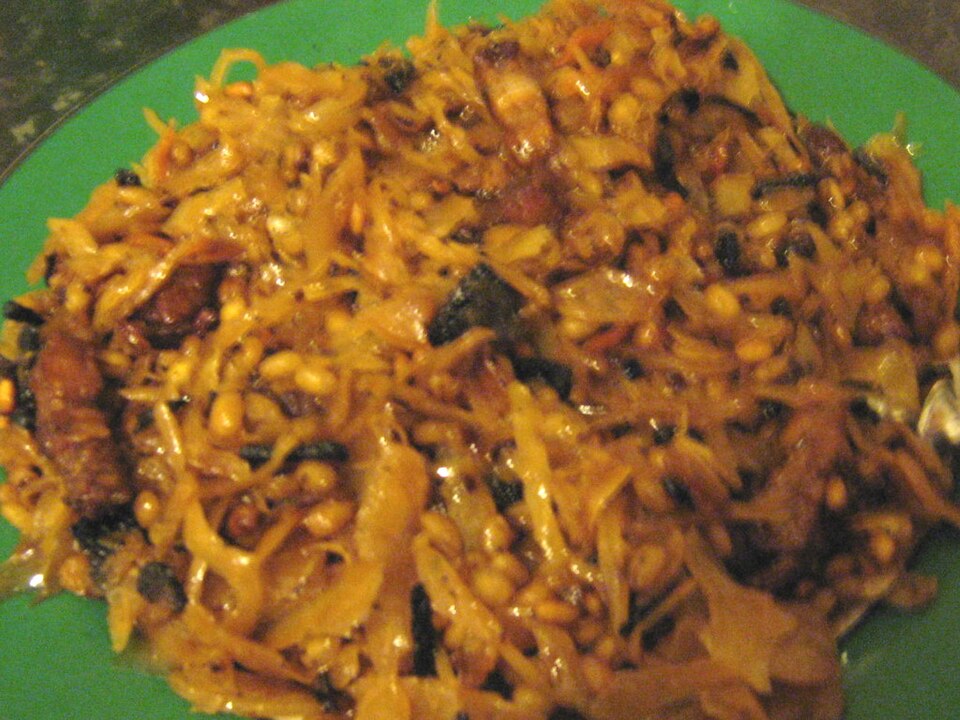
Mulgikapsad
Estonian · 2 h 15 min · 476 kcal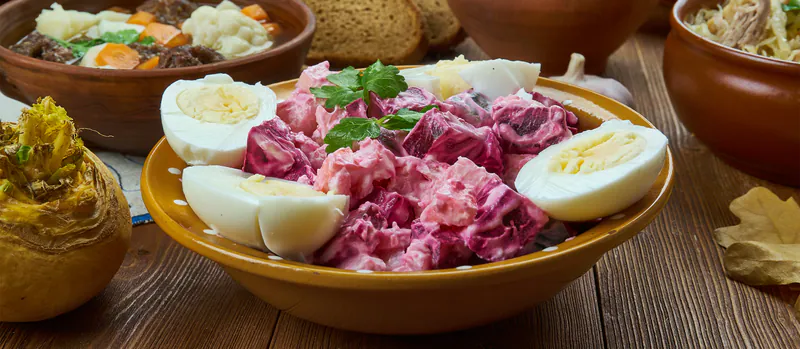
Rosolje
Estonian · 2 h 15 min · 247 kcal
Eisbein (Berlin cured pork knuckle with sauerkraut and pea purée)
 German · 3 h 5 min · 1915 kcal