
 Sudanese · Eritrean · Ethiopian · Breakfast dishes
Shahan ful (Horn of Africa spiced fava bean breakfast)
Contains egg (no meat or fish)
Slow-cooked fava beans mashed and fried with onion, tomato, garlic, green chilli and berbere, finished with lemon and served on a shared plate (shahan) topped with yoghurt, raw onion and chilli. A breakfast staple of Sudan, Eritrea and Ethiopia, especially loved during Lent and Ramadan, scooped up with warm bread rolls.
Shahan ful (Horn of Africa spiced fava bean breakfast) is a Sudanese dish, ready in about 2 hours 15 minutes and made with fava beans (dried) and berbere. It serves 4 and is rated easy to cook.
No licensed photograph of this dish yet.
- Prep
- 15 min
- Cook
- 2 h
- Total
- 2 h 15 min
- Serves
- 4
- Level
- Easy
- Calories
- 597
Plus overnight soaking; about 20 minutes in all with canned beans.
Main ingredients
Ingredients
For the beans
For the sauce
To serve
Method
Beans
1 h 50 minStep 1
Drain the soaked beans, cover with the fresh water and simmer gently, partly covered, for 1½–2 hours until very soft and starting to fall apart. Top up with water as needed and drain, keeping a cup of the cooking liquid.
- 110 min
- low heat
- Saucepan (opens in a new tab)
A pressure cooker does this in about 40 minutes.
Sauce
17 minStep 2
Heat the oil in a frying pan and soften the onion (opens in a new tab) over medium heat for 6 minutes. Add the garlic (opens in a new tab), tomato (opens in a new tab), chopped green chilli (opens in a new tab), berbere (opens in a new tab) and cumin (opens in a new tab) and cook, stirring, until the tomato collapses into a thick red sauce, about 6 minutes.
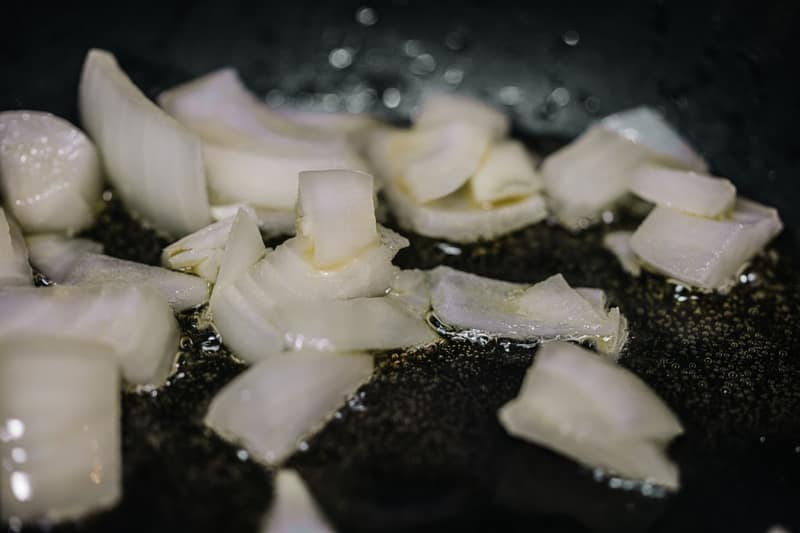
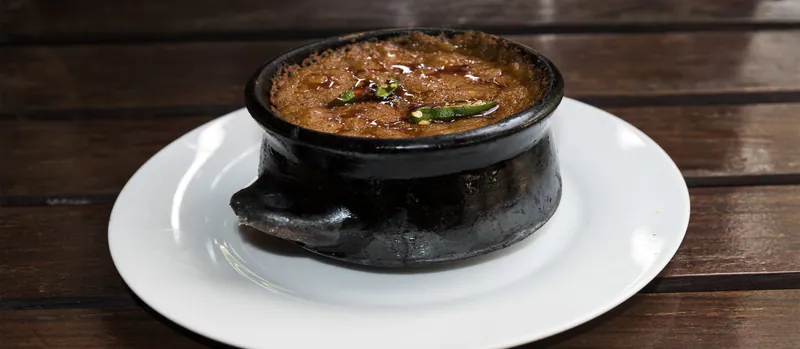
How it looks · Photo: Magda Ehlers on Pexels Step 3
Add the beans and mash them into the sauce with the back of the spoon, leaving some texture. Loosen with a splash of the cooking liquid, then stir in the lemon juice (opens in a new tab), salt and pepper (opens in a new tab) and cook for 3 minutes more.
- 5 min
- medium-low heat
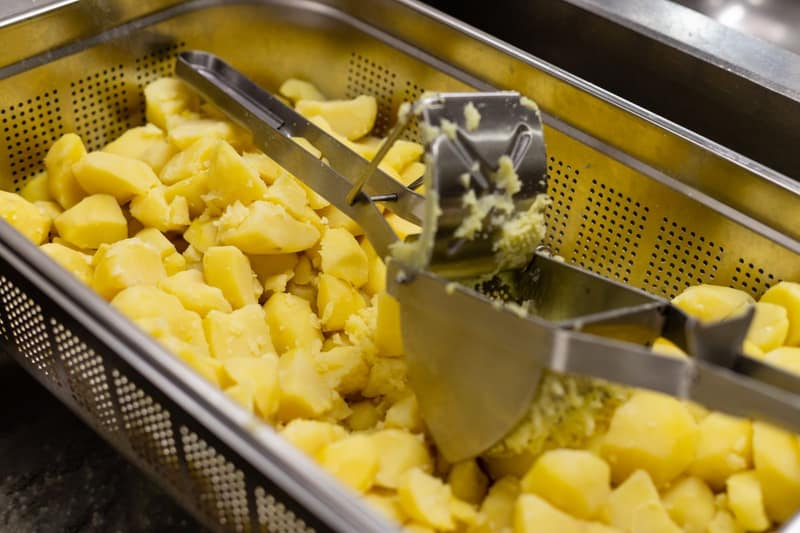
How it looks · Photo: Mateusz Feliksik on Pexels
To serve
3 minStep 4
Spread on a large shared plate. Spoon yoghurt (opens in a new tab) into the centre and scatter with red onion (opens in a new tab), sliced chilli and chopped egg (opens in a new tab). Serve with the warm bread for scooping.
- 3 min

How it looks · Photo: Klaus Nielsen on Pexels
At a glance
1 · Beans in a pot
 Fava beans (dried)
then heat
2 · Sauce in a pan
 Neutral vegetable oil
 Onion
 Garlic
 Tomato
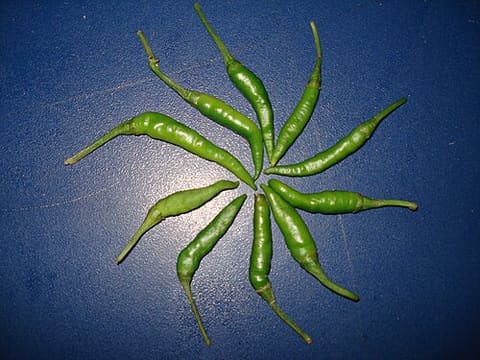 Green chilli
 Berbere
 Cumin
 Lemon juice
 Salt
 Black pepper
then spread
3 · To serve in a bowl
 Yogurt
 Red onion
- Green chilli
 Egg
 Crusty bread / baguette
About this dish
- Origin
- Sudan · Commonly attributedFava beans have been a breakfast food along the Nile for centuries; the berbere-spiced, mashed shahan ful is the version eaten in Sudan, Eritrea, Ethiopia and Djibouti, while Egypt's ful medames is usually left whole and dressed with oil and cumin.Also popular in Eritrea, Ethiopia, Djibouti, South SudanMore food from Sudan
Sudan - Dish
- Breakfast · Brunch · Breakfast dishes · Main courses
- Cooking method
- Simmered, Sautéed
- Taste
- earthy, spicy (chilli heat), savoury, tangy
- Diet
- Vegetarian (lacto-ovo) · No nut ingredients · High-protein · High-fibreWithout the optional extras: Lacto-vegetarian, Egg-freeWorked out from the ingredients. How labels work
All labels
Vegetarian (lacto-ovo) · Eggetarian · Pescatarian · Flexitarian-friendly · No nut ingredients · No added sugar · Alcohol-free · Pork-free · Beef-free · High-protein · High-fibre · Low-fat - Good for
- Everyday · Budget-friendly · Make-ahead
- Cook more with
- Fava beans (dried) · Berbere · Onion · Garlic · Tomato · Green chilli
Allergens
- Contains: Milkfrom yogurt
- Contains, can be adapted: Eggsfrom egg
- Contains: Wheatfrom crusty bread / baguette
- Contains: Glutenfrom crusty bread / baguette
- May contain: Sesamefrom crusty bread / baguette
Based on typical versions of these ingredients and not verified allergen-free. Brands differ and cross-contact happens, so always check labels. For severe allergies, follow your clinician’s advice.
Nutrition
597 kcal per serving
Estimated1 serving ≈ 676 g · recipe makes 4
Where the energy comes from
- Protein 18%
- Carbohydrate 56%
- Fat 26%
| Nutrient | Per serving | Per 100 g* |
|---|---|---|
| Energy | 597 kcal | 88 kcal |
| Protein | 27 g | 4 g |
| Carbohydrate | 85.8 g | 12.7 g |
| Net carbohydrate | 66.4 g | 9.8 g |
| Sugars | 12.4 g | 1.8 g |
| Added sugars | 0 g | 0 g |
| Fibre | 19.4 g | 2.9 g |
| Fat | 17.9 g | 2.6 g |
| Saturated fat | 2.3 g | 0.3 g |
| Trans fat | 0.1 g | 0 g |
| Cholesterol | 4 mg | 1 mg |
| Sodium | 1116 mg | 165 mg |
| Salt equivalent | 2.8 g | 0.4 g |
Vitamins & minerals per serving
- Potassium
- 1076 mg
- Calcium
- 211 mg
- Iron
- 8.2 mg
- Magnesium
- 173 mg
- Vitamin A (RAE)
- 62 µg
- Vitamin C
- 27 mg
- Vitamin D
- 0 µg
- Vitamin B12
- 0.1 µg
- Folate (DFE)
- 411 µg
How these numbers were made
- Calculated from USDA FoodData Central (SR Legacy) per-100 g values and the listed quantities.
- *Per 100 g of combined raw ingredients; the cooked dish may weigh more or less.
- Optional ingredients are not included: egg.
- Berbere: Blended chili powder (FDC 171319) used as a stand-in; berbere is a chilli-based Ethiopian/Eritrean blend with fenugreek, coriander and warm spices and has a broadly similar profile.
- “—” means the value isn’t known for enough of the ingredients; it is never zero by default.
- Values are estimates for guidance, not for medical dosing. U.S. Department of Agriculture, Agricultural Research Service. FoodData Central, 2019. fdc.nal.usda.gov.
Good to know
Tips
- Eritrean cafés often crumble soft white cheese or drizzle niter kibbeh (spiced butter) over the top.
Common mistakes
- Undercooking the dried beans; they must be soft enough to crush between your fingers.
Serve with
- Eat from the shared plate with torn bread rolls and a cup of spiced tea or coffee.
Food safety
- Fava beans can trigger a dangerous reaction (favism) in people with G6PD deficiency.
Storage
- Keeps 3 days in the fridge without the toppings.
Reheating
- Reheat in a pan with a splash of water, stirring, until steaming.
Variations
- Sudanese ful bil zeit (Sudan): Simply dressed with sesame oil, cumin, salt and lime, topped with feta and falafel (ta'amiya).
- Fata ful (Ethiopia): Torn bread is soaked in the ful and topped with yoghurt and spiced butter, popular in Ethiopia.
Original editorial recipe · FriendsPantry editorial · source: TasteAtlas (dish facts) · Not yet independently reviewed · Added
Recipe DNA
How this dish is built
Built from the recipe’s own sections. Each band’s width is its share of the dish by weight. Choose a component to see what it does.
The body of the dish
For the sauce
- Neutral vegetable oil4 tbsp · 54 g
- Onion, finely chopped1 piece · 110 g
- Garlic, crushed3 clove · 12 g
- Tomato, finely chopped2 piece · 240 g
- Green chilli, finely chopped2 piece · 12 g
- Berbere1 tbsp · 6.4 g
- Cumin1 tsp · 2.1 g
- Lemon juice2 tbsp · 31 g
- Salt1 tsp · 6 g
- Black pepper0.5 tsp · 1.2 g
Masalas in this recipe
Make the masala first, then come back to finish the dish.
Dry spice blend
Berbere spice blend
This recipe uses 1 tbsp (6.4 g for 4 servings).
Reviews & corrections
Reviews come from signed-in cooks and appear after a moderator checks them. We never show made-up ratings.
You might also like
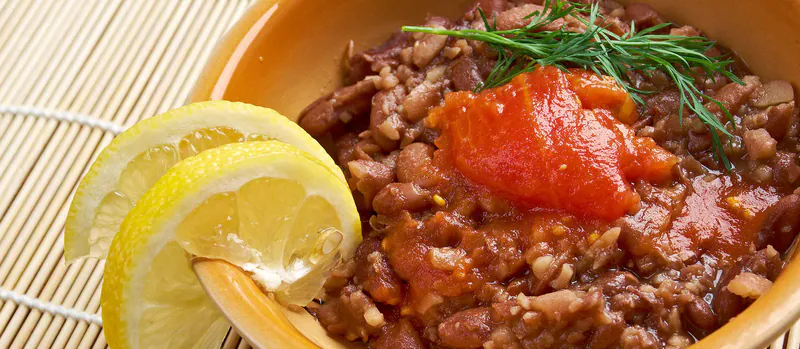
Ful medames
 Egyptian · 14 h 40 min · 310 kcal · Vegan
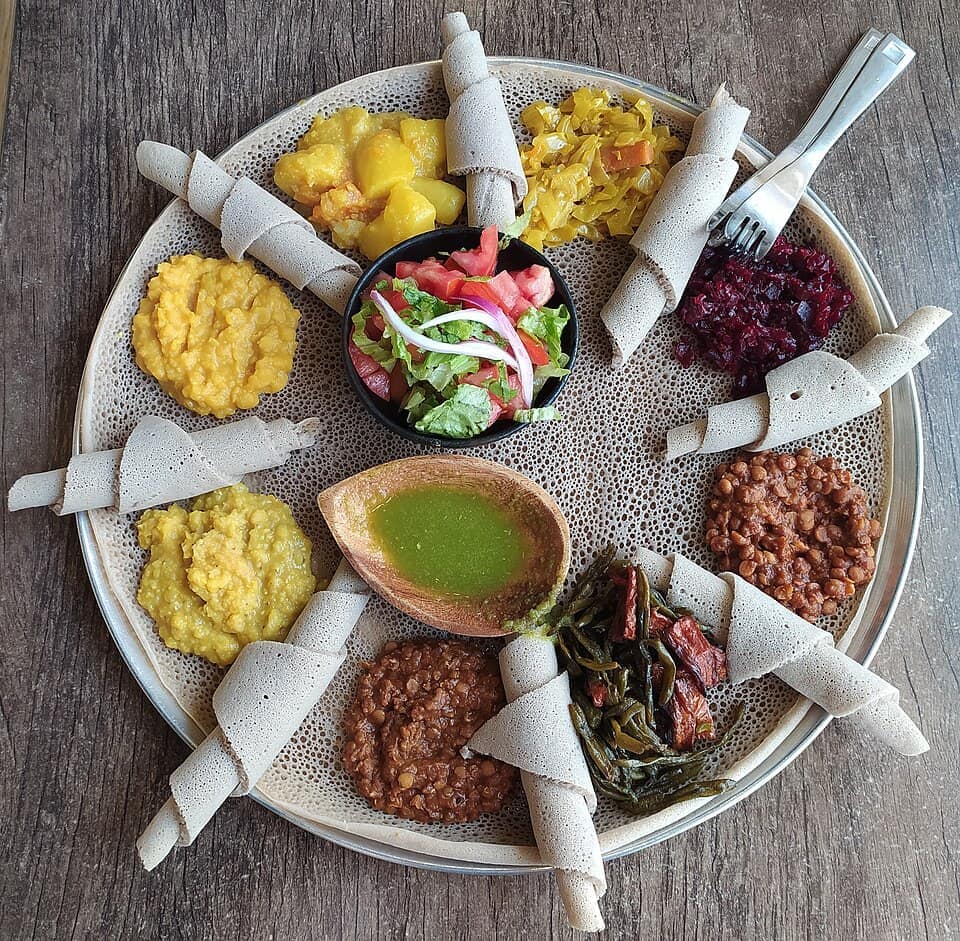
Injera
 Ethiopian · 48 h 55 min · 165 kcal · Vegan
Fata (Eritrean spicy tomato bread with yoghurt)
 Eritrean · 40 min · 501 kcal · Vegetarian
Shiro
Ethiopian · 40 min · 273 kcal · Vegan