
 German · Sweets & confectionery
Quarkbällchen (German quark doughnut balls)
Contains egg (no meat or fish)
Quarkbällchen
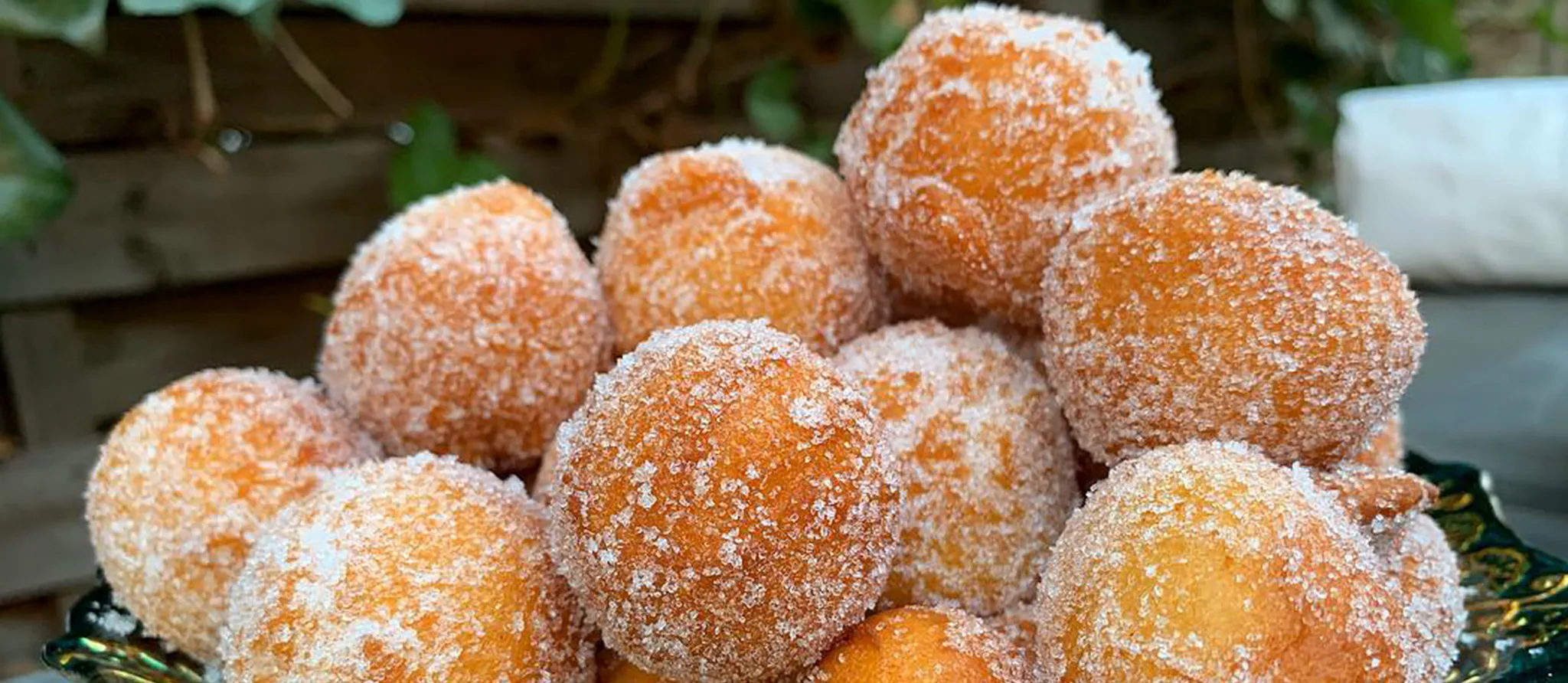
Small, quick doughnut balls made from a soft batter of quark, eggs, sugar and flour raised with baking powder, deep-fried until golden and rolled in sugar. A German bakery and fairground favourite that needs no yeast or rising time.
Quarkbällchen (German quark doughnut balls) is a German sweet from Germany, ready in about 35 minutes and made with twaróg (polish curd cheese), all-purpose flour and sugar. It serves 6 and is rated easy to cook.
- Prep
- 15 min
- Cook
- 20 min
- Total
- 35 min
- Serves
- 6
- Level
- Easy
- Calories
- 382
Main ingredients
Ingredients
For the dough
For frying
For coating
Method
Dough
6 minStep 1
Whisk (opens in a new tab) the quark (opens in a new tab), eggs (opens in a new tab), 70 g sugar (opens in a new tab), vanilla (opens in a new tab), lemon zest (opens in a new tab) and salt until smooth. Mix the flour and baking powder (opens in a new tab) and stir it in just until you have a soft, sticky dough. Do not overmix.
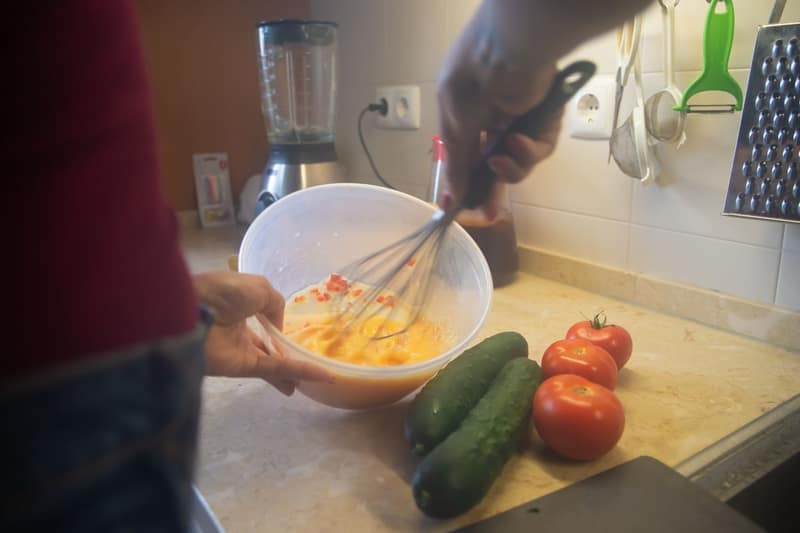
How it looks · Photo: Kampus Production on Pexels
Frying
24 minStep 2
Heat the oil in a deep pot to 170 °C. Mix the coating sugar (opens in a new tab) with the cinnamon (opens in a new tab) in a wide bowl.
- 6 min
- 170°C
- medium heat
- Dutch oven / casserole pot (opens in a new tab)
- Food thermometer (opens in a new tab)
Food safety: Never leave hot oil unattended, keep the pan's handle turned inwards and lower food in away from you.
Step 3
With two teaspoons dipped in the hot oil, drop walnut-sized balls of dough into the oil, 6–8 at a time. Fry for 4–5 minutes, turning, until deep golden and cooked through; they often roll over by themselves.
- 15 min
- 170°C
- medium heat
- Measuring spoons (opens in a new tab)
- Slotted spoon (opens in a new tab)
Break the first one open: if the centre is doughy, lower the heat slightly so they cook longer before browning.
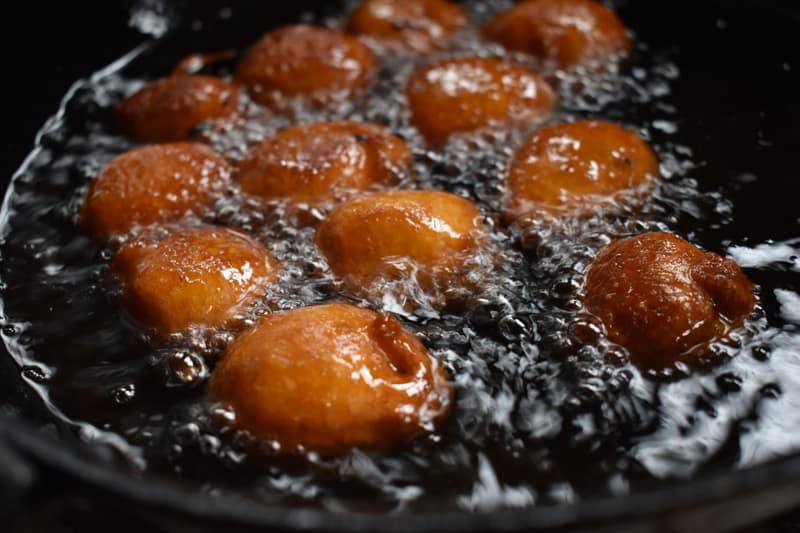
How it looks · Photo: Riya Roy on Pexels
At a glance
1 · Dough in a bowl
 Twaróg (Polish curd cheese)
 Egg
 Sugar
 Vanilla extract
 Lemon zest
 Salt
 All-purpose flour
 Baking powder
then heat
2 · Frying in a pan
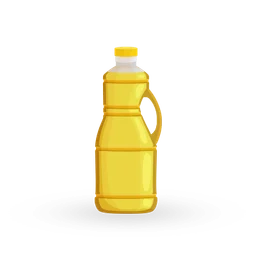 Neutral vegetable oil
About this dish
- Origin
- Germany · Commonly attributedSold in bakeries all over Germany and especially popular at Carnival (Fasching) and Christmas markets.Also popular in AustriaMore food from Germany
Germany - Dish
- Snack · Dessert · Sweets & confectionery · Desserts · Street food · Fried dough & doughnuts
- Cooking method
- Deep-fried
- Taste
- sweet, creamy, citrusy
- Diet
- Vegetarian (lacto-ovo) · No nut ingredientsWorked out from the ingredients. How labels work
All labels
Vegetarian (lacto-ovo) · Eggetarian · Pescatarian · Flexitarian-friendly · No nut ingredients · Pork-free · Beef-free · DASH-style - Good for
- Child-friendly · Festive & celebration · Budget-friendly
- Cook more with
- Twaróg (Polish curd cheese) · All-purpose flour · Sugar · Egg · Vanilla extract · Lemon zest
- Techniques
- Deep-frying
Allergens
- Contains: Milkfrom twaróg (polish curd cheese)
- Contains: Eggsfrom egg
- Contains: Wheatfrom all-purpose flour, baking powder
- Contains: Glutenfrom all-purpose flour, baking powder
Based on typical versions of these ingredients and not verified allergen-free. Brands differ and cross-contact happens, so always check labels. For severe allergies, follow your clinician’s advice.
Nutrition
382 kcal per serving
Estimated1 serving ≈ 135 g · recipe makes 6
Where the energy comes from
- Protein 12%
- Carbohydrate 62%
- Fat 27%
| Nutrient | Per serving | Per 100 g* |
|---|---|---|
| Energy | 382 kcal | 283 kcal |
| Protein | 11 g | 8.2 g |
| Carbohydrate | 58.9 g | 43.6 g |
| Net carbohydrate | 57.7 g | 42.7 g |
| Sugars | 26.3 g | 19.5 g |
| Added sugars | 25 g | 18.5 g |
| Fibre | 1.2 g | 0.9 g |
| Fat | 11.3 g | 8.4 g |
| Saturated fat | 1.9 g | 1.4 g |
| Trans fat | — | — |
| Cholesterol | 69 mg | 51 mg |
| Sodium | 339 mg | 251 mg |
| Salt equivalent | 0.8 g | 0.6 g |
Vitamins & minerals per serving
- Potassium
- 113 mg
- Calcium
- 138 mg
- Iron
- 2.4 mg
- Magnesium
- 15 mg
- Vitamin A (RAE)
- 42 µg
- Vitamin C
- 0 mg
- Vitamin D
- 0.4 µg
- Vitamin B12
- 0.3 µg
- Folate (DFE)
- 134 µg
How these numbers were made
- Calculated from USDA FoodData Central (SR Legacy) per-100 g values and the listed quantities.
- *Per 100 g of combined raw ingredients; the cooked dish may weigh more or less.
- Optional ingredients are not included: cinnamon.
- Twaróg (Polish curd cheese): Creamed cottage cheese used as a stand-in; twaróg is a dry, crumbly fresh curd cheese similar to quark or farmer's cheese, usually a little lower in moisture.
- “—” means the value isn’t known for enough of the ingredients; it is never zero by default.
- Values are estimates for guidance, not for medical dosing. U.S. Department of Agriculture, Agricultural Research Service. FoodData Central, 2019. fdc.nal.usda.gov.
Good to know
Tips
- Wet quark makes a slack dough: drain it in a sieve lined with kitchen paper for 30 minutes if it looks watery.
Common mistakes
- Frying too hot — the outside darkens while the middle stays raw.
Serve with
- Best eaten warm, with coffee or hot chocolate.
Storage
- Best on the day; keep 1 day in a paper bag.
Variations
- Powdered-sugar Quarkbällchen: Dusted with icing sugar instead of rolled in granulated sugar.
- Quarkkeulchen: Saxon pan-fried potato and quark cakes, a different but related quark sweet.
Original editorial recipe · FriendsPantry editorial · source: TasteAtlas (dish facts) · Not yet independently reviewed · Added
Recipe DNA
How this dish is built
Built from the recipe’s own sections. Each band’s width is its share of the dish by weight. Choose a component to see what it does.
Structure
For the dough
- Twaróg (Polish curd cheese), quark (Magerquark or 20%), well drained250 g
- Egg2 piece · 100 g
- Sugar70 g
- Vanilla extract1 tsp · 4.3 g
- Lemon zest1 tsp · 2 g
- Salt1 pinch · 0.4 g
- All-purpose flour250 g
- Baking powder2 tsp · 8.9 g
Reviews & corrections
Reviews come from signed-in cooks and appear after a moderator checks them. We never show made-up ratings.
You might also like
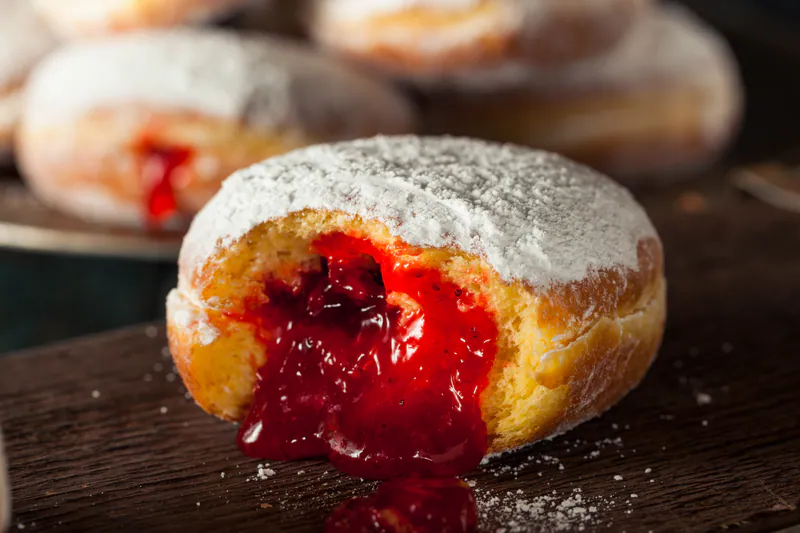
Pączki (Polish doughnuts)
 Polish · 3 h 15 min · 314 kcal
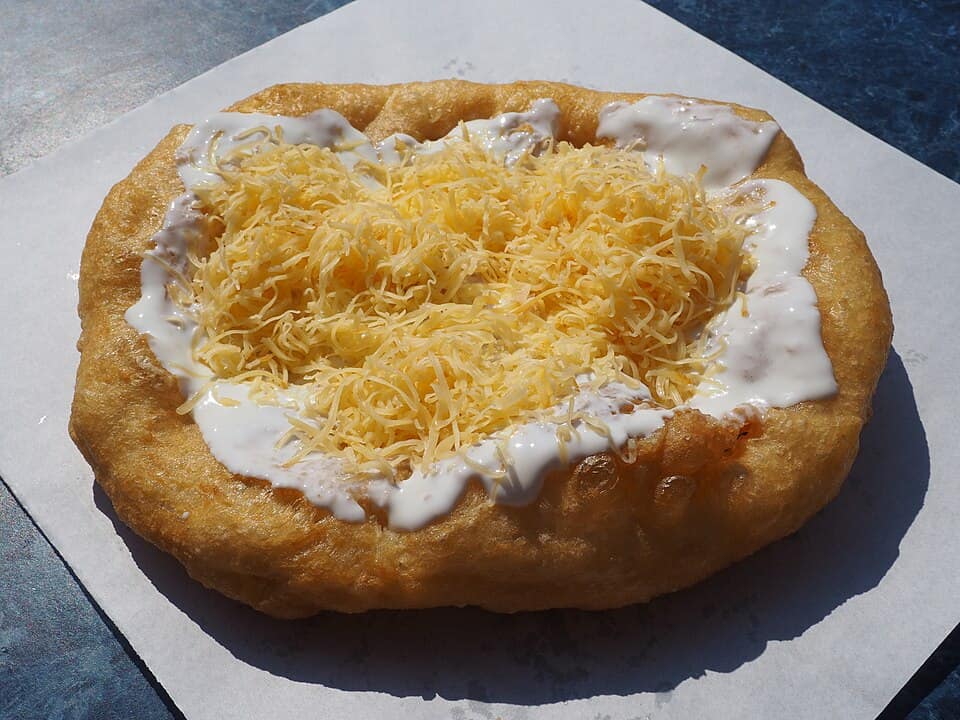
Lángos
 Hungarian · 1 h 40 min · 601 kcal · Vegetarian
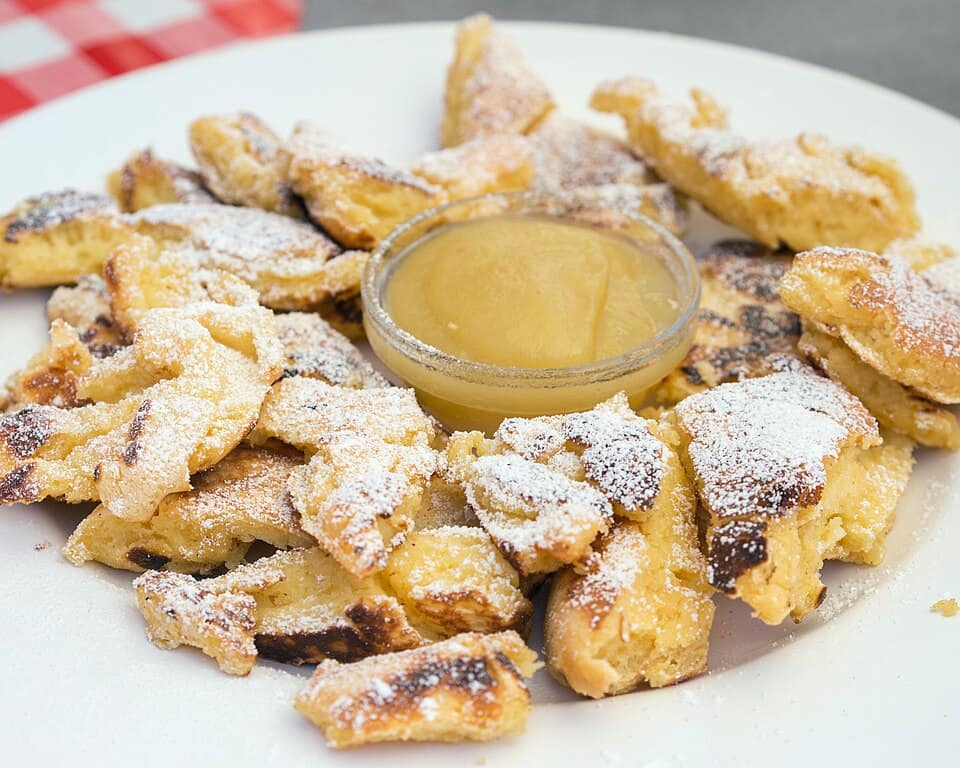
Kaiserschmarrn
 Austrian · 25 min · 481 kcal · Contains egg
Bergische Waffeln (heart waffles with hot cherries and cream)
German · 1 h · 652 kcal · Contains egg