Nikujaga
Non-vegetarian
肉じゃが · nikujaga
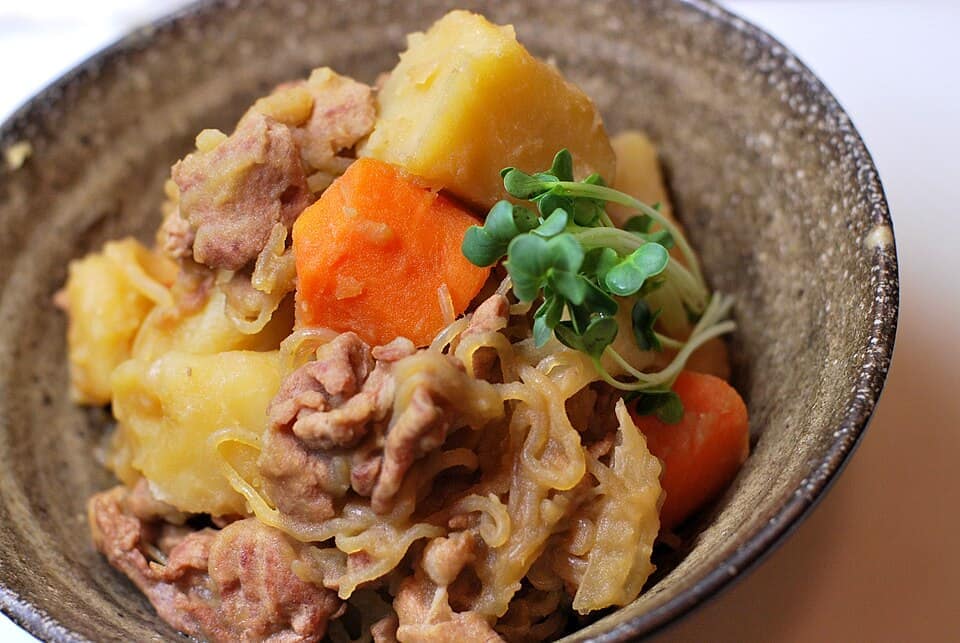
A homely braise of thinly sliced beef, potatoes, carrot and onion simmered in sweet soy dashi until the potatoes soak up the broth.
Nikujaga is a Japanese stew, ready in about 55 minutes and made with beef sirloin steak and potato. It serves 4 and is rated easy to cook.
- Prep
- 15 min
- Cook
- 30 min
- Rest
- 10 min
- Total
- 55 min
- Serves
- 4
- Level
- Easy
- Calories
- 296
Method
Step 1
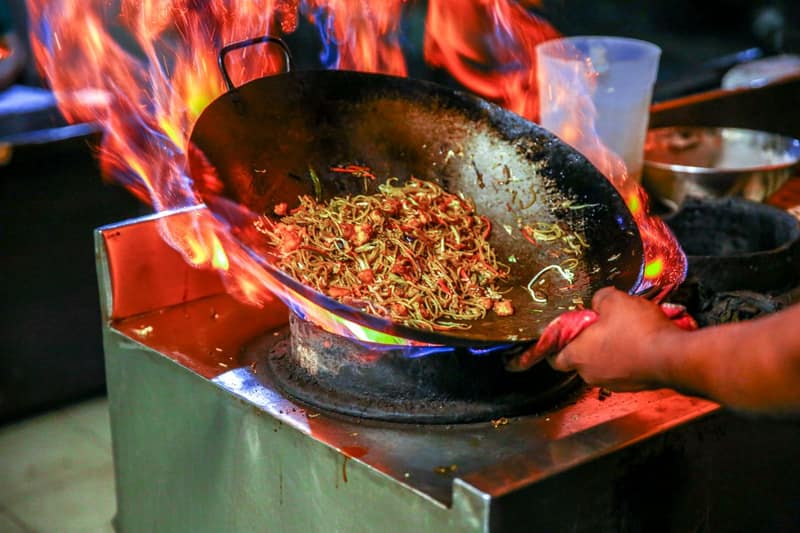
Heat the oil in a wide saucepan (opens in a new tab) and stir-fry the beef until it just changes colour. Add the onion (opens in a new tab), potato (opens in a new tab) and carrot (opens in a new tab) and toss to coat.
- 4 min
- medium-high heat
- Saucepan (opens in a new tab)
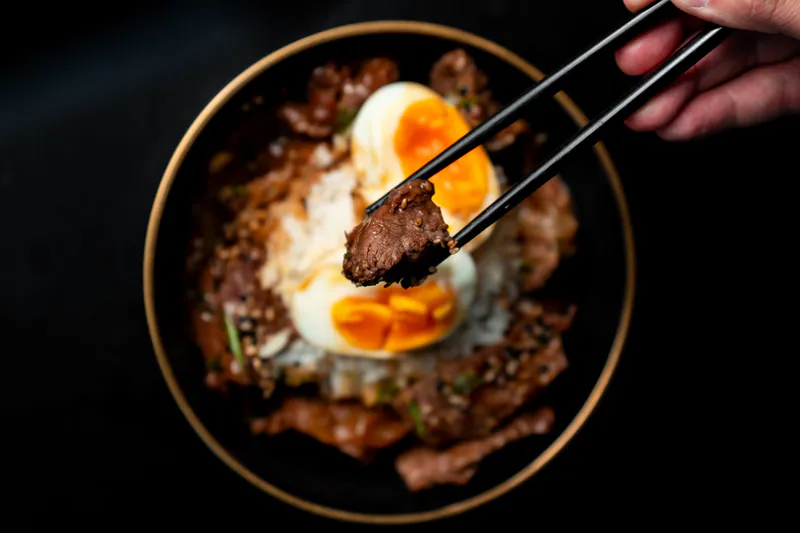
How it looks · Photo: Aesthos AR. Photography on Pexels Step 2
Pour in the dashi (opens in a new tab) and bring to the boil, skimming off any foam. Add the sake (opens in a new tab), sugar (opens in a new tab) and mirin (opens in a new tab).
- 3 min
- high heat
Step 3
Lay a piece of baking paper or a small lid directly on the surface and simmer for 10 minutes.
- 10 min
- medium-low heat
Step 4
Add the soy sauce (opens in a new tab) and simmer, covered with the paper, until the potatoes (opens in a new tab) are tender and the liquid has reduced by about half.
- 12 min
- medium-low heat
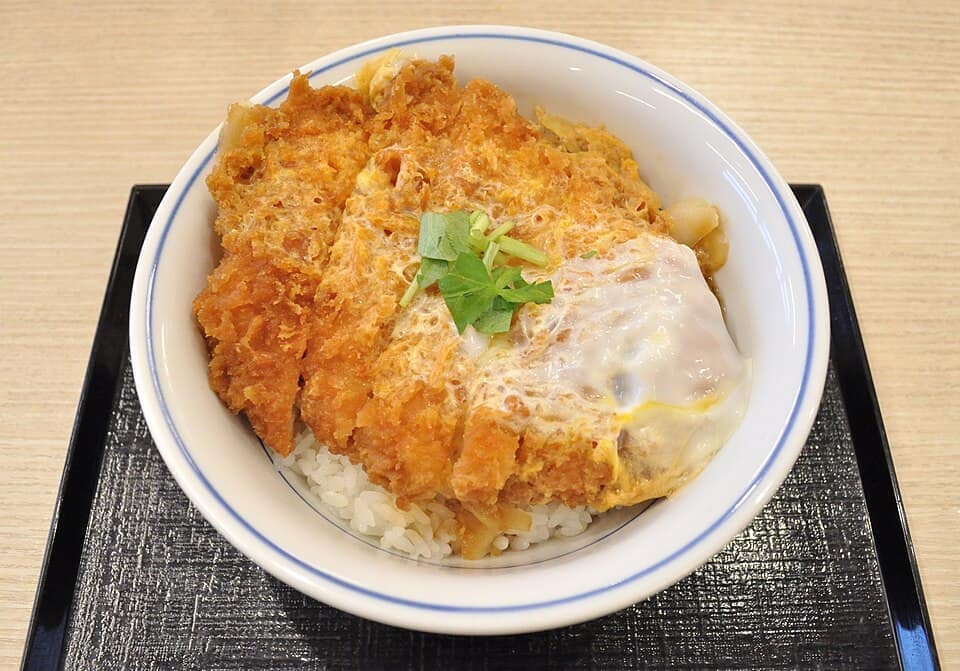
How it looks · Photo: Bachir Mamud on Pexels Step 5
Take the pan off the stove and leave, covered, for 10 minutes so the potatoes (opens in a new tab) absorb the flavour as they cool slightly. Serve with the green beans (opens in a new tab) scattered over.

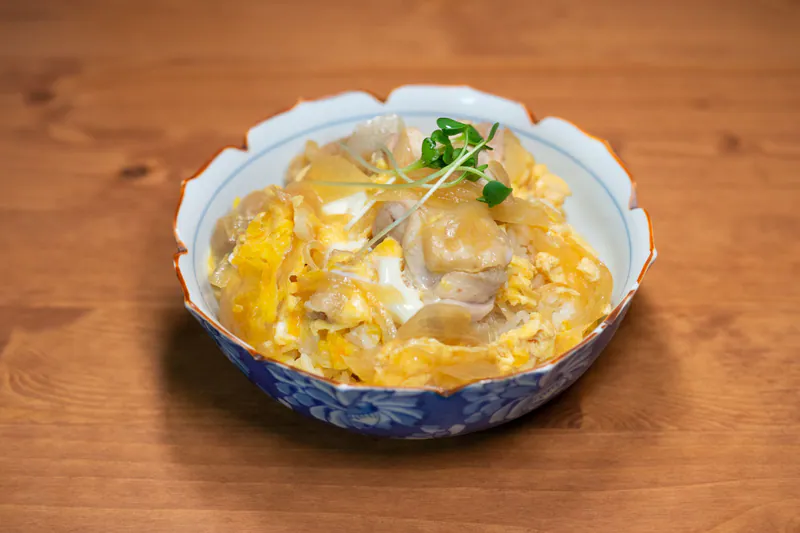
How it looks · Photo: Willians Huerta on Pexels
About this dish
- Origin
- Japan · Well documentedMore food from Japan
- Dish
- Dinner · Stews & braises · Main courses
- Cooking method
- Simmered, Braised
- Taste
- sweet & savoury, umami, mild
- Diet
- Dairy-free · No nut ingredients · High-proteinWorked out from the ingredients. How labels work
All labels
Non-vegetarian · Flexitarian-friendly · Dairy-free · Egg-free · No nut ingredients · Pork-free · High-protein · Low-fat · Calorie-conscious - Good for
- One-pot · Everyday · Make-ahead · Child-friendly
- Techniques
- Stir-frying · Boiling · Simmering · Braising · Reduction
Allergens
- Contains, can be adapted: Fishfrom dashi
- Contains, can be adapted: Wheatfrom soy sauce
- Contains, can be adapted: Glutenfrom soy sauce
- Contains: Soyfrom soy sauce
Based on typical versions of these ingredients and not verified allergen-free. Brands differ and cross-contact happens, so always check labels. For severe allergies, follow your clinician’s advice.
Nutrition
296 kcal per serving
Estimated1 serving ≈ 380 g · recipe makes 4
Where the energy comes from
- Protein 25%
- Carbohydrate 54%
- Fat 21%
| Nutrient | Per serving | Per 100 g* |
|---|---|---|
| Energy | 296 kcal | 78 kcal |
| Protein | 17.9 g | 4.7 g |
| Carbohydrate | 37.9 g | 10 g |
| Net carbohydrate | 33.8 g | 8.9 g |
| Sugars | 9.4 g | 2.5 g |
| Added sugars | — | — |
| Fibre | 4.1 g | 1.1 g |
| Fat | 6.5 g | 1.7 g |
| Saturated fat | 1.3 g | 0.3 g |
| Trans fat | — | — |
| Cholesterol | 31 mg | 8 mg |
| Sodium | 905 mg | 238 mg |
| Salt equivalent | 2.3 g | 0.6 g |
Vitamins & minerals per serving
- Potassium
- 1104 mg
- Calcium
- 50 mg
- Iron
- 2.3 mg
- Magnesium
- 68 mg
- Vitamin A (RAE)
- 127 µg
- Vitamin C
- 33 mg
- Vitamin D
- 0.1 µg
- Vitamin B12
- 1.2 µg
- Folate (DFE)
- 41 µg
How these numbers were made
- Calculated from USDA FoodData Central (SR Legacy) per-100 g values and the listed quantities.
- *Per 100 g of combined raw ingredients; the cooked dish may weigh more or less.
- Optional ingredients are not included: green beans.
- Dashi: Home-prepared fish stock (FDC 172885) used as a stand-in for katsuobushi-kombu dashi; both are very low in energy.
- Mirin: Sake (FDC 167723) used as a stand-in; true mirin is sweeter, so sugar is underestimated.
- “—” means the value isn’t known for enough of the ingredients; it is never zero by default.
- Values are estimates for guidance, not for medical dosing. U.S. Department of Agriculture, Agricultural Research Service. FoodData Central, 2019. fdc.nal.usda.gov.
Good to know
Tips
- Adding the soy sauce after the sugar lets the sweetness penetrate first, a common Japanese seasoning order.
Common mistakes
- Stirring too much breaks up the potatoes; shake the pan instead.
Serve with
- Serve with rice and miso soup.
Food safety
- Refrigerate leftovers within 2 hours; they keep 3 days and taste better the next day. Reheat until piping hot.
Storage
- Refrigerate for up to 3 days; it tastes even better the next day.
Reheating
- Reheat gently in a covered pan.
Original editorial recipe · FriendsPantry editorial · Not yet independently reviewed · Added · Updated
Recipe DNA
How this dish is built
Grouped by each ingredient’s role in the dish. Each band’s width is its share of the dish by weight. Choose a component to see what it does.
What the dish is built around
Main ingredient
- Beef sirloin steak, thinly sliced200 g
- Potato, peeled, cut into large chunks3 piece · 600 g
- Carrot, cut into chunks1 piece · 60 g
- Green beans, blanched (optional)60 g
Reviews & corrections
Reviews come from signed-in cooks and appear after a moderator checks them. We never show made-up ratings.