
Homemade chistorra (Basque paprika sausage)
Non-vegetarian
Txistorra
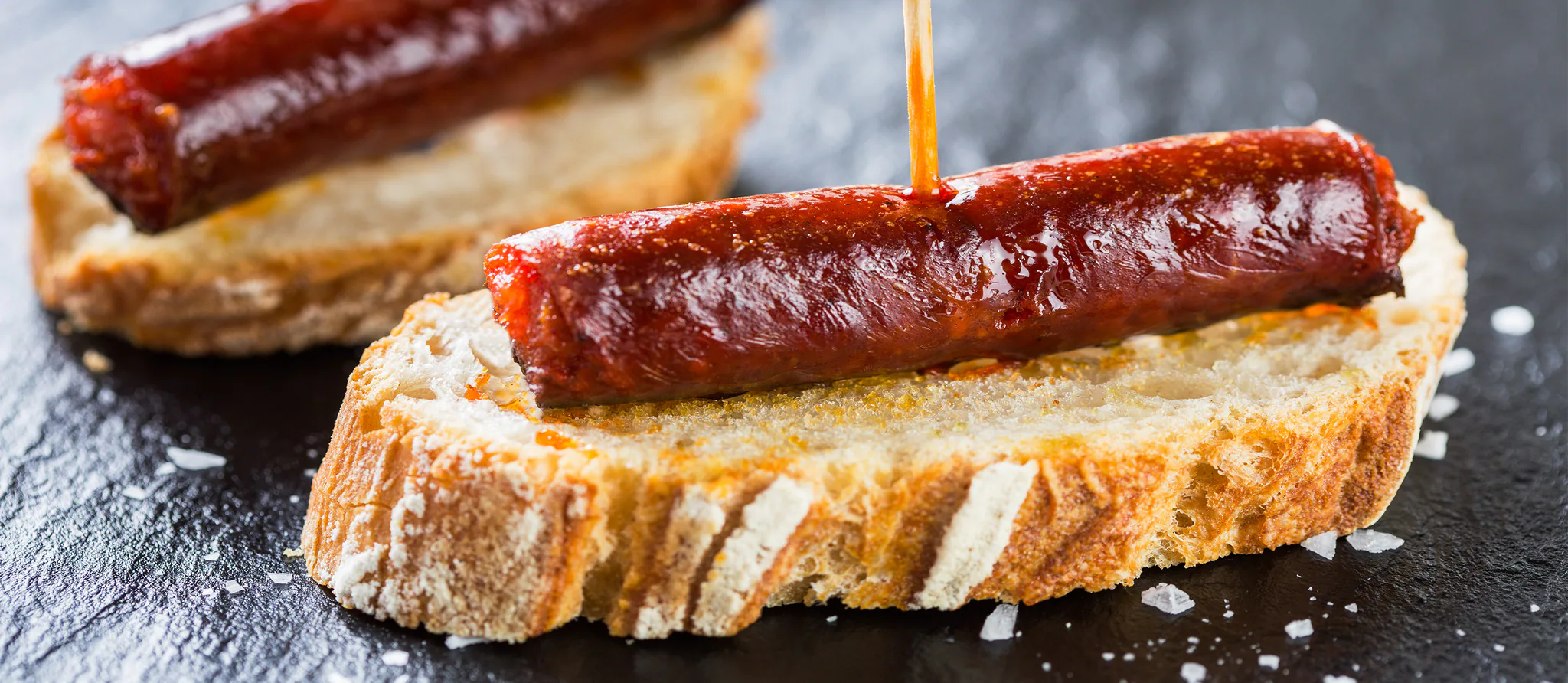
A thin, bright-red fresh sausage of minced pork belly seasoned with garlic, salt and sweet paprika, stuffed into narrow casings and briefly air-dried. Fried in its own fat, it is the star of Basque pintxos and village fiestas.
Homemade chistorra (Basque paprika sausage) is a Spanish starter from Spain, ready in about 1 hour 10 minutes and made with pork belly, smoked paprika and garlic. It serves 8 and is rated advanced to cook.
- Prep
- 1 h
- Cook
- 10 min
- Total
- 1 h 10 min
- Serves
- 8
- Level
- Advanced
- Calories
- 572
Plus 12 hours marinating the meat and 1–2 days air-drying in the fridge.
Main ingredients
Ingredients
For the sausage
To cook
To serve
Method
Sausage
50 minStep 1
Mince the cold pork belly (opens in a new tab) and shoulder through the medium plate of a mincer, or pulse in short bursts in a food processor (opens in a new tab) to a coarse mince. Keep everything as cold as possible.
Chill the mincer parts or the processor bowl in the freezer for 30 minutes first.
Step 2
Mix in the paprikas (opens in a new tab), garlic (opens in a new tab), salt, thyme (opens in a new tab) and wine, kneading with your hands for 2–3 minutes until the mixture turns slightly sticky. Fry a teaspoon to taste the seasoning. Cover and refrigerate for 12 hours so the flavours develop.

How it looks · Photo: Klaus Nielsen on Pexels Step 3
Stuff the mixture into the soaked casings using a sausage stuffer or a piping bag with a wide nozzle, filling evenly but not too tightly. Prick any air bubbles with a pin. Leave as one long sausage, or twist into links of about 15 cm.
- 35 min
Step 4
Hang the sausages, or lay them on a rack, uncovered in the fridge for 1–2 days to dry the surface and deepen the colour.
To cook
8 minStep 5
To cook, coil or cut the chistorra into pieces and fry in a pan with the oil over medium heat for 6–8 minutes, turning, until browned and cooked through. It releases plenty of red fat.
- 8 min
- medium heat
- Frying pan / skillet (opens in a new tab)
Food safety: Cook fresh sausage and minced pork until the centre reaches 71 °C and the juices run clear.
To serve
2 minStep 6
Serve on slices of bread to soak up the paprika (opens in a new tab) fat, secured with a cocktail stick as a pintxo.
- 2 min

How it looks · Photo: Willians Huerta on Pexels
At a glance
1 · Sausage in a bowl
 Pork belly
 Pork shoulder
 Smoked paprika
- Paprika
 Garlic
 Salt
- Dried thyme
 Dry white wine
- Natural sausage casings
then coil
2 · To cook in a pan
 Olive oil
then serve
3 · To serve in a bowl
 Crusty bread / baguette
About this dish
- Origin
- Basque Country, Navarre and Aragon, Spain · Well documentedA fast-cured sausage eaten within days rather than dried for months like chorizo; sometimes made with part beef.Also popular in FranceMore food from Spain
Spain - Dish
- Lunch · Dinner · Snack · Breakfast · Appetizers & starters · Finger food · Sausages
- Cooking method
- Pan-fried
- Taste
- smoky, garlicky, savoury
- Diet
- Dairy-free · No nut ingredients · Keto-style · Low-carbWithout the optional extras: Whole-food focused, Paleo-style, No gluten ingredientsWorked out from the ingredients. How labels work
All labels
Non-vegetarian · Dairy-free · Egg-free · No nut ingredients · No added sugar · Beef-free · Keto-style · Low-carb - Good for
- Festive & celebration · Make-ahead · Freezer-friendly
- Cook more with
- Pork belly · Smoked paprika · Garlic · Pork shoulder · Dried thyme · Dry white wine
- Techniques
- Pan-frying · Kneading
Allergens
- Contains, can be adapted: Wheatfrom crusty bread / baguette
- Contains, can be adapted: Glutenfrom crusty bread / baguette
- May contain: Sesamefrom crusty bread / baguette
- Contains: Sulphitesfrom dry white wine
Based on typical versions of these ingredients and not verified allergen-free. Brands differ and cross-contact happens, so always check labels. For severe allergies, follow your clinician’s advice.
Nutrition
572 kcal per serving
Estimated1 serving ≈ 141 g · recipe makes 8
Where the energy comes from
- Protein 11%
- Carbohydrate 1%
- Fat 87%
| Nutrient | Per serving | Per 100 g* |
|---|---|---|
| Energy | 572 kcal | 406 kcal |
| Protein | 15.8 g | 11.3 g |
| Carbohydrate | 2 g | 1.4 g |
| Net carbohydrate | 1.2 g | 0.9 g |
| Sugars | 0.3 g | 0.2 g |
| Added sugars | 0 g | 0 g |
| Fibre | 0.7 g | 0.5 g |
| Fat | 55.1 g | 39.1 g |
| Saturated fat | 19.5 g | 13.9 g |
| Trans fat | — | — |
| Cholesterol | 90 mg | 64 mg |
| Sodium | 928 mg | 659 mg |
| Salt equivalent | 2.3 g | 1.6 g |
Vitamins & minerals per serving
- Potassium
- 331 mg
- Calcium
- 21 mg
- Iron
- 1.4 mg
- Magnesium
- 15 mg
- Vitamin A (RAE)
- 50 µg
- Vitamin C
- 1 mg
- Vitamin D
- —
- Vitamin B12
- 1 µg
- Folate (DFE)
- 4 µg
How these numbers were made
- Calculated from USDA FoodData Central (SR Legacy) per-100 g values and the listed quantities.
- *Per 100 g of combined raw ingredients; the cooked dish may weigh more or less.
- Optional ingredients are not included: paprika, crusty bread / baguette.
- Smoked paprika: Sweet paprika data; smoking does not change the nutrients meaningfully.
- Natural sausage casings: Dry gelatine (FDC 169599) scaled to a quarter as a stand-in: soaked hog or sheep casings are mostly water and collagen, used a few grams per sausage.
- “—” means the value isn’t known for enough of the ingredients; it is never zero by default.
- Values are estimates for guidance, not for medical dosing. U.S. Department of Agriculture, Agricultural Research Service. FoodData Central, 2019. fdc.nal.usda.gov.
Good to know
Tips
- Without casings, shape the mixture into thin skinless logs and fry them the same day.
Common mistakes
- Letting the fat warm up while mincing, which makes the sausage greasy and crumbly.
Serve with
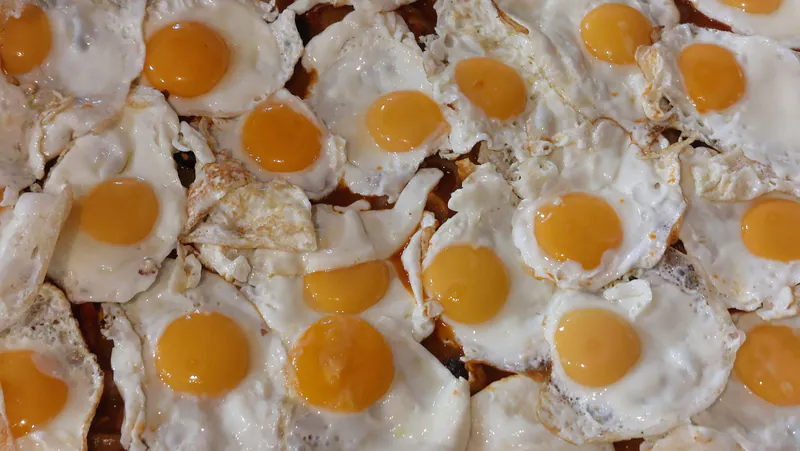
- Eat hot on bread as a pintxo, wrapped in a talo (Basque corn flatbread) at fiestas, or with fried eggs and chips.
Food safety
- Cook fresh sausage and minced pork until the centre reaches 71 °C and the juices run clear.
- Homemade chistorra is a fresh sausage, not a cured one: it must always be cooked before eating.
Storage
- Keep raw chistorra refrigerated and cook within 4 days, or freeze for up to 2 months.
Variations
- Talo con txistorra: Fried chistorra wrapped in a thin griddled corn flatbread, sold at the Santo Tomás fair in San Sebastián.
- Huevos rotos con chistorra: Fried potatoes and runny eggs topped with crisp chistorra.
Original editorial recipe · FriendsPantry editorial · source: TasteAtlas (dish facts) · Not yet independently reviewed · Added
Recipe DNA
How this dish is built
Built from the recipe’s own sections. Each band’s width is its share of the dish by weight. Choose a component to see what it does.
Reviews & corrections
Reviews come from signed-in cooks and appear after a moderator checks them. We never show made-up ratings.
You might also like
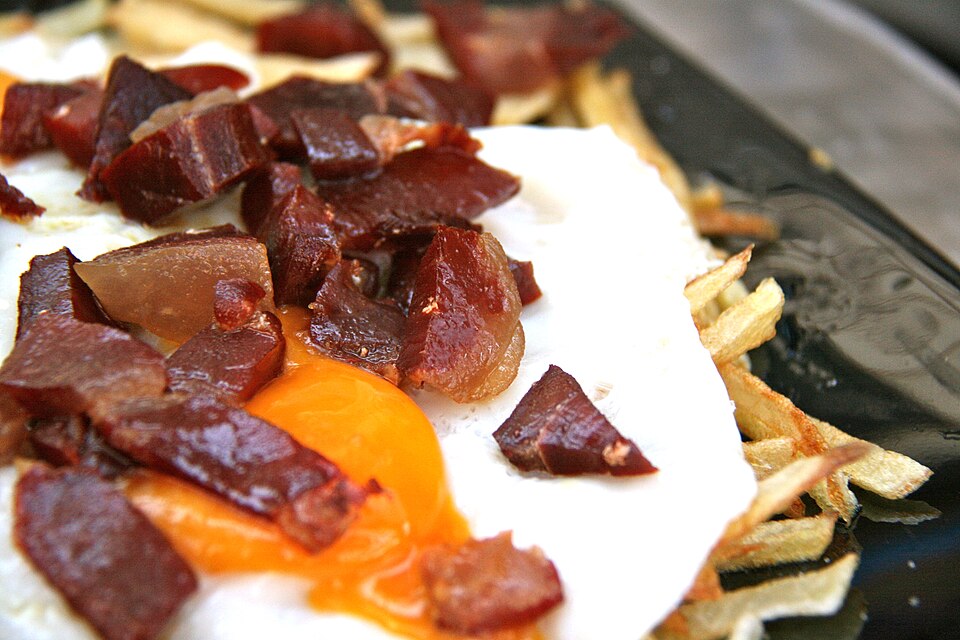
Huevos rotos (broken eggs over fried potatoes)
 Spanish · 35 min · 671 kcal
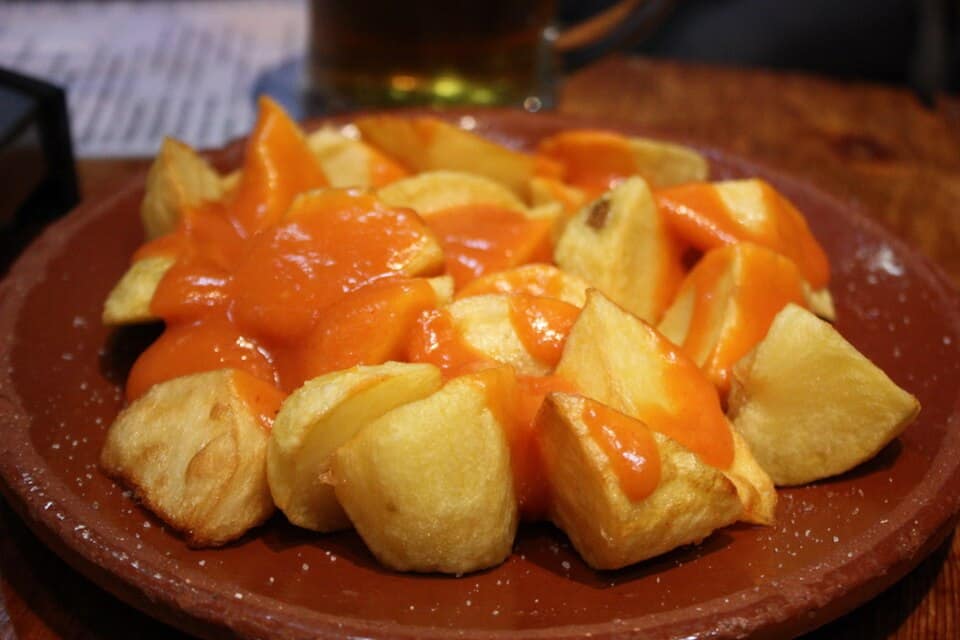
Patatas bravas
Spanish · 50 min · 508 kcal · Egg optional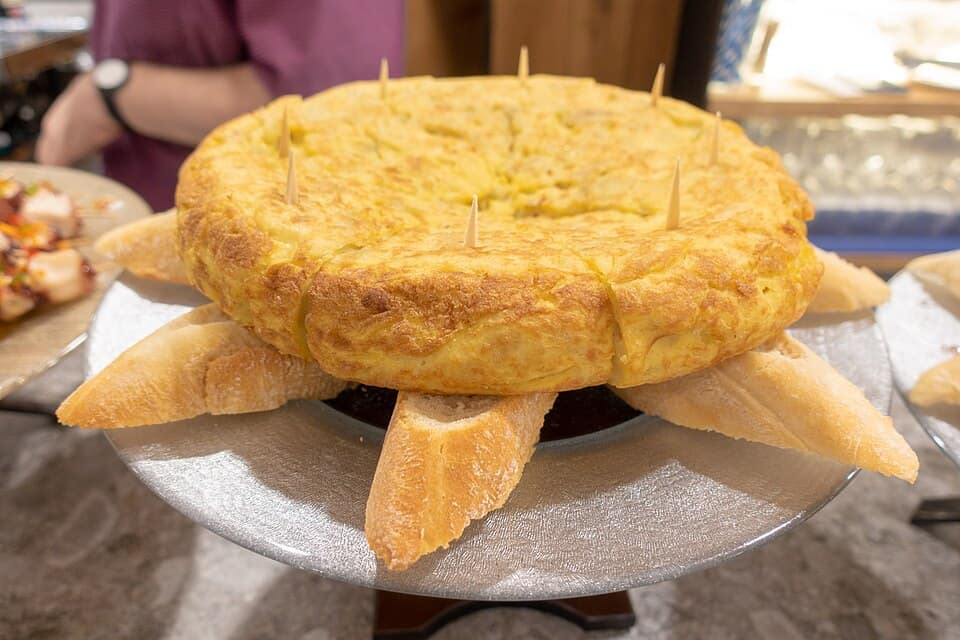
Tortilla española
Spanish · 1 h · 272 kcal · Contains egg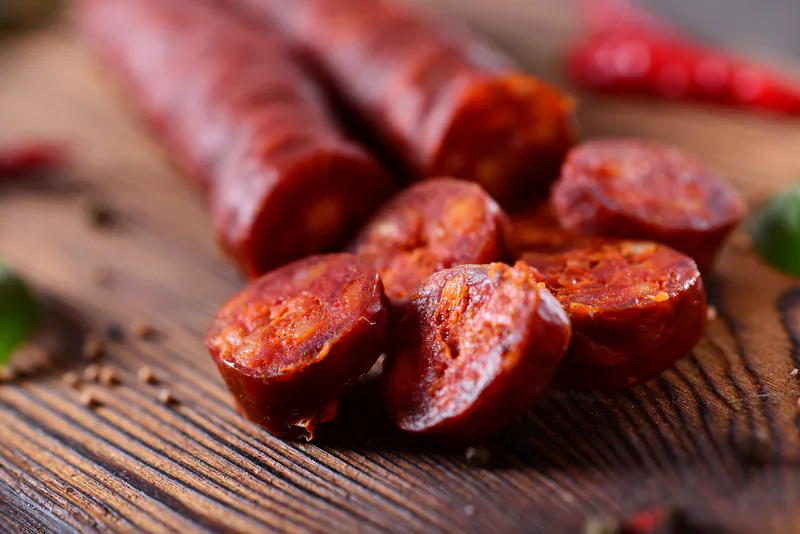
Chorizo fresco (homemade fresh Spanish chorizo)
Spanish · 13 h · 532 kcal