
Meat · Sausage making
Natural sausage casings
Cleaned animal intestines, salted, used to stuff homemade sausages.
Also called: hog casings, pork casings, sheep casings, natural casings, Saitling, tripa natural
What it is
Natural casings are cleaned intestines from pigs (hog casings), sheep or cattle, sold packed in salt or brine. Hog casings suit standard pork sausages and bratwurst; finer sheep casings suit chipolatas, merguez and frankfurters. They must be soaked and flushed with water before use.
How it’s used
- Stuffing homemade fresh or cured sausages
- Making boudin, kielbasa and chorizo at home
Characteristics
Storage
Refrigerated. Keep packed in salt in a sealed container in the fridge; they last for many months.
Diet, allergens and safety
No major allergens in typical versions.
- Vegetarian
- Vegan
- Dairy-free
- Egg-free
- Gluten-free
- Nut-free
- Soy-free
- Caffeine-free
- Flush with clean water before use and keep chilled while making sausages.
- Usually from pigs, so not suitable for halal, kosher or vegetarian diets unless labelled otherwise.
Nutrition per 100 g
- Energy
- 84 kcal
- Protein
- 21.4 g
- Carbohydrate
- 0 g
- Fat
- 0.025 g
- Fibre
- 0 g
- Sugars
- 0 g
USDA FoodData Central: Gelatins, dry powder, unsweetened × 0.25 (a close stand-in).
Substitutes
Optional — what works if you don’t have it, and how it changes the dish.
- Collagen casings — Easier to handle and need no soaking, but less snap.
Related ingredients
Recipes with natural sausage casings
See all 21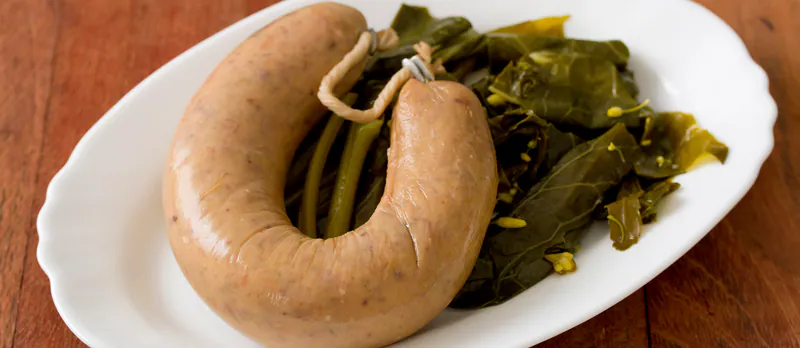
Alheira de Mirandela
 Portuguese · 14 h 50 min · 775 kcal
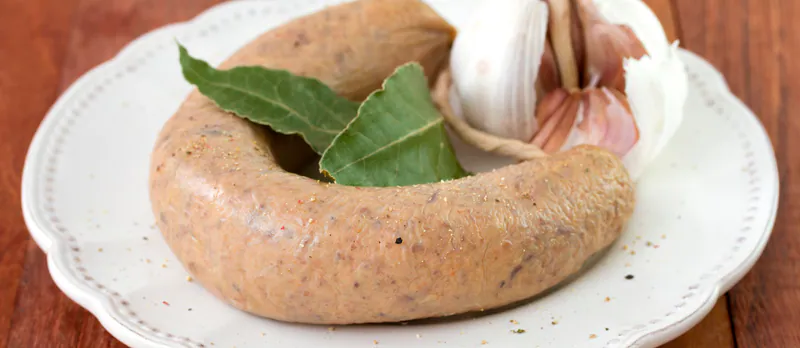
Alheira de Vinhais (smoked pork and bread sausage)
Portuguese · 4 h · 800 kcal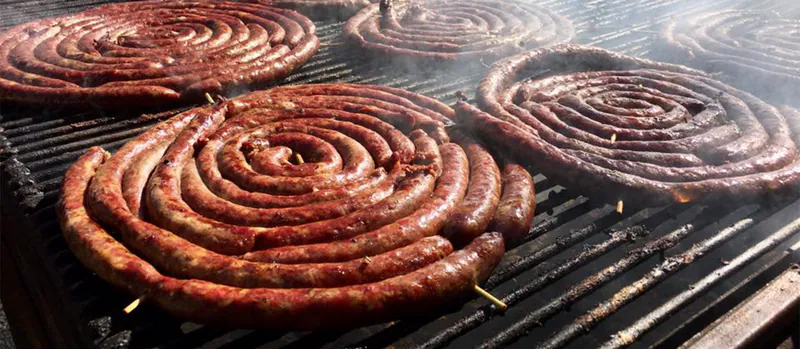
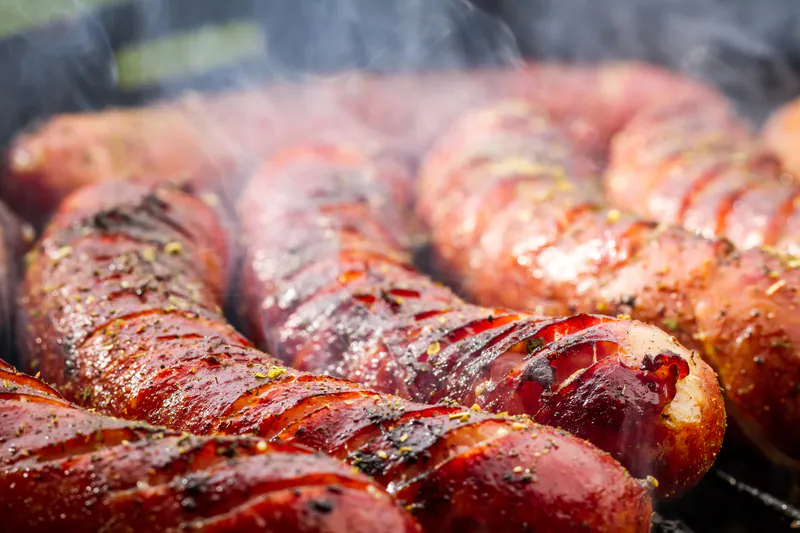
Cârnați de Pleșcoi (Romanian spicy mutton sausages)
 Romanian · 1 h · 492 kcal
Chorizo a la parrilla (Argentine grilled chorizo)
 Argentine · 13 h 10 min · 556 kcal
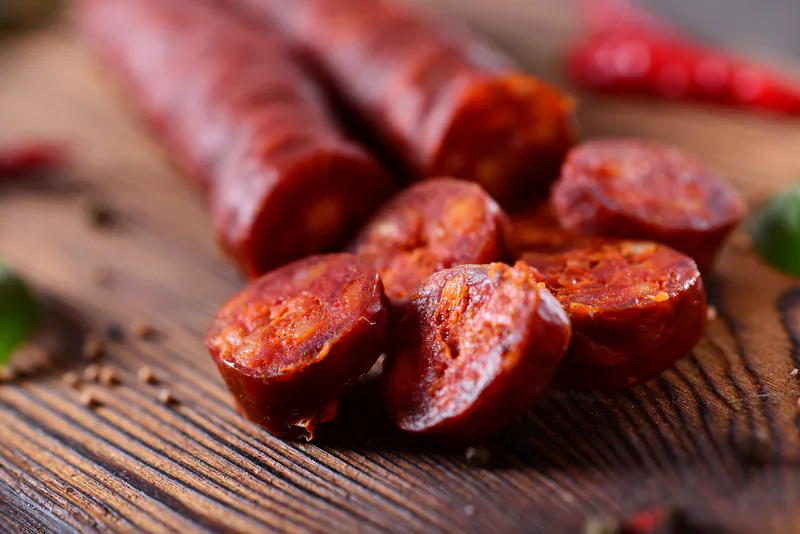
Chorizo fresco (homemade fresh Spanish chorizo)
 Spanish · 13 h · 532 kcal
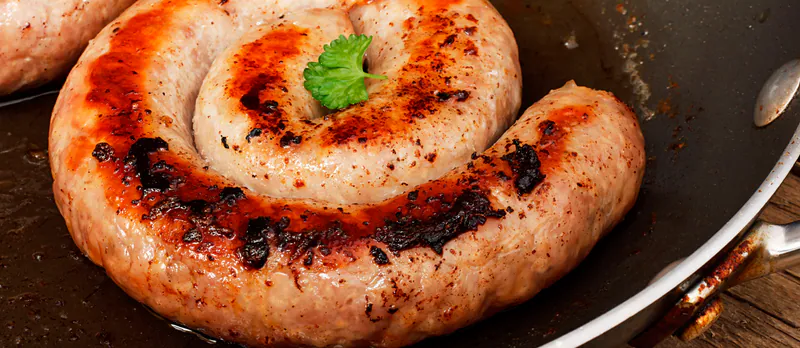
Cumberland sausage (homemade coil)
 British · 1 h 40 min · 671 kcal
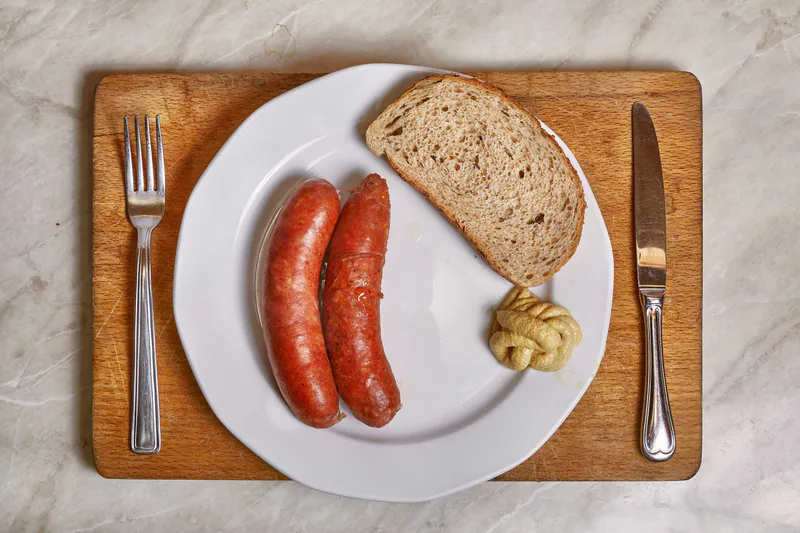
Debreceni kolbász (homemade Debrecen paprika sausage)
 Hungarian · 2 h 35 min · 759 kcal
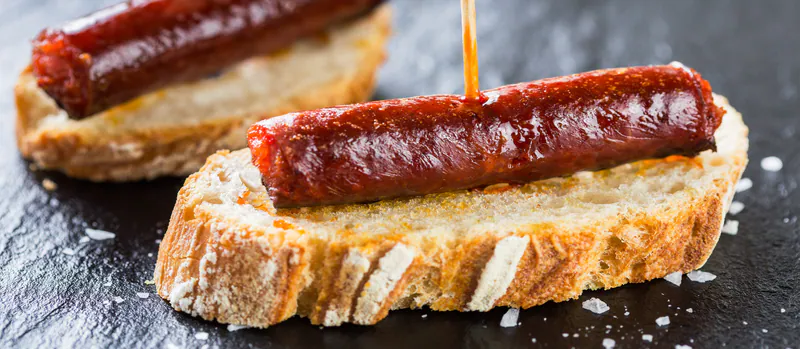
Homemade chistorra (Basque paprika sausage)
Spanish · 1 h 10 min · 572 kcal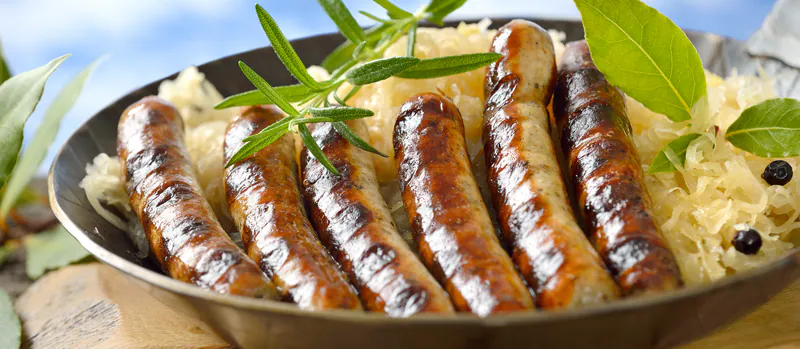
Homemade Franconian bratwurst
 German · 3 h 35 min · 695 kcal
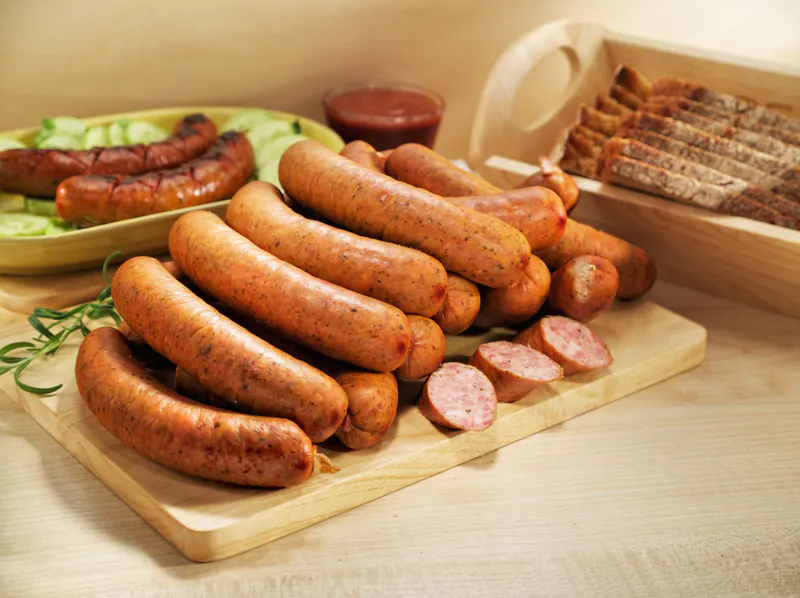
Kiełbasa polska (homemade Polish garlic sausage)
 Polish · 3 h 15 min · 654 kcal
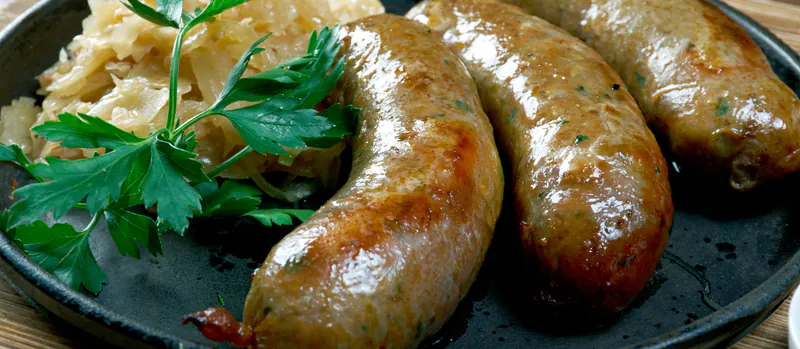
Kupati (Georgian spiced sausages)
 Georgian · 2 h 15 min · 460 kcal
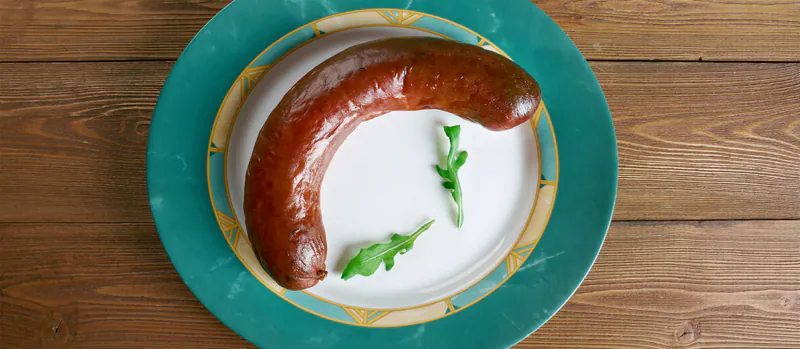
Loukaniko (Cypriot red wine and coriander pork sausage)
 Cypriot · 25 h 15 min · 441 kcal
9 more
- Mealy pudding (Scottish oatmeal white pudding) · British
- Merguez (homemade spicy lamb sausages) · Algerian
- Qazı (Kazakh horse-meat sausage) · Kazakh
- Sai kok (Lao lemongrass pork sausage) · Lao
- Sai oua (Northern Thai herbal sausage) · Thai
- Salsiccia (homemade fresh Italian sausage) · Italian
- St. Galler Bratwurst (Swiss veal sausage) · Swiss
- Verivorst (Estonian blood sausage with barley) · Estonian
- Weißwurst (Bavarian white sausage) · German