

Claypot rice with chicken and Chinese sausage
Non-vegetarian
煲仔飯 · bou zai faan
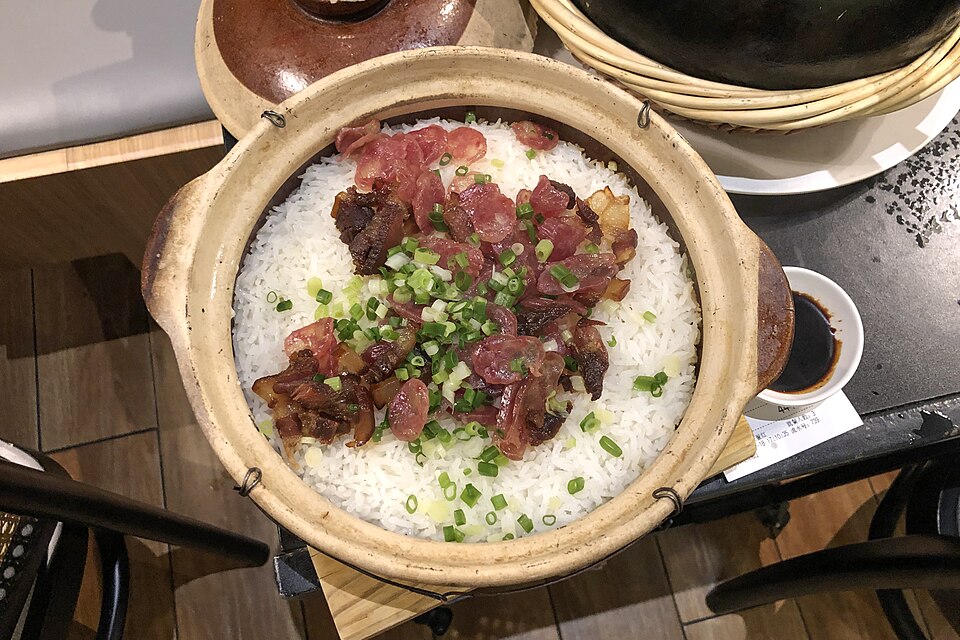
Rice cooked in a claypot until a crisp golden crust forms on the bottom, topped with marinated chicken, shiitake and sweet Chinese sausage that steam on top, then drizzled with sweet soy sauce. A Hong Kong winter favourite.
Claypot rice with chicken and Chinese sausage is a Hong Kong rice dish, ready in about 1 hour 15 minutes and made with long-grain white rice and chinese sausage (lap cheong). It serves 2 and is rated intermediate to cook.
- Prep
- 15 min
- Cook
- 30 min
- Rest
- 30 min
- Total
- 1 h 15 min
- Serves
- 2
- Level
- Intermediate
- Calories
- 816
Method
Step 1
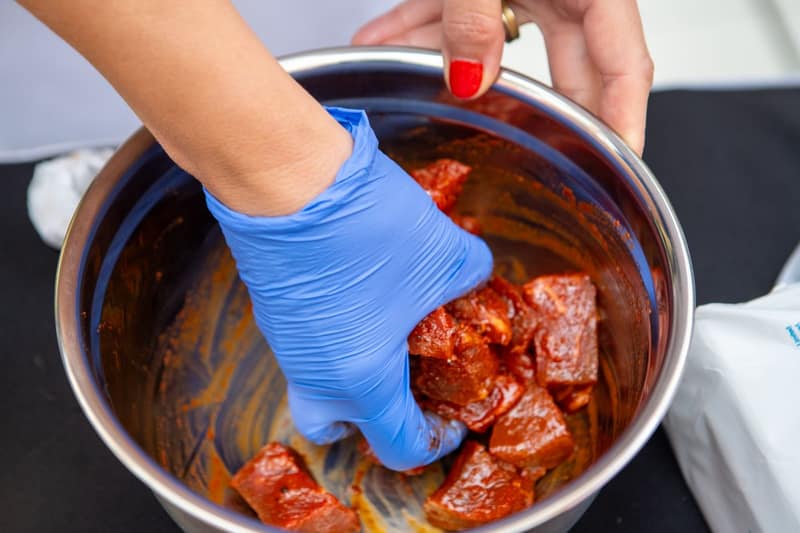
Soak the rice for 30 minutes. Meanwhile marinate the chicken with the soy sauce (opens in a new tab), oyster sauce (opens in a new tab), wine, cornstarch (opens in a new tab) and ginger.
- 5 min
How it looks · Photo: Ip Photographer on Pexels Step 2
Brush a claypot or heavy pot with the oil, add the drained rice and water and bring to the boil over medium-high heat, uncovered, until most of the water has disappeared and holes appear on the surface.
- 8 min
- medium-high heat
- Dutch oven / casserole pot (opens in a new tab)
Step 3
Quickly lay the chicken, sausage and shiitake (opens in a new tab) on top, cover and cook on low heat.
- 15 min
- low heat
Food safety: Check the chicken is cooked through before serving.
Step 4
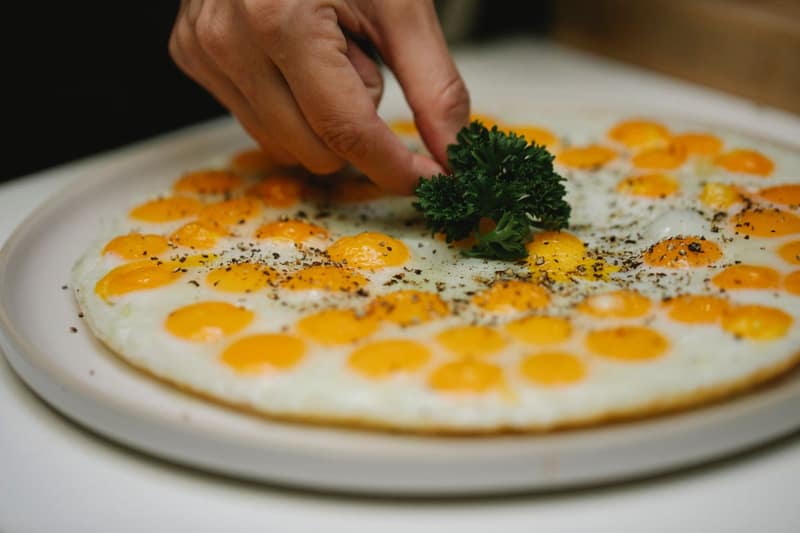
Drizzle a little oil around the inside edge of the pot, then tilt and rotate the pot over medium heat for a few minutes to crisp the rice crust. Add the egg (opens in a new tab) now if using.
- 5 min
- medium heat
Listen for a gentle crackle — that's the crust forming.
Step 5
Warm the sauce ingredients together, pour over the rice, scatter with spring onion (opens in a new tab) and bok choy (opens in a new tab) and mix at the table, scraping up the crust.
- 2 min
How it looks · Photo: Klaus Nielsen on Pexels
About this dish
- Origin
- Hong Kong · Commonly attributedA Cantonese dish strongly associated with Hong Kong's dai pai dong and winter street stalls.Also popular in ChinaMore food from Hong Kong
- Dish
- Dinner · Rice dishes · Main courses
- Cooking method
- Steamed, Simmered
- Taste
- savoury, sweet & savoury, smoky
- Diet
- Dairy-free · No nut ingredients · High-proteinWithout the optional extras: Egg-freeWorked out from the ingredients. How labels work
All labels
Non-vegetarian · Dairy-free · No nut ingredients · Beef-free · High-protein - Good for
- One-pot
- Cook more with
- Long-grain white rice · Chinese sausage (lap cheong) · Chicken thigh · Soy sauce · Oyster sauce · Shaoxing wine
- Techniques
- Boiling · Simmering · Steaming · Marinating
Allergens
- Contains, can be adapted: Eggsfrom egg
- May contain: Crustaceansfrom oyster sauce
- Contains: Molluscsfrom oyster sauce
- Contains: Wheatfrom soy sauce, oyster sauce, shaoxing wine, chinese sausage (lap cheong)
- Contains: Glutenfrom soy sauce, oyster sauce, shaoxing wine, chinese sausage (lap cheong)
- Contains: Soyfrom soy sauce, oyster sauce, chinese sausage (lap cheong)
- Contains: Sesamefrom toasted sesame oil
- May contain: Sulphitesfrom chinese sausage (lap cheong)
Based on typical versions of these ingredients and not verified allergen-free. Brands differ and cross-contact happens, so always check labels. For severe allergies, follow your clinician’s advice.
Nutrition
816 kcal per serving
Estimated1 serving ≈ 497 g · recipe makes 2
Where the energy comes from
- Protein 20%
- Carbohydrate 49%
- Fat 31%
| Nutrient | Per serving | Per 100 g* |
|---|---|---|
| Energy | 816 kcal | 164 kcal |
| Protein | 39.5 g | 8 g |
| Carbohydrate | 98 g | 19.7 g |
| Net carbohydrate | 94.9 g | 19.1 g |
| Sugars | — | — |
| Added sugars | — | — |
| Fibre | 3.1 g | 0.6 g |
| Fat | 27.8 g | 5.6 g |
| Saturated fat | — | — |
| Trans fat | — | — |
| Cholesterol | — | — |
| Sodium | 2263 mg | 455 mg |
| Salt equivalent | 5.7 g | 1.1 g |
Vitamins & minerals per serving
- Potassium
- 792 mg
- Calcium
- 78 mg
- Iron
- 6.8 mg
- Magnesium
- 91 mg
- Vitamin A (RAE)
- —
- Vitamin C
- —
- Vitamin D
- —
- Vitamin B12
- —
- Folate (DFE)
- 449 µg
How these numbers were made
- Calculated from USDA FoodData Central (SR Legacy) per-100 g values and the listed quantities.
- *Per 100 g of combined raw ingredients; the cooked dish may weigh more or less.
- Optional ingredients are not included: bok choy, egg.
- Shaoxing wine: Sake (FDC 167723) used as a stand-in for Chinese rice cooking wine.
- Chinese sausage (lap cheong): Dry/hard pork salami (FDC 172938) used as a stand-in; lap cheong is similarly fatty and cured but sweeter.
- “—” means the value isn’t known for enough of the ingredients; it is never zero by default.
- Values are estimates for guidance, not for medical dosing. U.S. Department of Agriculture, Agricultural Research Service. FoodData Central, 2019. fdc.nal.usda.gov.
Good to know
Tips
- A heat diffuser helps a thin claypot from cracking on gas or electric hobs.
Common mistakes
- Lifting the lid too often while the rice steams — it never cooks through.
- Turning the heat too high for the crust; listen for a gentle crackle, not a burning smell.
Storage
- Best eaten from the pot. Refrigerate leftovers within 1 hour and eat within 1 day; reheat until piping hot.
Original editorial recipe · FriendsPantry editorial · Not yet independently reviewed · Added · Updated
Recipe DNA
How this dish is built
Built from the recipe’s own sections. Each band’s width is its share of the dish by weight. Choose a component to see what it does.
What the dish is built around
Main ingredient
- Long-grain white rice, jasmine, rinsed and soaked 30 minutes220 g
- Chicken thigh, boneless, cut into bite-size pieces200 g
- Chinese sausage (lap cheong), sliced on the diagonal2 piece · 80 g
- Shiitake mushrooms, soaked if dried, sliced4 piece · 76 g
- Bok choy, blanched (optional)150 g
- Egg (optional)1 piece · 50 g
Reviews & corrections
Reviews come from signed-in cooks and appear after a moderator checks them. We never show made-up ratings.
You might also like
Beef and broccoli stir-fry
 Cantonese · 30 min · 309 kcal
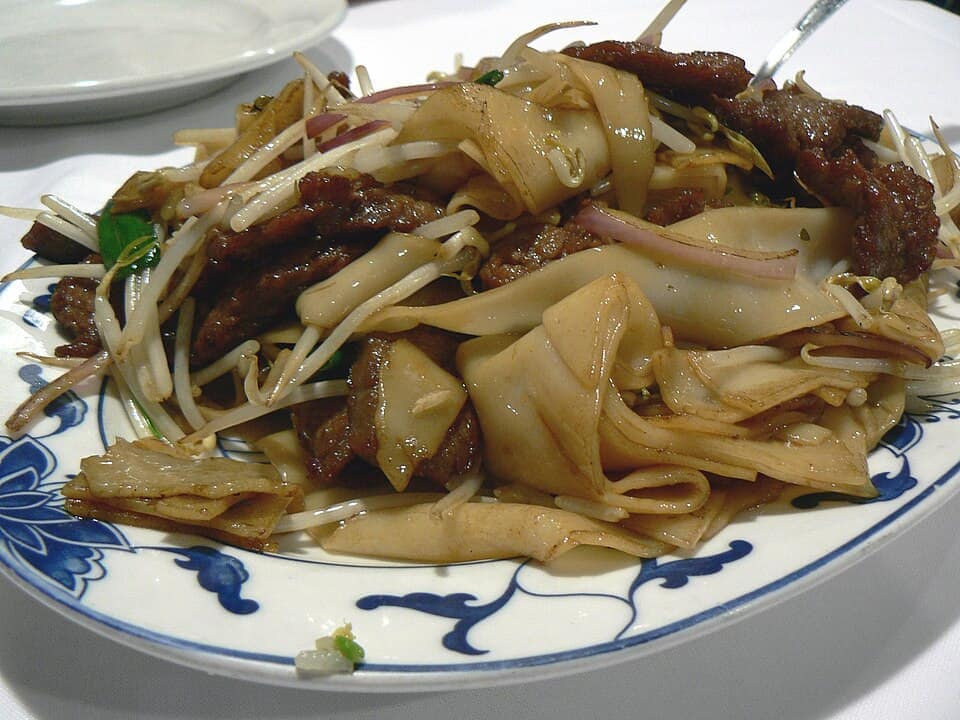
Beef chow fun
Cantonese · 30 min · 772 kcal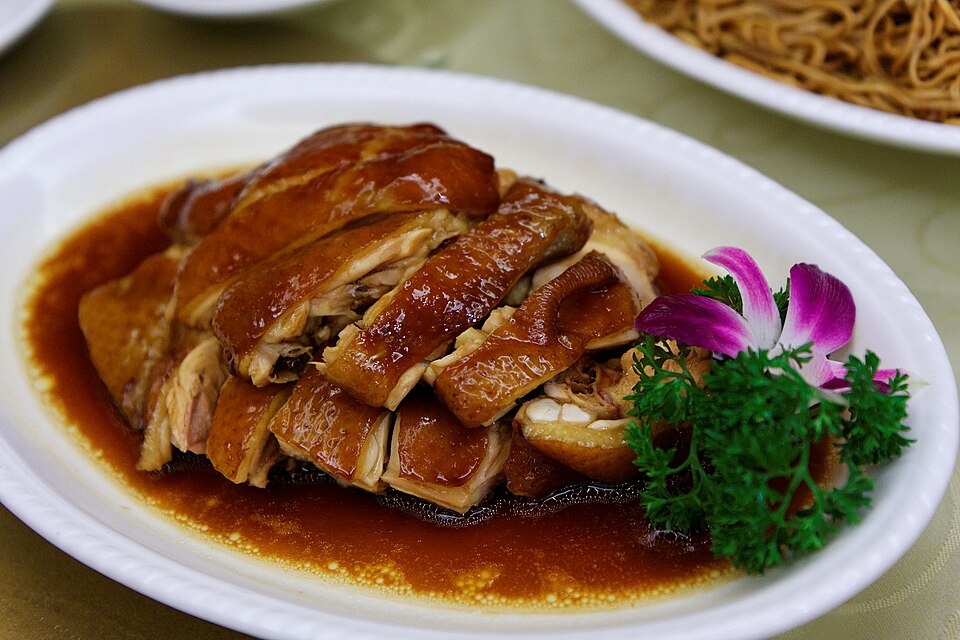
Cantonese soy sauce chicken
Cantonese · 1 h 5 min · 466 kcal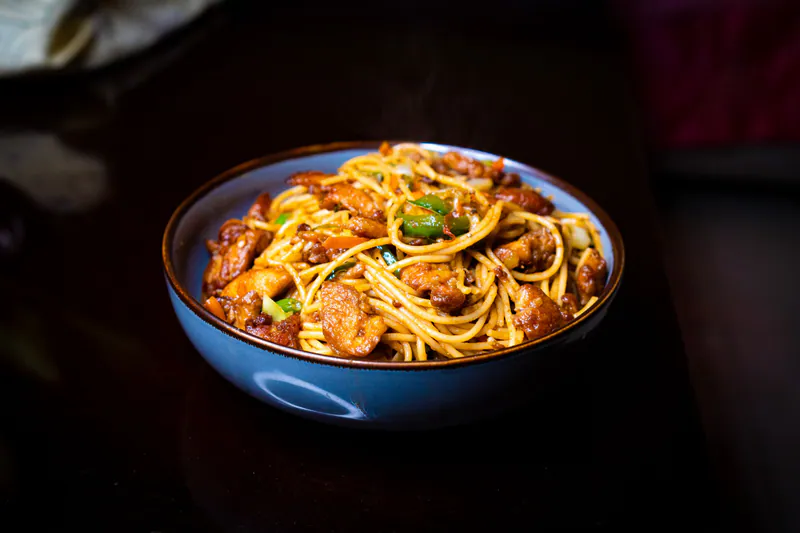
Chicken chow mein
Cantonese · 27 min · 636 kcal