
Regional spice blends
Za'atar
Levantine blend of dried thyme-like herbs, sumac, toasted sesame and salt, eaten with olive oil and bread.
Also called: zaatar, zahtar, zatar
- Herbal & green
- Fruity & sour
- Nutty & toasty
- No heat
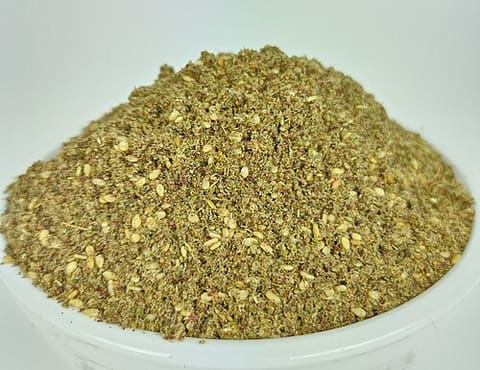
Photo: Fshadid, via Wikimedia Commons (CC-BY-SA-4.0)
Flavour and aroma
herbal, tangy, nutty, salty. Herbal, tangy, nutty, salty.
- Heat
- No heat
- Forms
- dried
How to use it
use raw
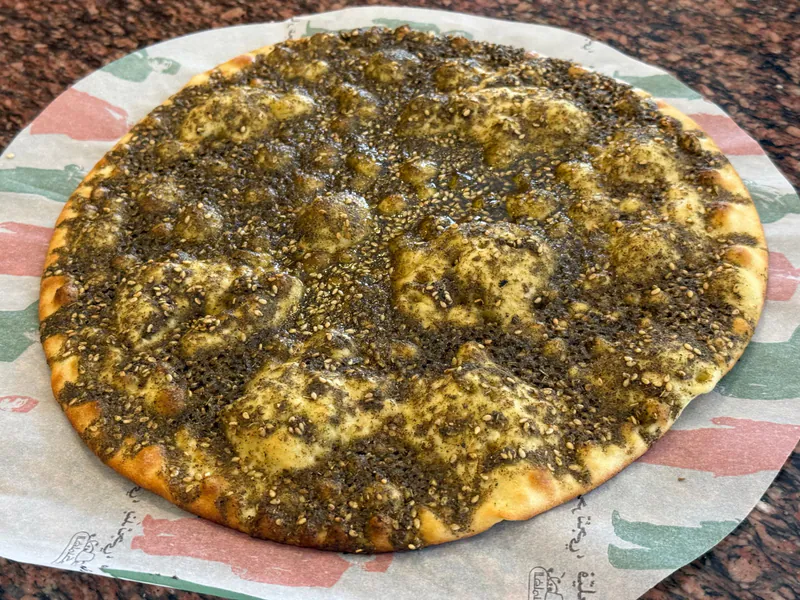
Mix 1 part za'atar with 2–3 parts olive oil into a paste and spread on dough before baking manakish, or dip bread straight into oil then za'atar.
use raw
Sprinkle over labneh, hummus, eggs, salads and roast vegetables after cooking.
toast · Toasting technique
If making your own, toast the sesame seeds separately until golden before mixing with the dried herbs, sumac and salt.
- Man'oushe flatbread
- Dipping bread with olive oil
- Sprinkled on labneh, eggs and hummus
- Roasted vegetables and chicken
Identifying good quality
A coarse green-brown mix flecked with red-purple sumac and pale sesame seeds. It should smell herbal and tangy. Very green, uniform blends may use dyed or bulked herbs; dark brown, dusty blends are old.
- Not to be confused with Dried thyme: Plain dried thyme lacks the sesame, sumac and salt; some Levantine labels translate za'atar herb as 'thyme'.
Origin and history
Origin: The Levant. 'Za'atar' names both a group of local wild herbs (chiefly Origanum syriacum) and the blend made from them.. Grown and used: Used across Lebanon, Syria, Palestine, Jordan and Israel, with versions in Iraq and Turkey; now sold internationally..
The blend of dried za'atar herb (or thyme and oregano), sumac, toasted sesame and salt is an everyday Levantine seasoning, eaten with olive oil and bread for breakfast and baked onto manakish. Recipes vary by region and family: some add cumin, coriander or marjoram.
Commonly told; not firmly documented
In masalas, pastes and sauces
Recipes with za'atar
Ka'ak al-Quds
 Palestinian · 2 h 18 min · 502 kcal · Vegetarian
Labneh with za'atar and olive oil
Levantine · 8 min · 125 kcal · Vegetarian
Manakish za'atar
 Lebanese · 1 h 41 min · 424 kcal · Vegetarian
Taboon bread
Palestinian · 2 h 40 min · 344 kcal · Vegan