
Dried chillies
Scotch bonnet pepper
Capsicum chinense
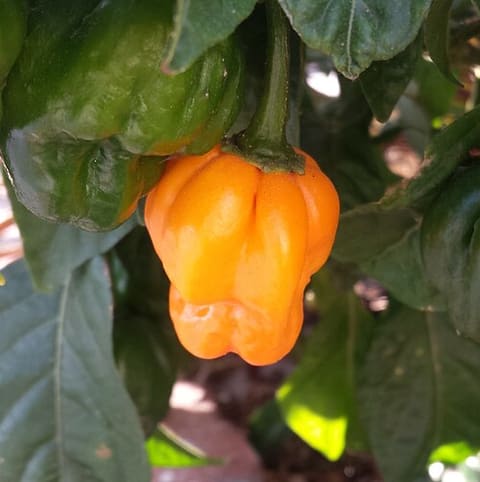
Squat, fruity, very hot Caribbean chilli; dropped whole into curries and stews or blended into jerk and pepper sauces.
Also called: scotch bonnet, scotch bonnet chilli, habanero, congo pepper, bonney pepper, piment bouc, wiri wiri
Around the world: piman bouk (ht) · piment antillais (fr)
- Hot & numbing
- Fruity & sour
- Very hot
Photo: Temaciejewski, via Wikimedia Commons (CC-BY-SA-4.0)
Flavour and aroma
fiery, fruity, tropical, apricot-like. Fierce heat with a sweet, fruity, almost tropical flavour.
- Heat
- Very hot
- Forms
- fresh, dried
How to use it
infuse · Simmering technique
For flavour with controlled heat, prick the whole chilli once or twice and simmer it in the pot (rice and peas, stews, soups); lift it out before serving without bursting it.
use raw
For jerk marinade and pepper sauce, wear gloves, remove seeds and white ribs for less heat, and blend with the other ingredients.
- Added whole to curries and stews for flavour with controlled heat
- Blended into jerk marinade and Caribbean pepper sauce
- Chopped into escovitch, pikliz and salsas
Identifying good quality
Squat, lantern-shaped chillies 2.5–4 cm across, red, orange, yellow or green, with glossy, slightly wrinkled skin. Very strong fruity smell. Typically 100,000–350,000 Scoville units: many times hotter than a jalapeño.
- Not to be confused with Fresh red chilli: Bird's eye chillies are long and thin; Scotch bonnets are squat and much hotter.
Origin and history
Origin: Capsicum chinense was domesticated in the Amazon basin; the Scotch bonnet type developed in the Caribbean.. Grown and used: Grown across the Caribbean and West Africa; used in Jamaican, Trinidadian, Haitian, Guyanese and West African cooking..
Capsicum chinense chillies were grown throughout the Caribbean before European contact. The Scotch bonnet, named for its squat bonnet shape, became the defining heat of Jamaican jerk and pepper pot, Caribbean pepper sauces and, via trade, many West African stews.
Commonly told; not firmly documented
Recipes with scotch bonnet pepper
Curry channa and aloo
 Trinidadian · 45 min · 337 kcal · Vegan
Griot
 Haitian · 5 h 55 min · 524 kcal
Jamaican curry chicken
 Jamaican · 1 h 10 min · 422 kcal
Trinidad curry duck
Trinidadian · 2 h 10 min · 357 kcal