
Regional spice blends
Ras el hanout
Morocco's 'head of the shop' spice blend: warm, floral and gently hot, for tagines, couscous and grilled meat.
Also called: ras al hanout, ras-al-hanout, moroccan spice blend, head of the shop
Around the world: رأس الحانوت (ar)
- Warm & sweet
- Floral
- Earthy
- Very mild
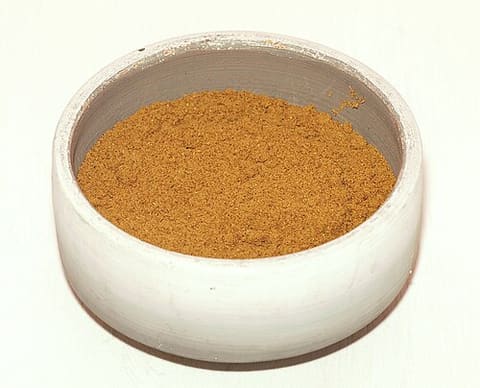
Photo: Sarefo, via Wikimedia Commons (CC-BY-SA-4.0)
Flavour and aroma
warm, floral, sweet-spicy, complex. Warm, sweetly spiced, earthy, with mild heat.
- Heat
- Very mild
- Forms
- ground
How to use it
bloom in fat · Tadka (tempering) technique
Stir into olive oil or butter with the onions at the start of a tagine and cook for 1 minute over low-medium heat before adding meat and liquid.
use raw
Rub on lamb or chicken with oil and salt before roasting or grilling, ideally a few hours ahead.
- Seasoning tagines and couscous
- Rubbed on lamb or chicken before grilling or roasting
- Tossed with roasted vegetables and chickpeas
- A pinch in lentil soup or harira
Identifying good quality
A fine, warm-brown to orange powder, sometimes with visible rose petals. It should smell layered and floral; a blend that smells mainly of cumin or turmeric is a simpler, cheaper version.
- Not to be confused with Baharat (seven spice): Baharat is a Levantine/Gulf blend, peppery rather than floral.
Origin and history
Origin: Morocco and the wider Maghreb.. Grown and used: Used in Morocco, Algeria and Tunisia; sold internationally..
Ras el hanout means 'head of the shop' in Arabic: the best blend a spice merchant could offer. There is no fixed recipe; traditional versions can contain a dozen to 30 or more ingredients, such as cumin, coriander, ginger, cinnamon, turmeric, black pepper, cardamom, nutmeg, mace, allspice, dried rosebuds, lavender and grains of paradise.
Well documented
Recipes with ras el hanout
No recipes use it yet.