
Regional spice blends
Five-spice powder
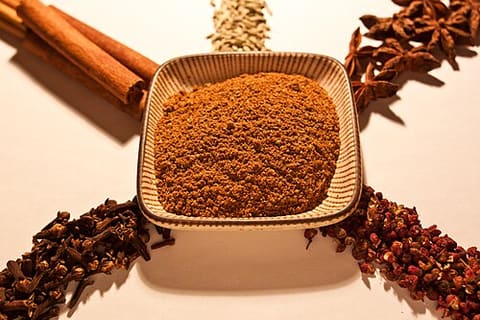
Chinese blend of star anise, Sichuan pepper, cinnamon, cloves and fennel for roast meats and braises.
Also called: chinese five spice, wuxiang fen
- Anise & liquorice
- Warm & sweet
- Hot & numbing
- No heat
Photo: Tim Sackton, via Wikimedia Commons (CC-BY-SA-2.0)
Flavour and aroma
liquorice, warm, sweet, slightly numbing. Sweet, anise-led, warm, slightly numbing.
- Heat
- No heat
- Forms
- ground
How to use it
use raw
Mix into marinades and dry rubs for pork, duck and chicken: about 1/2 teaspoon per 500 g meat.
bloom in fat · Tadka (tempering) technique
Add briefly to hot oil with garlic for stir-fries or braises; too long and it turns bitter.
- Char siu and roast duck
- Red-braised pork
- Marinades and dry rubs
- Taiwanese fried chicken
Identifying good quality
A fine, reddish-brown powder that smells first of star anise and cinnamon. It is strong: a little goes a long way.
- Not to be confused with Panch phoron: Bengali panch phoron is a mix of five whole seeds used in tempering, unrelated in flavour.
Origin and history
Origin: China.. Grown and used: Used in southern Chinese, Taiwanese and Vietnamese cooking and widely sold internationally..
Chinese five-spice powder is usually star anise, cloves, Chinese cinnamon (cassia), Sichuan pepper and fennel seed, though recipes vary and some use more than five spices. It flavours char siu, roast duck, red-cooked meats and marinades. Its exact origin is not documented; the popular idea that it was designed to represent five elements or five tastes is a later explanation, not established history.
Uncertain
In masalas, pastes and sauces
Recipes with five-spice powder
Char siu (Cantonese barbecue pork)
 Cantonese · 1 h 10 min · 392 kcal
Homemade hoisin sauce
Cantonese · 28 min · 42 kcal · Vegan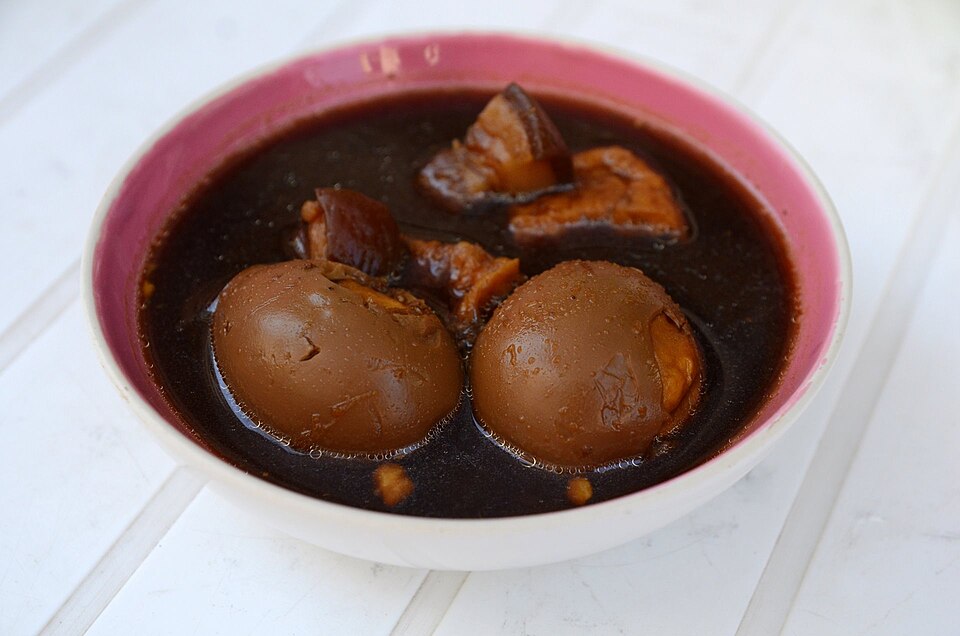
Kai palo
 Thai · 1 h 30 min · 586 kcal
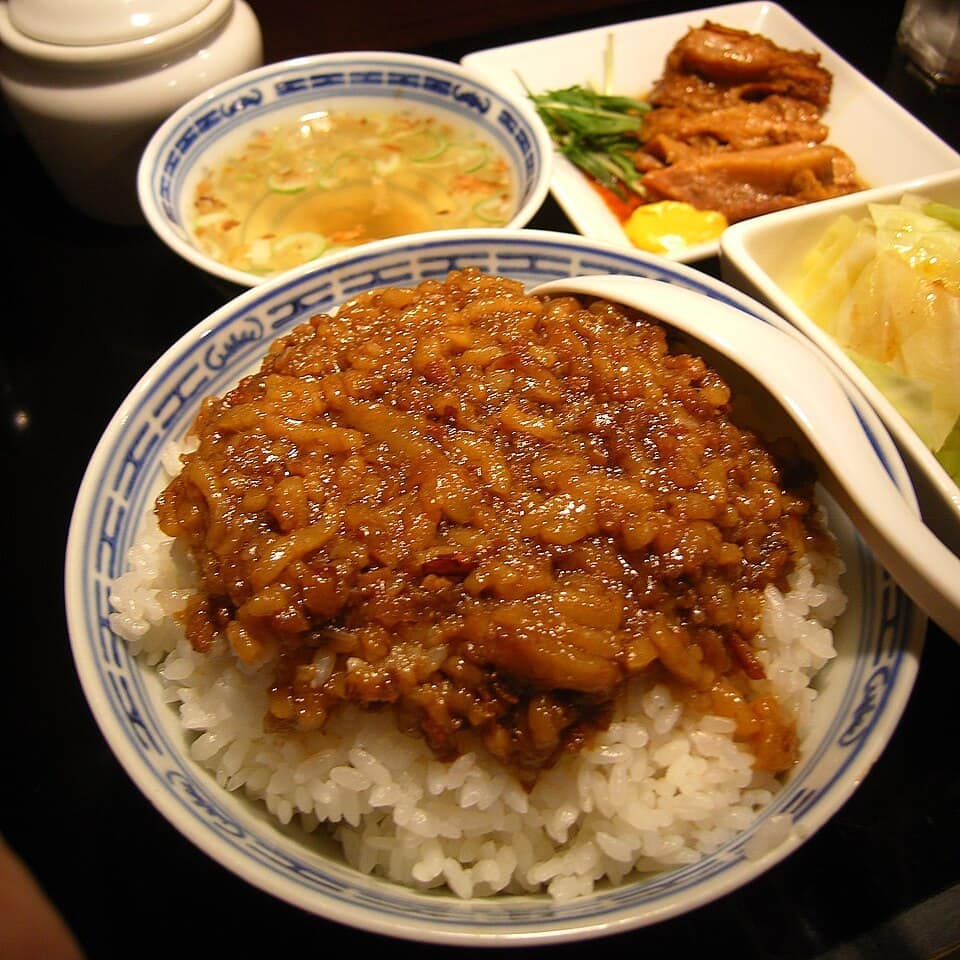
Lu rou fan (Taiwanese braised pork rice)
 Taiwanese · 2 h · 779 kcal
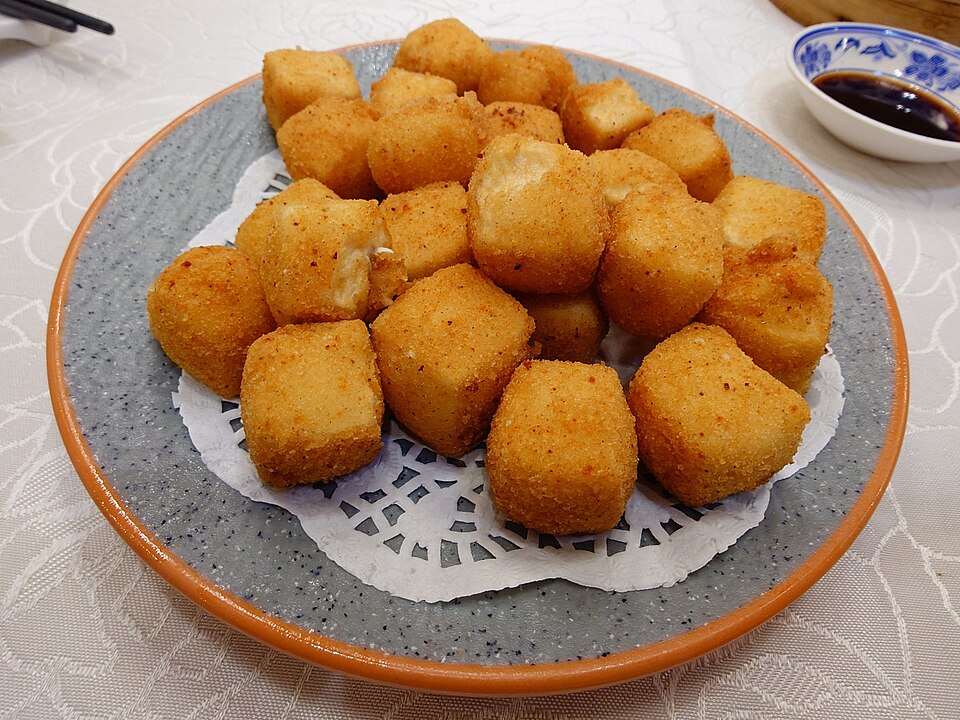
Salt and pepper tofu
Cantonese · 35 min · 399 kcal · Vegan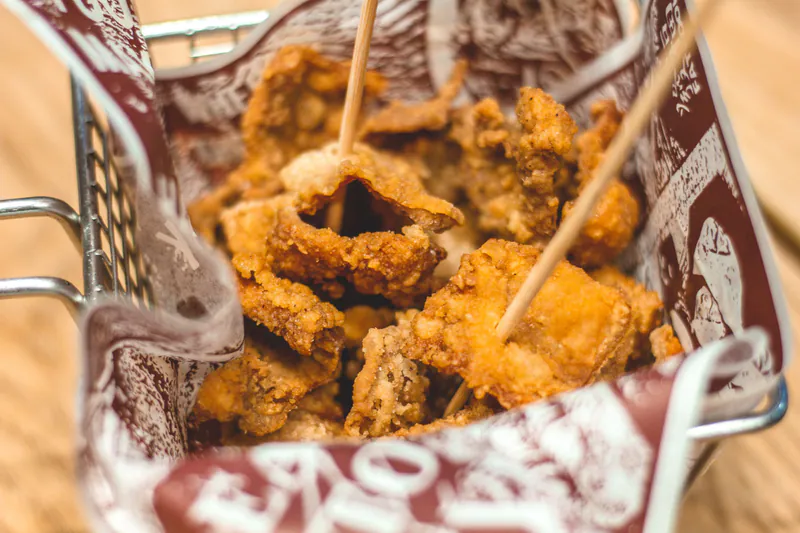
Taiwanese popcorn chicken
Taiwanese · 1 h 5 min · 423 kcal