
Pasta, noodles & bread · Noodles
Soba noodles
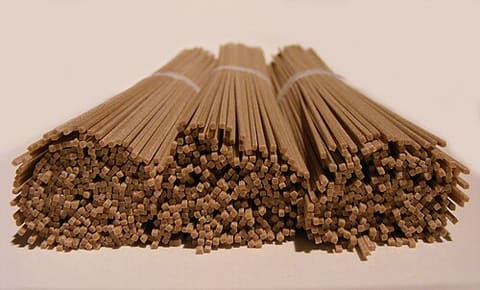
Thin, grey-brown Japanese buckwheat noodles, served hot in broth or cold with dipping sauce.
Also called: buckwheat noodles, soba
A kind of noodles
Photo: FotoosVanRobin, via Wikimedia Commons (CC-BY-SA-2.0)
What it is
Soba are made from buckwheat flour, usually with some wheat flour (often 20–50%) for strength. They are thin, flat-edged and grey-brown, with an earthy, nutty taste. 100% buckwheat (juwari) soba is gluten-free but fragile; most dried soba contains wheat. They differ from udon and ramen, which are wheat-only.
How it’s used
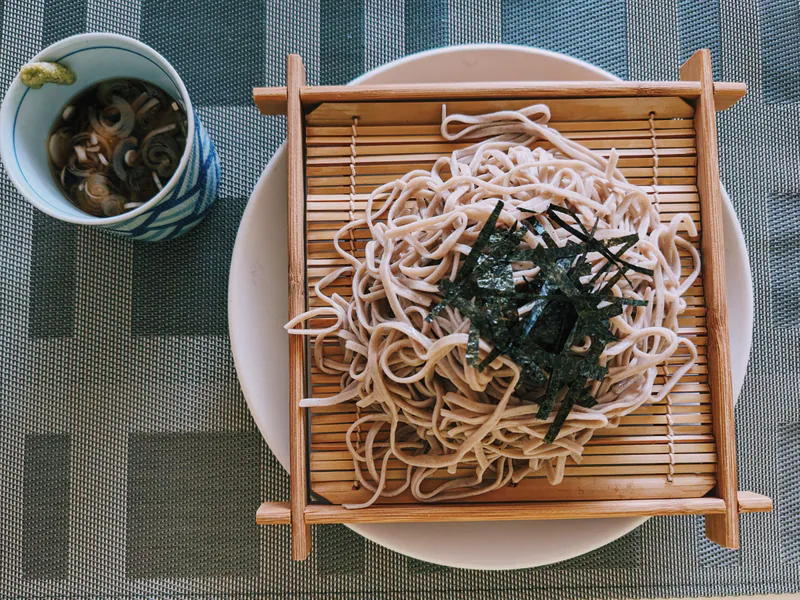
- Cold zaru soba with tsuyu dipping sauce
- Hot soba in dashi broth
- Soba noodle salads
- Yakisoba-style stir-fries (though yakisoba uses wheat noodles)
Characteristics
Storage
Pantry-stable. Dried soba keeps in a dry cupboard.
Diet, allergens and safety
Contains Wheat, Gluten.
- Vegetarian
- Vegan
- Dairy-free
- Egg-free
- Gluten-free
- Nut-free
- Soy-free
- Caffeine-free
- Most soba contains wheat; only 100% buckwheat soba labelled gluten-free is suitable for coeliacs. Buckwheat itself is an allergen for some.
Nutrition per 100 g
- Energy
- 336 kcal
- Protein
- 14.38 g
- Carbohydrate
- 74.62 g
- Fat
- 0.71 g
- Fibre
- — g
- Sugars
- — g
USDA FoodData Central: Noodles, japanese, soba, dry.
Substitutes
Optional — what works if you don’t have it, and how it changes the dish.
- Udon noodles — Works in hot broths; thicker and milder.
Related ingredients
Recipes with soba noodles
Cold soba noodle salad with edamame
International · 28 min · 346 kcal · Vegan
Zaru soba
 Japanese · 45 min · 374 kcal
More noodles
Noodles
Egg noodles
Chinese-style wheat noodles enriched with egg; springy, yellow and good for lo mein, chow mein and soups.
19 recipes
Noodles
Noodles
Long strands of dough or starch, from wheat and egg noodles to rice, buckwheat and glass noodles.
53 recipes
Noodles
Rice noodles
Dried noodles of rice flour and water, from hair-thin vermicelli to flat pho noodles; gluten-free and quick to soak.
18 recipes
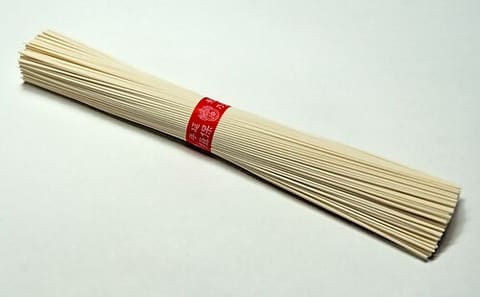
Noodles
Udon noodles
Thick, white Japanese wheat noodles with a soft, bouncy chew; sold fresh, frozen or dried.
6 recipes
Noodles
Ramen noodles
Springy yellow wheat noodles made with alkaline salts (kansui); used in ramen and as chow mein noodles.
4 recipes
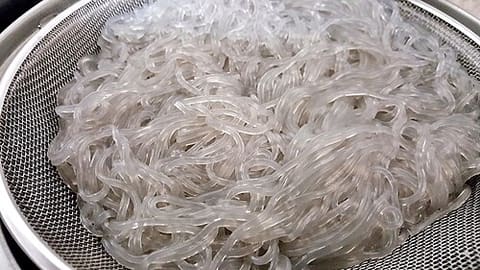
Noodles
Glass noodles
Transparent noodles of mung bean or sweet potato starch; slippery, chewy and gluten-free.
6 recipes
Noodles
Fresh wide rice noodles (ho fun)
Soft, fresh sheets or wide ribbons of steamed rice batter; the noodles in beef chow fun and pad see ew.
1 recipe
Noodles
Falooda vermicelli
Very thin vermicelli noodles cooked soft and layered with rose syrup, milk, basil seeds and ice cream in falooda.
2 recipes