
Oils & fats · Animal fats
Duck fat
Rendered fat from duck, prized for roast potatoes, confit and frying.
Also called: rendered duck fat, graisse de canard, duck dripping
Around the world: graisse de canard (fr)
What it is
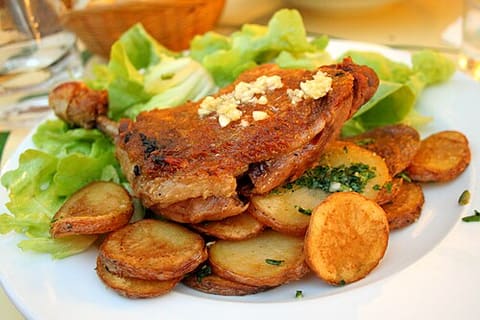
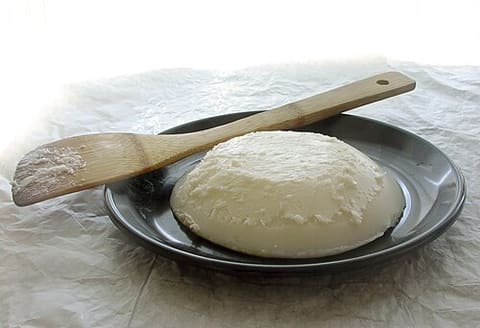
The clear golden fat rendered from duck skin and cavity fat, solid in the fridge and soft at room temperature. It is used in south-west France for confit and frying, and in British kitchens for the crispest roast potatoes.
How it’s used
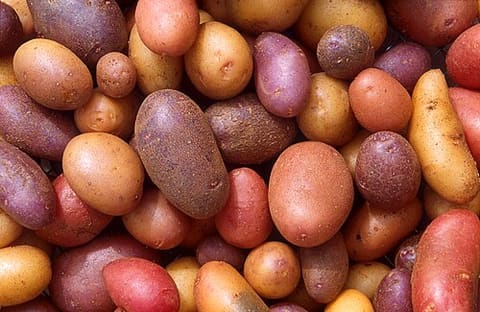
- Roasting potatoes
- Confit duck and other meats
- Sautéing and frying
- Enriching beans and cassoulet
Characteristics
Storage
Refrigerated. Keep in a sealed jar in the fridge for months, or freeze.
Diet, allergens and safety
No major allergens in typical versions.
- Vegetarian
- Vegan
- Dairy-free
- Egg-free
- Gluten-free
- Nut-free
- Soy-free
- Caffeine-free
Nutrition per 100 g
- Energy
- 902 kcal
- Protein
- 0 g
- Carbohydrate
- 0 g
- Fat
- 100 g
- Fibre
- 0 g
- Sugars
- 0 g
USDA FoodData Central: Lard (a close stand-in).
Substitutes
Optional — what works if you don’t have it, and how it changes the dish.
Related ingredients
Recipes with duck fat
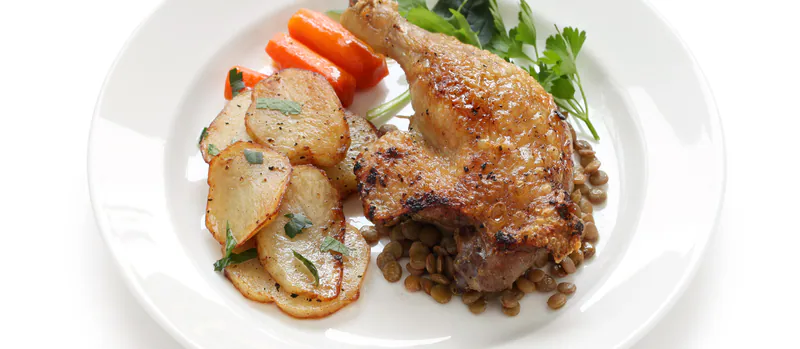
Confit de canard (duck confit)
 French · 15 h 50 min · 349 kcal
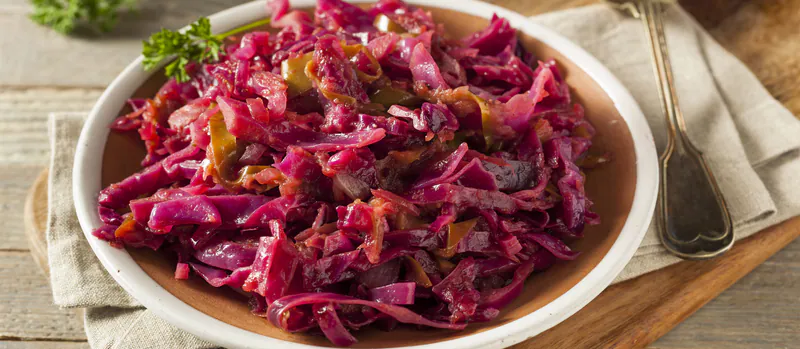
Rødkål (Danish sweet and sour red cabbage)
 Danish · 1 h 50 min · 159 kcal
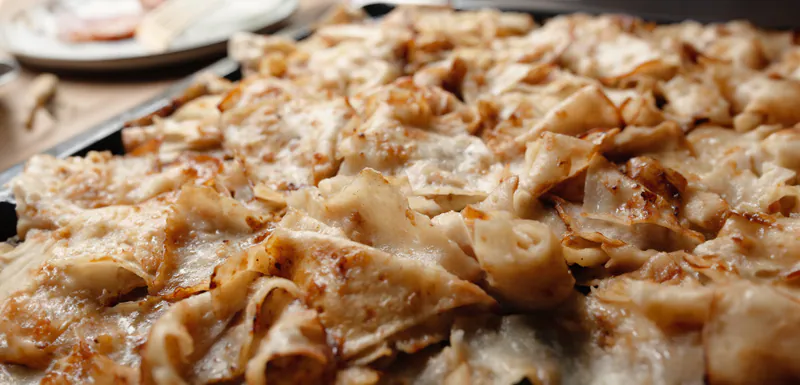
Zagorski mlinci (baked pasta sheets)
 Croatian · 1 h 35 min · 383 kcal