
 Italian · Appetizers & starters
Tonno del Chianti (Tuscan pork 'tuna' preserved in olive oil)
Non-vegetarian
Tonno del Chianti
Pork salted overnight, poached slowly in white wine with peppercorns, juniper and bay until it falls into flakes, then packed in jars under Tuscan olive oil. The texture and look are uncannily like preserved tuna, and it is eaten the same way, with beans and sliced onion.
Tonno del Chianti (Tuscan pork 'tuna' preserved in olive oil) is an Italian starter from Italy, ready in about 4 hours 20 minutes and made with pork loin, dry white wine and olive oil. It serves 8 and is rated intermediate to cook.
No licensed photograph of this dish yet.
- Prep
- 20 min
- Cook
- 3 h
- Rest
- 1 h
- Total
- 4 h 20 min
- Serves
- 8
- Level
- Intermediate
- Calories
- 517
Plus overnight salting and at least 2 days in the jar before eating.
Main ingredients
Ingredients
For curing
For poaching
For the jars
Method
Curing
5 minStep 1
Rub the pork chunks all over with the coarse salt, cover and refrigerate overnight (12–24 hours).
- 5 min
Food safety: Wash hands, boards and knives after handling raw meat, and keep it apart from salad and other ready-to-eat food.
Poaching
3 h 5 minStep 2
Rinse the salt off the pork and pat dry. Put it in a heavy pot with the wine, water, peppercorns (opens in a new tab), juniper (opens in a new tab), bay leaves (opens in a new tab) and garlic (opens in a new tab); the liquid should just cover the meat.
Step 3
Bring to a bare simmer and cook very gently, uncovered, for 2½–3 hours, topping up with a little water if needed, until the meat breaks into flakes when pressed.
- 180 min
- low heat
Keep the liquid trembling, never boiling, or the meat turns stringy rather than flaky.
Step 4
Lift out the pork with a slotted spoon (opens in a new tab) and leave it to drain and cool on a rack for about 1 hour, until completely cold and dry on the surface.
Jars
10 minStep 5
Break the meat into large flakes and pack into clean, sterilised jars, layering with the extra bay leaves (opens in a new tab), peppercorns (opens in a new tab) and juniper (opens in a new tab). Pour in olive oil (opens in a new tab) to cover by at least 1 cm, tapping the jars to release air bubbles. Seal and refrigerate for at least 2 days before eating.
Food safety: Meat stored under oil must always be kept in the fridge and eaten within 1 week; never keep it at room temperature.
At a glance
1 · Curing in a bowl
 Pork loin
 Salt
then rinse
2 · Poaching in a pot
 Dry white wine
 Black peppercorns
 Juniper berries
 Bay leaves
 Garlic
then break
3 · Jars in a bowl
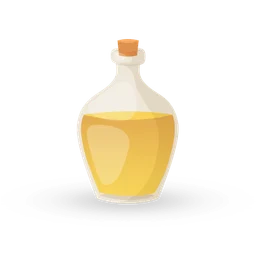 Olive oil
- Bay leaves
- Black peppercorns
- Juniper berries
About this dish
- Origin
- Panzano in Chianti, Tuscany, Italy · Commonly attributedPopularised by the Panzano butcher Dario Cecchini, who first made it with suckling pig as a way to use and keep the whole animal.More food from Italy
Italy - Dish
- Lunch · Dinner · Appetizers & starters · Main courses
- Cooking method
- Poached, Slow-cooked
- Taste
- savoury, aromatic / warmly spiced, rich, salty
- Diet
- No gluten ingredients · Dairy-free · No nut ingredients · Low-carb · High-proteinWorked out from the ingredients. How labels work
All labels
Non-vegetarian · Whole-food focused · Paleo-style · No gluten ingredients · Dairy-free · Egg-free · No nut ingredients · No added sugar · Beef-free · Low-carb · High-protein - Good for
- Make-ahead · Batch cooking
- Cook more with
- Pork loin · Dry white wine · Black peppercorns · Juniper berries · Bay leaves
Allergens
- Contains: Sulphitesfrom dry white wine
Based on typical versions of these ingredients and not verified allergen-free. Brands differ and cross-contact happens, so always check labels. For severe allergies, follow your clinician’s advice.
Nutrition
517 kcal per serving
Estimated1 serving ≈ 289 g · recipe makes 8
Where the energy comes from
- Protein 30%
- Carbohydrate 4%
- Fat 67%
| Nutrient | Per serving | Per 100 g* |
|---|---|---|
| Energy | 517 kcal | 179 kcal |
| Protein | 31.9 g | 11.1 g |
| Carbohydrate | 4.1 g | 1.4 g |
| Net carbohydrate | 3.7 g | 1.3 g |
| Sugars | 1.2 g | 0.4 g |
| Added sugars | 0 g | 0 g |
| Fibre | 0.3 g | 0.1 g |
| Fat | 32 g | 11.1 g |
| Saturated fat | 8.4 g | 2.9 g |
| Trans fat | 0.1 g | 0 g |
| Cholesterol | 89 mg | 31 mg |
| Sodium | 517 mg | 179 mg |
| Salt equivalent | 1.3 g | 0.4 g |
Vitamins & minerals per serving
- Potassium
- 621 mg
- Calcium
- 31 mg
- Iron
- 1.3 mg
- Magnesium
- 49 mg
- Vitamin A (RAE)
- 8 µg
- Vitamin C
- 0 mg
- Vitamin D
- 0.5 µg
- Vitamin B12
- 0.6 µg
- Folate (DFE)
- 2 µg
How these numbers were made
- Calculated from USDA FoodData Central (SR Legacy) per-100 g values and the listed quantities.
- *Per 100 g of combined raw ingredients; the cooked dish may weigh more or less.
- Optional ingredients are not included: garlic.
- Not counted (tiny amounts or “to taste”): juniper berries, juniper berries.
- “—” means the value isn’t known for enough of the ingredients; it is never zero by default.
- Values are estimates for guidance, not for medical dosing. U.S. Department of Agriculture, Agricultural Research Service. FoodData Central, 2019. fdc.nal.usda.gov.
Good to know
Tips
- Bring the jar out of the fridge 30 minutes before serving so the oil liquefies.
- Use the flavoured oil to dress the beans and salad.
Common mistakes
- Packing the meat while still warm or wet, which shortens its fridge life.
Serve with
- Serve like tonno e fagioli: on warm cannellini or borlotti beans with thinly sliced red onion (Certaldo onions in Tuscany), a grind of pepper and some of the oil.
- Pile on toasted pane toscano as crostini.
Food safety
- Cook pork until it reaches at least 63 °C in the centre and refrigerate leftovers within 2 hours.
- Home-preserved meat under oil carries a botulism risk if stored warm; keep it refrigerated at all times and discard if the jar smells off or bulges.
Storage
- Keeps up to 1 week refrigerated, fully covered with oil.
Variations
- Tonno di coniglio: Rabbit cooked and preserved in the same way, a Piedmontese favourite.
- Suckling pig version: The original Panzano recipe uses boned suckling pig, which gives a paler, more delicate 'tuna'.
Original editorial recipe · FriendsPantry editorial · source: TasteAtlas (dish facts) · Not yet independently reviewed · Added
Recipe DNA
How this dish is built
Reviews & corrections
Reviews come from signed-in cooks and appear after a moderator checks them. We never show made-up ratings.
You might also like
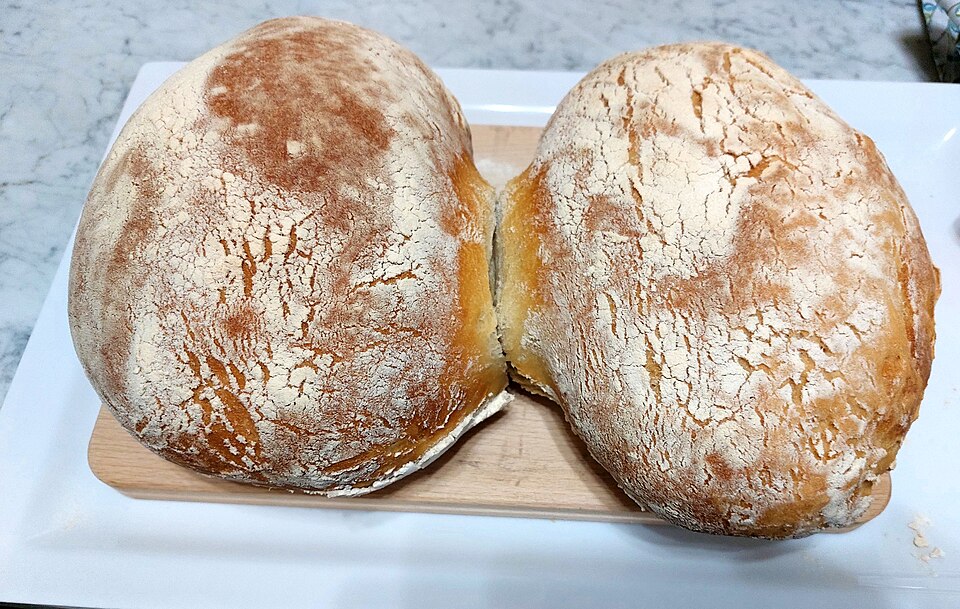
Pane toscano (unsalted Tuscan bread)
Italian · 12 h 5 min · 151 kcal · Vegan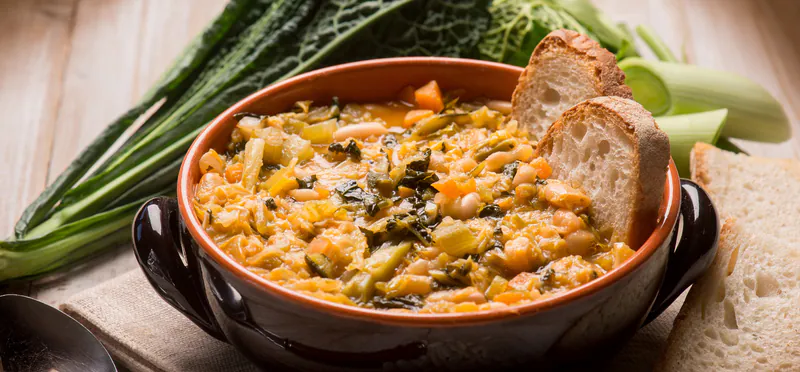
Ribollita
Italian · 1 h 20 min · 315 kcal · Vegan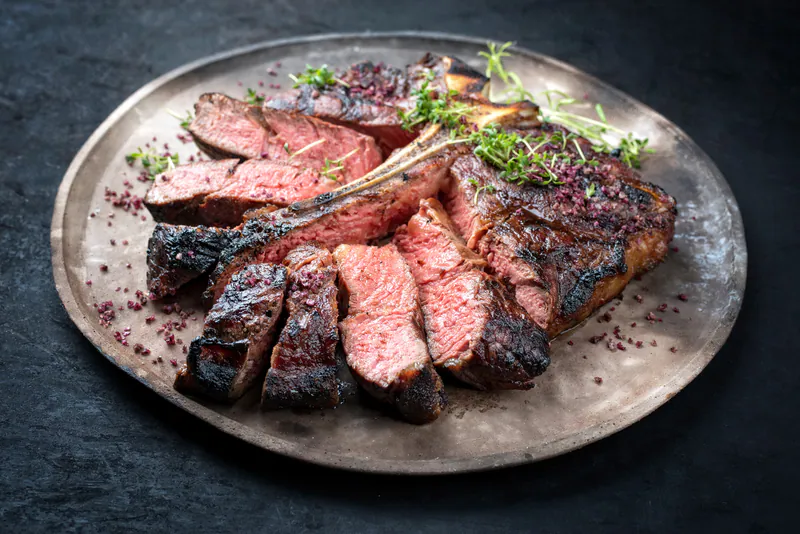
Bistecca alla fiorentina
Italian · 2 h 40 min · 487 kcal
Vitello tonnato
Italian · 4 h 20 min · 352 kcal