
Cookware & bakeware · Clay oven
Tandoor
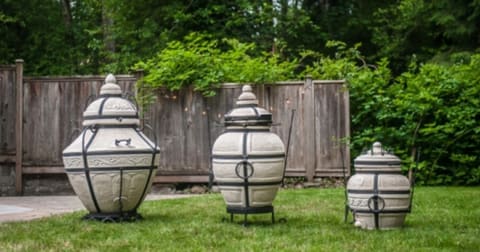
A tall, cylindrical clay oven heated by charcoal or wood, used for naan and tandoori meats.
Specialist · Fuel-fired
Photo: GDobriy, via Wikimedia Commons (CC-BY-SA-4.0)
What it is
A deep, urn-shaped oven of clay, often insulated inside a metal or brick casing, with a fire in the base. Its walls get extremely hot: flatbreads are slapped onto the inner wall to bake, while marinated meats cook on long skewers lowered inside. Home tandoors exist, including gas and electric versions, but most are used in restaurants.
What it’s for: Very high-heat baking and roasting, giving blistered breads and charred, juicy meats.
How to use it
- Light charcoal or wood at the bottom and let the walls heat for an hour or more.
- Stretch dough, dampen the back and press it onto the hot wall with a cushion.
- Lower skewered marinated meat or paneer into the oven.
- Remove bread with hooks and skewers with a cloth once charred and cooked through.
Good to know
- Tasks
- baking naan and tandoori roti, roasting tandoori chicken and kebabs, cooking paneer tikka, charring vegetables
- Cooking methods
- Oven-baked, Roasted, Grilled, Barbecued
- Materials
- clay, steel casing, brick
- Care and cleaning
- New tandoors need curing with gradual fires. Keep it dry; scrape stuck dough from the walls and empty ash once cold.
- Limitations
- Large, slow to heat, fuel-hungry and specialist.
Safety
- Use outdoors or with proper ventilation; burning charcoal releases carbon monoxide.
- Wear long gauntlets: the opening is extremely hot.
- Never pour water inside a hot tandoor.
If you don’t have one
- Oven — Roast at the highest heat and finish under the grill for char.
- Cast-iron skillet — Naan cooks well in a very hot pan, then under a grill or flame.
- Grill / barbecue — Gives similar char and smoke to skewered meats.
Equipment guide
How it works: A clay-lined, urn-shaped chamber is heated by charcoal, wood or gas at its base. The thick walls absorb heat and radiate it back intensely, while hot air rises past food on skewers. Breads stuck to the wall bake by direct contact with the hot clay, puffing and blistering in a couple of minutes. Interior air temperatures are commonly cited in the region of 400 °C and above, much hotter than a home oven.
| Material | Good | Watch out |
|---|---|---|
| Clay liner | Traditional; stores and radiates heat; breads stick to it and release when cooked. | Must be cured slowly before first use; cracks if heated too fast or wetted when hot. |
| Insulated stainless or steel drum casing | Protects the clay and holds heat; portable. | Heavy. |
| Brick or masonry surround | Permanent and very well insulated. | Not movable. |
- Charcoal clay tandoor
- Traditional restaurant style.
- Gas-fired tandoor
- Easier temperature control; common commercially.
- Electric home tandoor
- Small countertop units that get much less hot.
- Wood-fired pit or village tandoor
- Built into the ground, used for breads.
Buying guidance
Starting out: Most home cooks do not need one; an oven grill at maximum heat, a cast-iron pan and a smoking step (dhungar) get close.
Keen cook: A small drum tandoor for the garden, sited on a non-flammable base well away from buildings.
Professional: Commercial units are sized by mouth diameter and fuel; they need ventilation, fire-safe siting and slow curing.
- Mouth diameter and depth (sets how many skewers and breads fit)
- Thick, well-insulated walls
- Fuel type (charcoal, gas, electric)
- Air vent at the base for charcoal control
- Lid for the mouth to hold heat
No brands or prices — check current reviews before buying.
Techniques:BakingSmokingTandoor cookingCharcoal grillingMarinating
Related tools

Recipes that use it
No recipe in the catalogue lists it yet.