
Meat · Game
Hare
Dark, strongly flavoured wild hare, jointed and slow-cooked in rich wine sauces such as lepre in salmì and jugged hare.
Also called: jointed hare, wild hare, lepre, lièvre, Hase, liebre
Around the world: lepre (it) · lièvre (fr) · Hase (de) · liebre (es)
What it is
A wild relative of the rabbit, but larger, with dark red, gamey meat. Hare is hunted in season rather than farmed. It is usually jointed and marinated in wine, then braised slowly; the blood was traditionally used to thicken the sauce. The saddle can be roasted quickly and served pink.
How it’s used
- Lepre in salmì and pappardelle alla lepre (Italy)
- Jugged hare (Britain)
- Lièvre à la royale and civet de lièvre (France)
- Roast saddle served pink
Characteristics
Storage
Refrigerated. Keep jointed hare covered in the fridge for up to 3 days, or freeze.
Diet, allergens and safety
No major allergens in typical versions.
- Vegetarian
- Vegan
- Dairy-free
- Egg-free
- Gluten-free
- Nut-free
- Soy-free
- Caffeine-free
- Wild game is not always inspected like farmed meat. Whole cuts are usually cooked like beef (63 °C / 145 °F and a rest); minced or rolled game should reach 71 °C (160 °F).
- Store raw game sealed on the bottom shelf of the fridge and keep separate boards for raw meat and ready-to-eat food. Shot game can contain lead fragments; cut away tissue around the wound track.
- Wild hares can carry tularaemia: wear gloves when skinning and cook the meat right through.
Nutrition per 100 g
- Energy
- 136 kcal
- Protein
- 20.05 g
- Carbohydrate
- 0 g
- Fat
- 5.55 g
- Fibre
- 0 g
- Sugars
- — g
USDA FoodData Central: Game meat, rabbit, domesticated, composite of cuts, raw (a close stand-in).
Substitutes
Optional — what works if you don’t have it, and how it changes the dish.
- Rabbit — Milder; reduce braising time.
- Venison (deer meat) — Diced shoulder for ragù.
Related ingredients
Recipes with hare
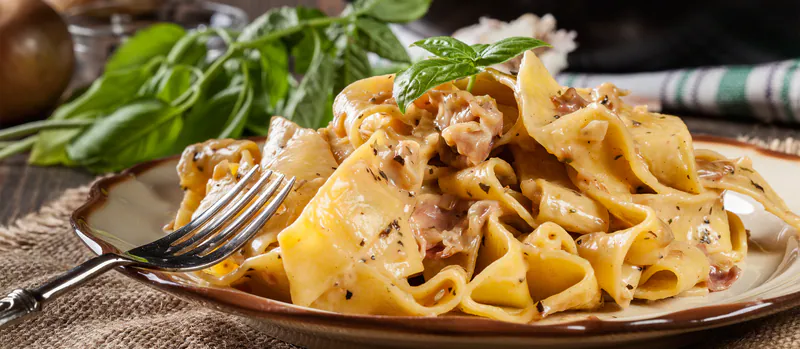
Pappardelle alla lepre (pappardelle with hare ragù)
 Italian · 3 h 40 min · 1127 kcal
More game
Game
Wild boar
Leaner, darker and more strongly flavoured than farmed pork; braised in ragù, stews and roasts.
3 recipes
Game
Reindeer meat
Lean, dark meat of herded Nordic reindeer, best known shaved and sautéed with lingonberries (poronkäristys).
1 recipe
Game
Kangaroo meat
Very lean, dark red Australian meat, cooked quickly to rare or medium-rare as steaks, fillets and burgers.
1 recipe
Game
Venison (deer meat)
Lean, dark deer meat for roasting, quick-cooked steaks, stews and sausages.
2 recipes