
Carrillada (braised pork cheeks in red wine)
Non-vegetarian
Carrillada de cerdo al vino tinto
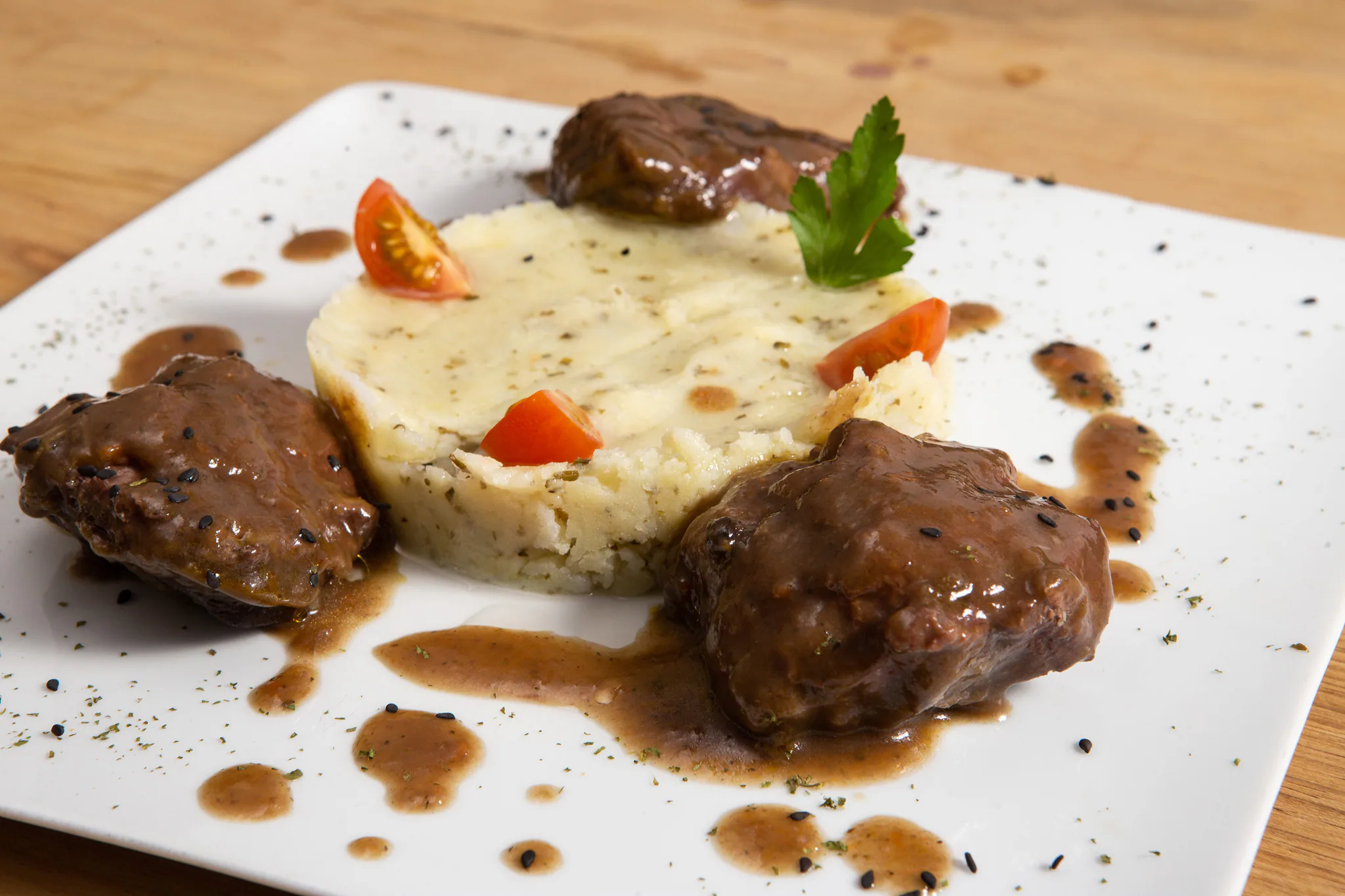
Pork cheeks browned in olive oil and braised slowly with red wine, a splash of port, onion, carrot, pepper, garlic, bay and pimentón until they are spoon-tender in a glossy, dark sauce. A favourite tapa and main course in Andalusian bars, best made with Iberian pork.
Carrillada (braised pork cheeks in red wine) is a Spanish main course from Spain, ready in about 3 hours 10 minutes and made with pork cheeks and dry red wine. It serves 4 and is rated intermediate to cook.
- Prep
- 25 min
- Cook
- 2 h 45 min
- Total
- 3 h 10 min
- Serves
- 4
- Level
- Intermediate
- Calories
- 1080
Main ingredients
Method
Step 1
Season the cheeks with salt and pepper (opens in a new tab) and dust lightly with flour. Brown them in batches in the olive oil (opens in a new tab) in a heavy pot over medium-high heat, 2–3 minutes a side, and set aside.
- 15 min
- medium-high heat
- Dutch oven / casserole pot (opens in a new tab)
- Tongs (opens in a new tab)
Food safety: Wash hands, boards and knives after handling raw meat, and keep it apart from salad and other ready-to-eat food.
Step 2
Lower the heat and cook the onion (opens in a new tab), carrot (opens in a new tab), red pepper (opens in a new tab) and garlic (opens in a new tab) in the same oil, scraping up the browned bits, until soft and lightly coloured, about 12 minutes.
- 12 min
- medium heat
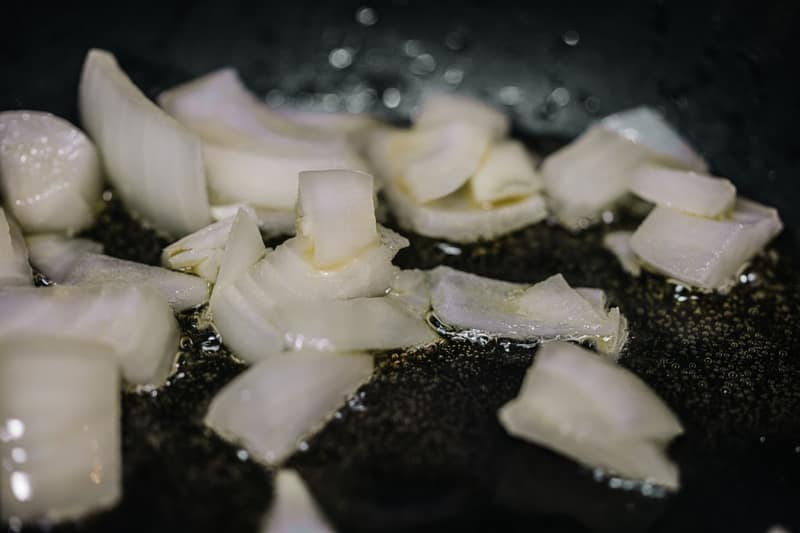
How it looks · Photo: Magda Ehlers on Pexels Step 3
Stir in the pimentón and cumin (opens in a new tab) for a few seconds, then pour in the red wine (opens in a new tab) and port (opens in a new tab). Boil for 5 minutes to cook off the raw alcohol.
- 6 min
- high heat
Step 4
Return the cheeks to the pot with the bay leaves (opens in a new tab), thyme (opens in a new tab) and stock; the liquid should almost cover them. Cover and braise on the lowest heat (or in a 160 °C oven) for 2–2½ hours, turning the cheeks halfway, until a spoon cuts through them easily.
- 135 min
- 160°C · if using the oven
- low heat
Step 5
Lift out the cheeks. Remove the bay and thyme (opens in a new tab) and blend the vegetables and liquid into a smooth sauce. Boil it down until glossy and thick enough to coat a spoon, then return the cheeks and warm through.
- 12 min
- medium-high heat
- Hand (stick) blender (opens in a new tab)
Some cooks leave the vegetables whole for a rustic sauce; blending gives the classic bar-style glaze.
At a glance
 Pork cheeks
 All-purpose flour
 Salt
 Black pepper
 Olive oil
 Onion
 Carrot
 Red bell pepper
 Garlic
 Smoked paprika
 Cumin
 Bay leaves
 Thyme (fresh)
 Dry red wine
 Port wine
 Beef stock
About this dish
- Origin
- Andalusia, Spain · Commonly attributedBraised cheeks are eaten across Spain; Seville and the Iberian-pig areas of Huelva and Córdoba are especially known for carrillada ibérica. Beef cheeks (carrillada de ternera) are cooked the same way.More food from Spain
Spain - Dish
- Lunch · Dinner · Main courses · Appetizers & starters · Stews & braises
- Cooking method
- Braised, Pan-fried
- Taste
- rich, savoury, sweet & savoury, smoky
- Diet
- Dairy-free · No nut ingredients · Low-carb · High-proteinWorked out from the ingredients. How labels work
All labels
Non-vegetarian · Dairy-free · Egg-free · No nut ingredients · No added sugar · Low-carb · High-protein - Good for
- Make-ahead · One-pot · Freezer-friendly
- Cook more with
- Pork cheeks · Dry red wine · All-purpose flour · Onion · Carrot · Red bell pepper
- Techniques
- Pan-frying · Boiling · Braising · Deglazing
Allergens
- Contains: Wheatfrom all-purpose flour
- Contains: Glutenfrom all-purpose flour
- May contain: Celeryfrom beef stock
- Contains: Sulphitesfrom dry red wine, port wine
Based on typical versions of these ingredients and not verified allergen-free. Brands differ and cross-contact happens, so always check labels. For severe allergies, follow your clinician’s advice.
Nutrition
1080 kcal per serving
Estimated1 serving ≈ 668 g · recipe makes 4
Where the energy comes from
- Protein 23%
- Carbohydrate 10%
- Fat 67%
| Nutrient | Per serving | Per 100 g* |
|---|---|---|
| Energy | 1080 kcal | 162 kcal |
| Protein | 55.2 g | 8.3 g |
| Carbohydrate | 22.8 g | 3.4 g |
| Net carbohydrate | 19.8 g | 3 g |
| Sugars | 8.3 g | 1.2 g |
| Added sugars | 0 g | 0 g |
| Fibre | 2.9 g | 0.4 g |
| Fat | 71.3 g | 10.7 g |
| Saturated fat | 21.2 g | 3.2 g |
| Trans fat | — | — |
| Cholesterol | 213 mg | 32 mg |
| Sodium | 1251 mg | 187 mg |
| Salt equivalent | 3.1 g | 0.5 g |
Vitamins & minerals per serving
- Potassium
- 1512 mg
- Calcium
- 104 mg
- Iron
- 5.1 mg
- Magnesium
- 94 mg
- Vitamin A (RAE)
- 318 µg
- Vitamin C
- 48 mg
- Vitamin D
- 5.1 µg
- Vitamin B12
- 2.2 µg
- Folate (DFE)
- 60 µg
How these numbers were made
- Calculated from USDA FoodData Central (SR Legacy) per-100 g values and the listed quantities.
- *Per 100 g of combined raw ingredients; the cooked dish may weigh more or less.
- Optional ingredients are not included: thyme (fresh).
- Pork cheeks: Pork shoulder (FDC 167843) as a stand-in; pork cheeks are a similarly well-marbled, collagen-rich working muscle meant for slow braising.
- Smoked paprika: Sweet paprika data; smoking does not change the nutrients meaningfully.
- Port wine: Sweet dessert wine (FDC 173176) used for port, a sweet fortified wine of similar sugar and alcohol content.
- “—” means the value isn’t known for enough of the ingredients; it is never zero by default.
- Values are estimates for guidance, not for medical dosing. U.S. Department of Agriculture, Agricultural Research Service. FoodData Central, 2019. fdc.nal.usda.gov.
Good to know
Tips
- Ask the butcher to remove the tough silver skin, or trim it yourself with a thin knife before browning.
- A pressure cooker cuts the braise to about 40 minutes.
Common mistakes
- Rushing the braise: undercooked cheeks are rubbery; they need time to turn gelatinous.
Serve with
- Serve on mashed potato or with hand-cut fried potatoes, or as a tapa with bread to mop the sauce.
Food safety
- Cook pork until it reaches at least 63 °C in the centre (71 °C for minced pork) and refrigerate leftovers within 2 hours.
- Cool stews and braises quickly in shallow containers and refrigerate within 2 hours; reheat until piping hot all the way through.
Storage
- Keeps 4 days refrigerated or 3 months frozen in the sauce.
Reheating
- Warm gently, covered, with a splash of water until piping hot.
Variations
- Carrillada de ternera: Beef cheeks braised the same way for about 3½ hours.
- Carrillada al Pedro Ximénez: The port is replaced by sweet PX sherry for a darker, raisiny sauce.
Original editorial recipe · FriendsPantry editorial · source: TasteAtlas (dish facts) · Not yet independently reviewed · Added
Recipe DNA
How this dish is built
Grouped by each ingredient’s role in the dish. Each band’s width is its share of the dish by weight. Choose a component to see what it does.
What the dish is built around
Main ingredient
- Pork cheeks, about 12, silver skin trimmed1.2 kg · 1200 g
- All-purpose flour, for dusting2 tbsp · 16 g
- Carrot, sliced2 piece · 120 g
- Red bell pepper, chopped1 piece · 120 g
Reviews & corrections
Reviews come from signed-in cooks and appear after a moderator checks them. We never show made-up ratings.
You might also like
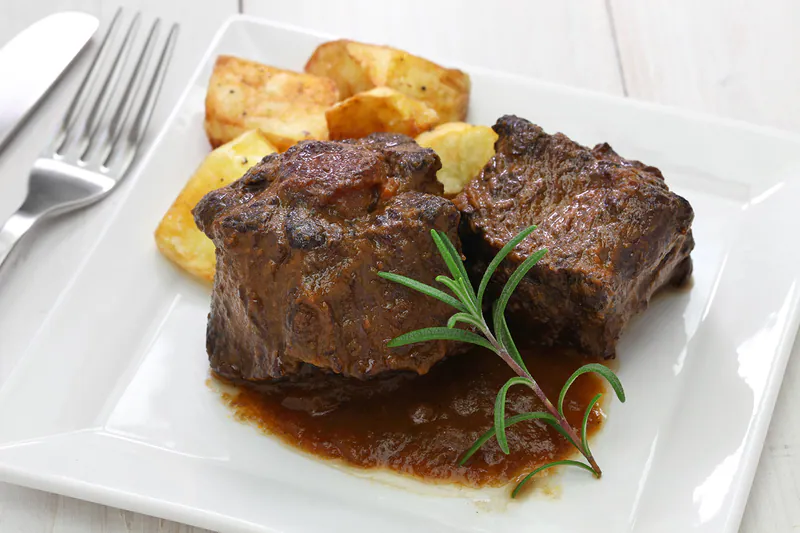
Rabo de toro (Córdoba braised oxtail)
 Spanish · 4 h 30 min · 1437 kcal
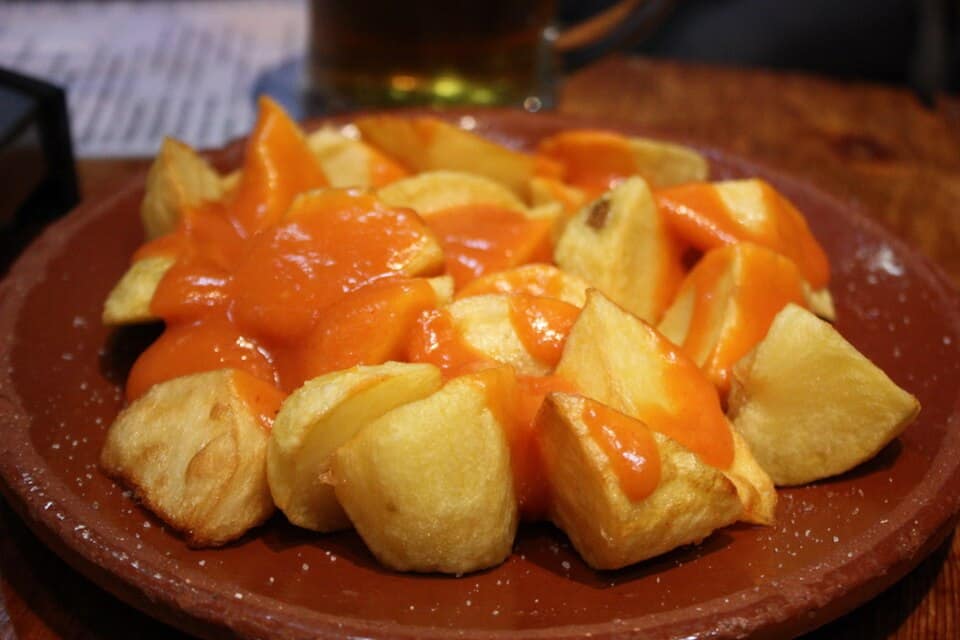
Patatas bravas
Spanish · 50 min · 508 kcal · Egg optional
Boeuf bourguignon
 French · 4 h · 625 kcal
Pollo al chilindrón (Aragonese chicken with peppers)
Spanish · 1 h 30 min · 1088 kcal