
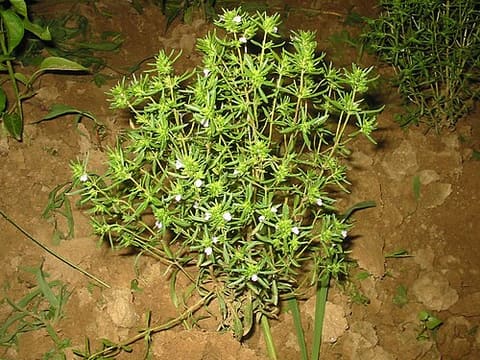
Aromatic leaves
Summer savory (dried)
Satureja hortensis
Peppery, thyme-like herb used dried in Bulgarian stews, bean dishes and German and Luxembourg cooking.
Also called: savory, dried savory, chubritsa, bohnenkraut, bounekraut, sarriette, cimbru
Around the world: чубрица, chubritsa (bg) · Bohnenkraut (de) · Bounekraut (lb) · sarriette (fr) · cimbru (ro)
- Herbal & green
- Pungent & sulphurous
- No heat
Photo: Bogdan, via Wikimedia Commons (CC-BY-SA-3.0)
Flavour and aroma
peppery, thyme-like, minty, savoury. Peppery, warm and herbal.
- Heat
- No heat
- Forms
- dried, fresh
How to use it
use raw
Add early to bean, lentil and meat stews so the flavour spreads; 1–2 teaspoons per pot.
crush · Dry grinding technique
Crumble finely and mix with salt and paprika to make sharena sol.
- Seasoning Bulgarian kavarma and bean stews
- Added to broad beans in judd mat gaardebounen
- Mixed with salt and paprika for sharena sol
Identifying good quality
Narrow, grey-green dried leaves, sometimes with small stems and flowers. Smells peppery, like a cross of thyme and mint.
- Not to be confused with Dried thyme: Thyme is earthier; savory is more peppery.
Origin and history
Origin: Southeastern Europe and the eastern Mediterranean (Satureja hortensis).. Grown and used: Grown in Bulgaria, Romania, Germany and elsewhere; used most in Bulgarian, Romanian, German, Georgian and Atlantic Canadian cooking..
Summer savory has been grown in European gardens since Roman times. In Germany it is called Bohnenkraut ('bean herb') because it is cooked with beans; in Bulgaria, as chubritsa, it is the main herb of sharena sol, a table seasoning of salt, savory and paprika. It is also traditional in Acadian and Newfoundland stuffings.
Commonly told; not firmly documented
Recipes with summer savory (dried)
Judd mat Gaardebounen
 Luxembourgish · 2 h 20 min · 713 kcal
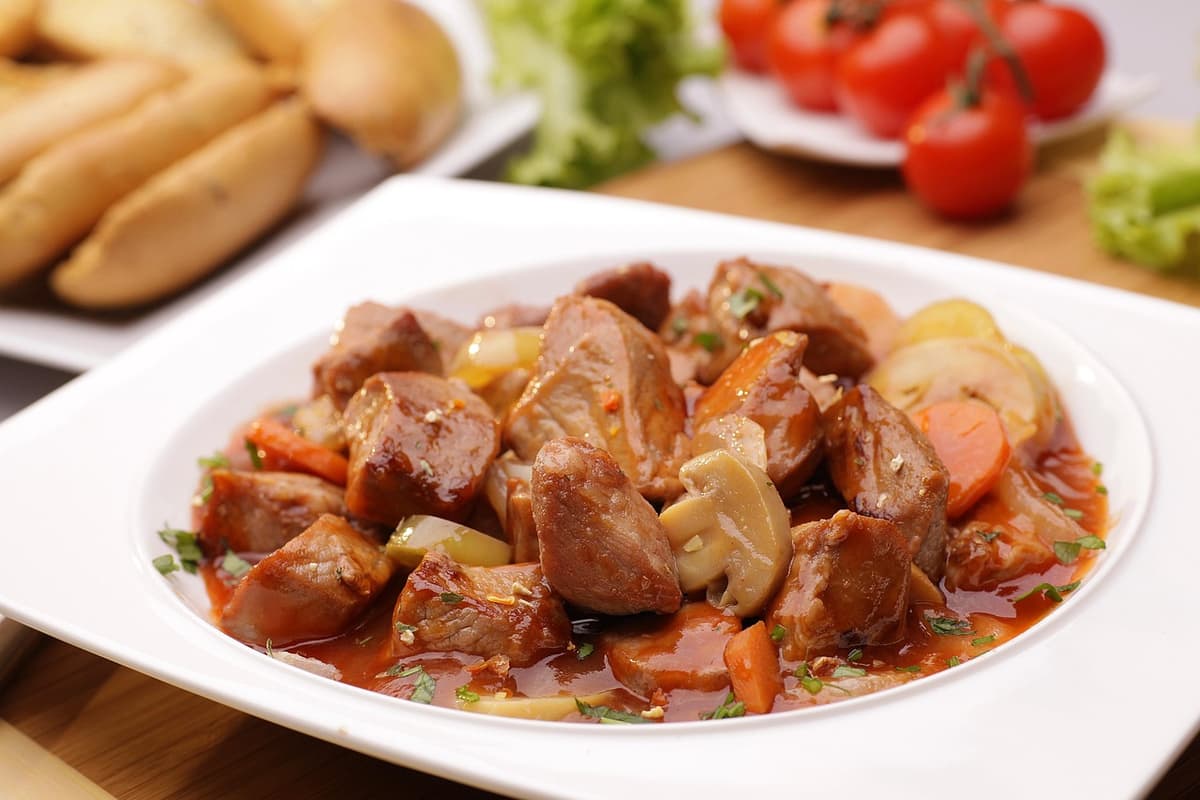
Kavarma (pork and vegetable clay pot)
 Bulgarian · 1 h 55 min · 623 kcal