
Aromatic leaves
Sage
Salvia officinalis
Soft, grey-green herb with a strong, musky, slightly peppery flavour; classic with pork, poultry and butter.
Also called: dried sage, adaçayı, salvia
- Herbal & green
- Resinous & piney
- Earthy
- No heat
Flavour and aroma
musky, camphor, slightly bitter, savoury. Earthy, musky, slightly bitter.
- Heat
- No heat
- Forms
- dried, fresh
How to use it
fry · Tadka (tempering) technique
Fry fresh leaves in butter or oil over medium heat for 20–40 seconds until crisp and the butter is nutty; drain and use as a garnish or sauce for pasta and gnocchi.
use raw
Use dried sage sparingly (about 1/2 teaspoon rubbed sage per 4 servings) in stuffings and sausage meat; it gets bitter and medicinal in excess.
crush · Dry grinding technique
Crumble rubbed sage between your fingers just before adding.
- Stuffing for roast chicken and turkey
- Sage and brown butter for gnocchi and ravioli
- Sausages and pork
- Saltimbocca
Identifying good quality
Soft, grey-green, velvety oval leaves with a pebbled surface. Dried sage is sold whole, 'rubbed' (fluffy and crumbled) or ground. It should smell strongly of camphor and pine; dull grey-brown leaves are old.
- Not to be confused with Dried mint: Dried mint is greener, smells of menthol and lacks sage's camphor.
Origin and history
Origin: The northern Mediterranean coast, especially the Balkans (Salvia officinalis).. Grown and used: Grown in Albania, Croatia, Turkey, Greece and temperate gardens; used in Italian, British and American cooking..
Sage was valued by the Romans as a medicinal herb and remained a common European kitchen herb. It is central to Italian saltimbocca and brown butter sauces, to British sage-and-onion stuffing and sausages, and to American Thanksgiving stuffing.
Commonly told; not firmly documented
Recipes with sage
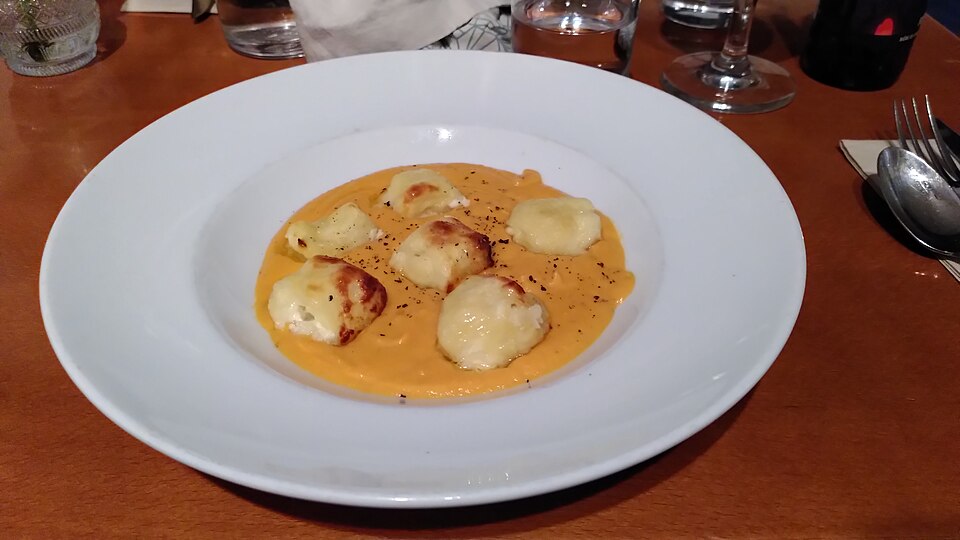
Gnudi (Tuscan spinach and ricotta dumplings)
 Italian · 1 h 45 min · 640 kcal · Contains egg
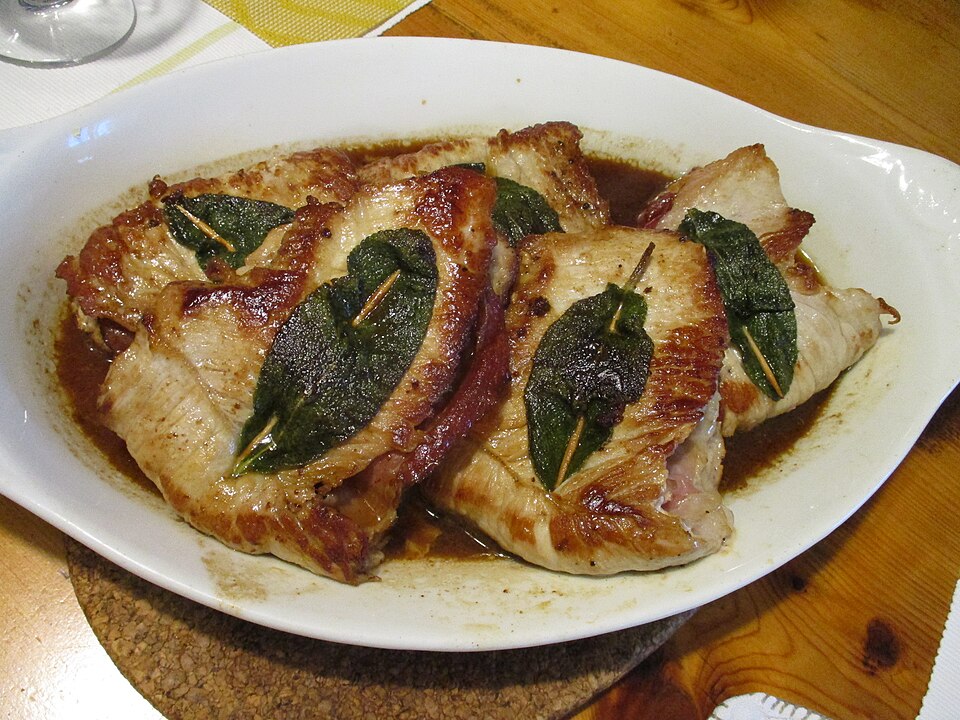
Pork saltimbocca
Italian · 25 min · 334 kcalRicotta and spinach ravioli with butter and sage
Italian · 1 h 55 min · 677 kcal · Contains eggRicotta gnocchi with butter and sage
Italian · 30 min · 577 kcal · Contains egg