
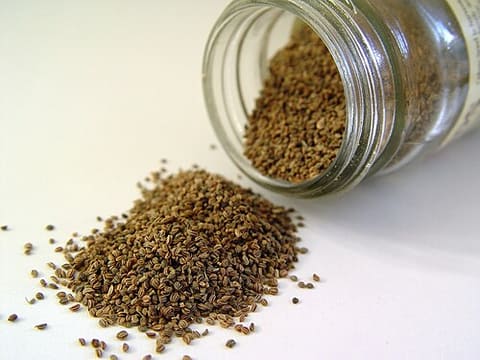
Seeds
Celery seed
Apium graveolens
Tiny brown seeds tasting strongly of celery, used in pickles, dressings, coleslaw and Bloody Marys.
- Herbal & green
- Earthy
- No heat
Photo: Holly Cheng, via Wikimedia Commons (CC-BY-SA-3.0)
Flavour and aroma
intense celery, grassy, bitter, slightly warm. Intense celery, slightly bitter.
- Heat
- No heat
- Forms
- whole, ground
How to use it
use raw
Use whole in coleslaw dressings, potato salads and pickle brines; use sparingly, about 1/4–1/2 teaspoon per 4 servings, as it turns bitter in excess.
crush · Dry grinding technique
Crush in a mortar before adding to rubs, soups and stews, which spreads the flavour more evenly.
bloom in fat · Tadka (tempering) technique
For soups, warm in the butter or oil with the onions for 30 seconds before adding liquid.
- Pickles and brines
- Coleslaw and potato salad dressings
- Bloody Mary and tomato juice
- Rubs and sausages
Identifying good quality
Tiny (about 1–1.5 mm), dark brown, ribbed seeds. Rub a few between your fingers: they should smell strongly of celery. Celery salt is ground seed mixed with salt; check the label.
Origin and history
Origin: Mediterranean and western Asian wetlands, from wild celery (Apium graveolens).. Grown and used: Most seed for spice is grown in India, with smaller crops in China and France; used mainly in North American and Northern European cooking..
Wild celery was used as a flavouring and medicinal plant in the ancient Mediterranean before the stalk and root vegetables were bred from it. Celery seed and celery salt became standard in American pickling, coleslaw and the Bloody Mary, and in Chicago-style hot dogs.
Commonly told; not firmly documented
In masalas, pastes and sauces
Recipes with celery seed
Homemade tomato ketchup
 American · 1 h 55 min · 27 kcal · Vegan