
Vegetables · Leafy greens
Taro leaves
Large heart-shaped taro leaves cooked long with coconut milk; used in laulau, palusami and Caribbean callaloo.
Also called: luau leaves, lu, lū, rourou, dasheen leaves, callaloo (dasheen), arbi ke patte
Around the world: lau talo (sm) · lū (to) · rourou (fj)
What it is
Taro leaves are big, arrow- or heart-shaped green leaves on long stems. They are eaten only after thorough cooking, because they contain irritating calcium oxalate. In the Pacific they wrap food or are simmered in coconut cream; in Trinidad, dasheen bush callaloo is a creamy soup; in Gujarat, patra rolls leaves with gram-flour paste.
Colocasia esculenta (leaves)
How it’s used
- Palusami / lu pulu with coconut cream
- Hawaiian laulau wrappers
- Trinidadian callaloo soup
- Patra / alu vadi rolls
- Filipino laing
Characteristics
- Taste
- Spinach-like, earthy and mild once cooked.
- Texture
- Silky and melting after long cooking.
- When cooked
- Must be simmered or steamed thoroughly; undercooked leaves cause an itchy, scratchy throat.
- Sold as
- fresh, frozen, canned, dried
- Cooking uses
- Commonly cooked, Suitable for boiling
- Common in
- Pacific Island, Samoan, Fijian, Tongan, Trinidadian, Gujarati, Filipino, Caribbean
Storage
Refrigerated. Refrigerate wrapped and use within a couple of days; freeze for longer.
Diet, allergens and safety
No major allergens in typical versions.
- Vegetarian
- Vegan
- Dairy-free
- Egg-free
- Gluten-free
- Nut-free
- Soy-free
- Caffeine-free
- Never eat raw; cook thoroughly to break down calcium oxalate, which irritates mouth and throat.
Nutrition per 100 g
- Energy
- 42 kcal
- Protein
- 4.98 g
- Carbohydrate
- 6.7 g
- Fat
- 0.74 g
- Fibre
- 3.7 g
- Sugars
- 3.01 g
USDA FoodData Central: Taro leaves, raw.
Substitutes
Optional — what works if you don’t have it, and how it changes the dish.
- Spinach — Much quicker to cook and safe raw; lacks body.
- Collard greens — For wrapping; sturdier.
Related ingredients
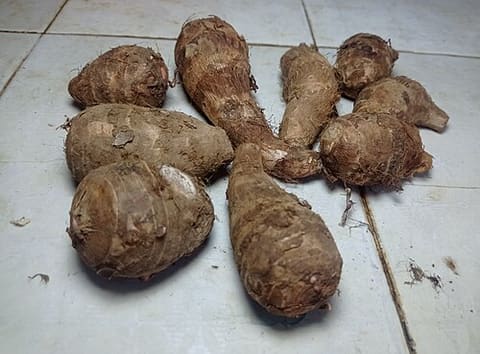

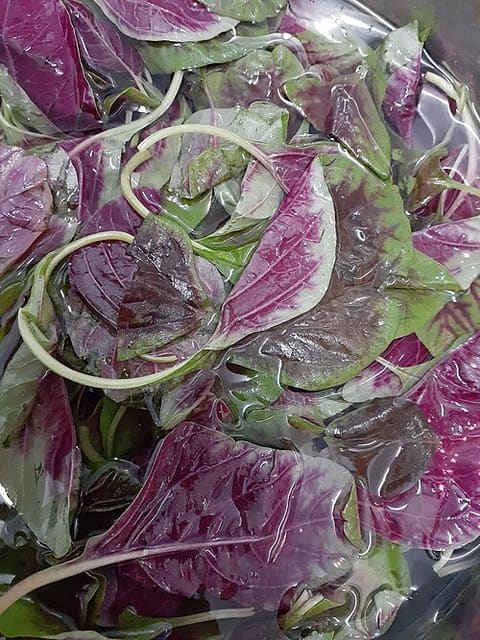
Recipes with taro leaves
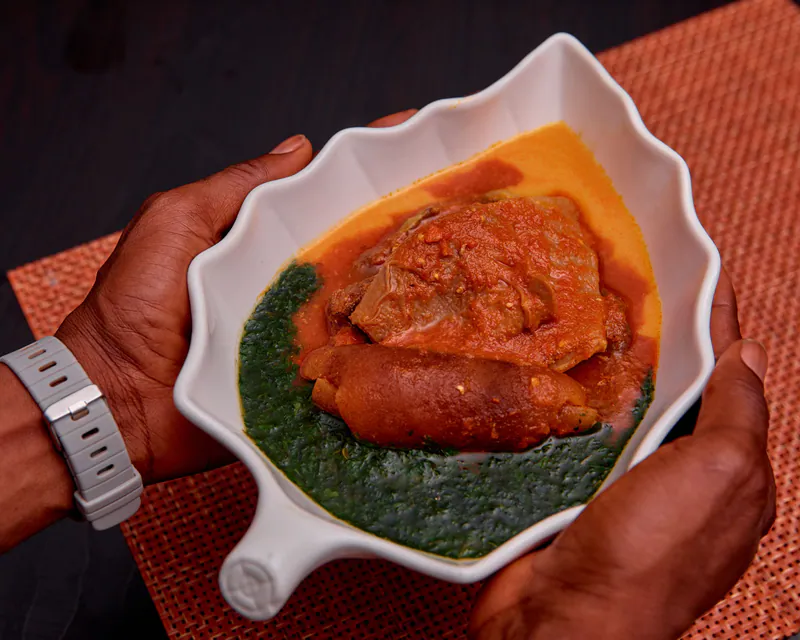
Kontomire stew
 Ghanaian · 55 min · 353 kcal
Lū pulu
 Tongan · 1 h 50 min · 311 kcal
Palusami
 Samoan · 1 h 40 min · 261 kcal · Vegan
More leafy greens
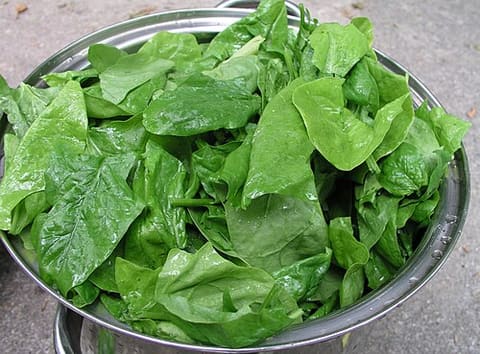
Leafy greens
Spinach
Tender dark-green leaves eaten raw as baby spinach or wilted into curries, pies, pastas and soups.
57 recipes
Leafy greens
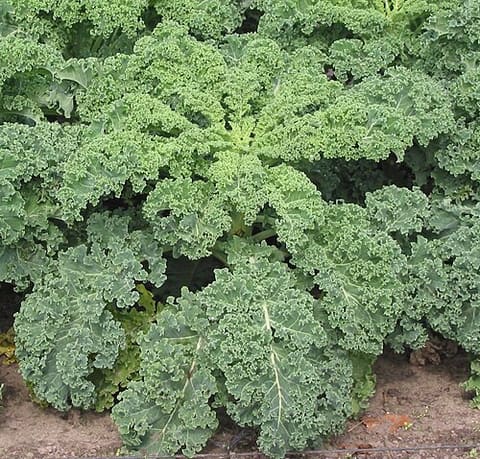
Kale
Sturdy brassica green with curly or flat dark leaves, eaten massaged raw, sautéed, braised or baked into crisps.
10 recipes
Leafy greens
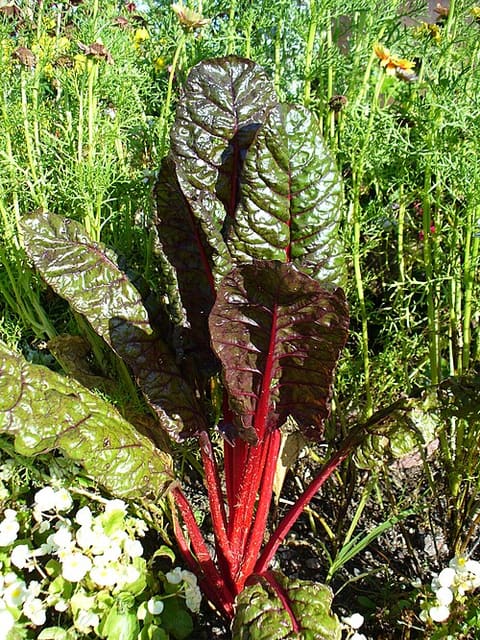
Swiss chard
Leafy green with broad leaves and thick white, red or yellow stems, cooked like spinach.
2 recipes
Leafy greens
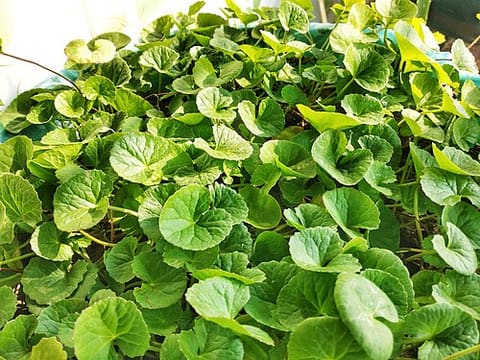
Gotu kola
Small round-leaved herb (Asiatic pennywort) eaten fresh in Sri Lankan sambols and Southeast Asian drinks.
1 recipe
Leafy greens
Mustard greens
Peppery, pungent brassica leaves cooked into sarson ka saag, stir-fries and pickles.
6 recipes
Leafy greens
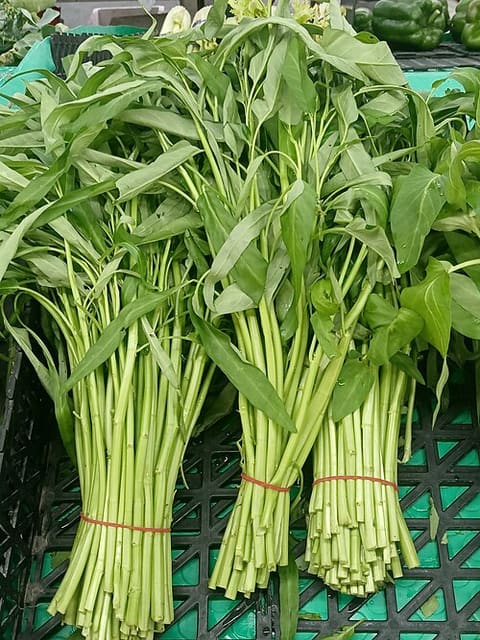
Water spinach
Hollow-stemmed green with arrow-shaped leaves (kangkung, morning glory), stir-fried quickly with garlic and chilli.
3 recipes
Leafy greens
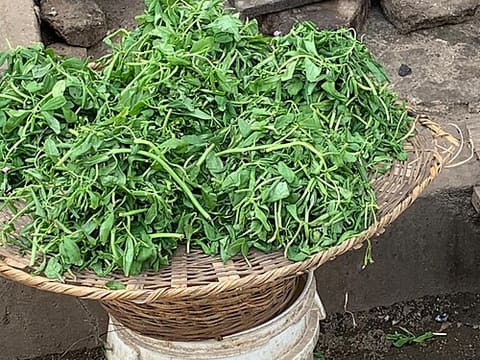
Jute leaves
Leafy green (molokhia, ewedu) that turns silky and slippery when cooked; base of Egyptian and West African soups.
2 recipes
Leafy greens
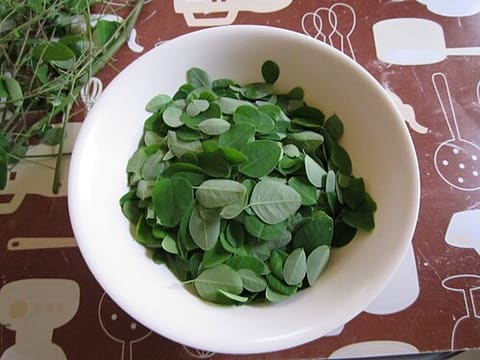
Moringa leaves
Tiny oval leaves of the drumstick tree, cooked into curries, soups and stews or dried to a powder.
1 recipe