
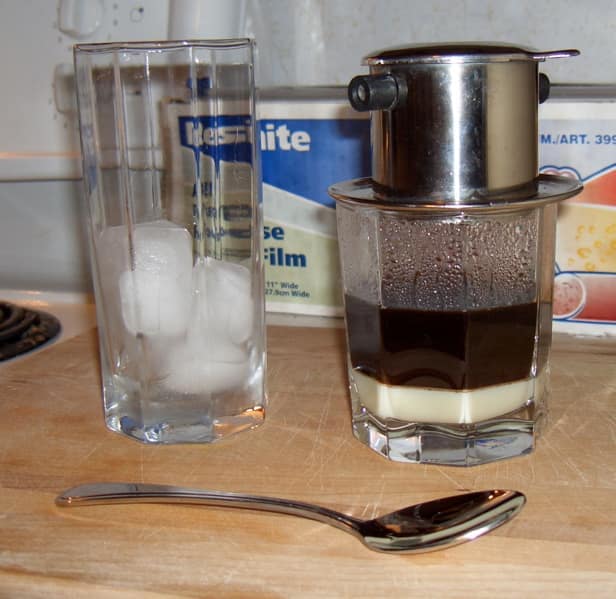
Cà phê sữa đá (Vietnamese iced coffee)
 Vietnamese · 7 min · 136 kcal · Vegetarian
Coffee House · Explore the world, one cup at a time
Three things set the character of the beans before you ever brew them: the species, how the cherries were processed, and how dark they were roasted.
Coffea arabica
Most of the world's coffee and nearly all speciality coffee. Grown at higher altitudes, it is generally sweeter and more aromatic, with more acidity and less bitterness than robusta. The plants are more delicate and more vulnerable to disease and heat.
Coffea canephora
The second most grown species, important in Vietnam, Brazil, Indonesia, Uganda and India. Hardier and higher-yielding, with a bolder, more bitter and earthy taste and a thick espresso crema. Robusta beans generally contain more caffeine than arabica.
Coffea liberica
A minor species with large, irregular beans and a smoky, woody, sometimes fruity flavour. It is grown mainly in parts of West Africa and South-East Asia, notably the Philippines (kapeng barako) and Malaysia.
Coffea liberica var. dewevrei
Once treated as a separate species, excelsa is now classed by botanists as a variety of liberica. It is tart and fruity with dark roasted notes, and is used mostly in South-East Asian blends.
Coffee beans are the seeds of a fruit, the coffee cherry. Processing is how the fruit is removed and the seeds dried.
The fruit is removed and the beans are fermented briefly in water to loosen the sticky mucilage, then washed and dried. Washed coffees tend to taste clean and bright, showing the bean's acidity clearly.
Whole coffee cherries are dried in the sun with the fruit still on, then hulled. The fruit's sugars influence the bean, so naturals are often fuller-bodied with jammy, winey or berry-like flavours — and less consistent if drying isn't carefully managed.
The skin is removed but some or all of the sticky mucilage is left on while the beans dry. The result usually sits between washed and natural: sweet and rounded with gentle acidity. 'Honey' refers to the sticky texture, not to honey itself.
Stopped soon after 'first crack'. Keeps the bean's origin character — fruit, flowers, bright acidity — and tastes lighter in body. Denser and harder to extract, so it likes hotter water and finer grinding.
Balanced sweetness, acidity and body, with caramel and nut notes. The most forgiving roast for most brewing methods.
Approaching or just into 'second crack'. Chocolatey and bittersweet with low acidity; a classic for espresso and milk drinks.
Well into second crack, with an oily surface. Roasty, smoky and bitter-sweet; much of the origin character is replaced by roast flavour. Extracts easily, so slightly cooler water helps. Darker doesn't mean more caffeine — roast level mainly changes flavour.
Decaffeinated beans are treated before roasting (with water, carbon dioxide or a solvent that is then removed) and keep a small amount of caffeine. Chicory and roasted barley are not coffee and contain no caffeine — see decaf & alternatives.
Robusta-led Vietnamese coffee, a bright pour-over, a dark-roast moka pot and a light-bodied Japanese iced coffee show the range.
Vietnamese · 7 min · 136 kcal · Vegetarian
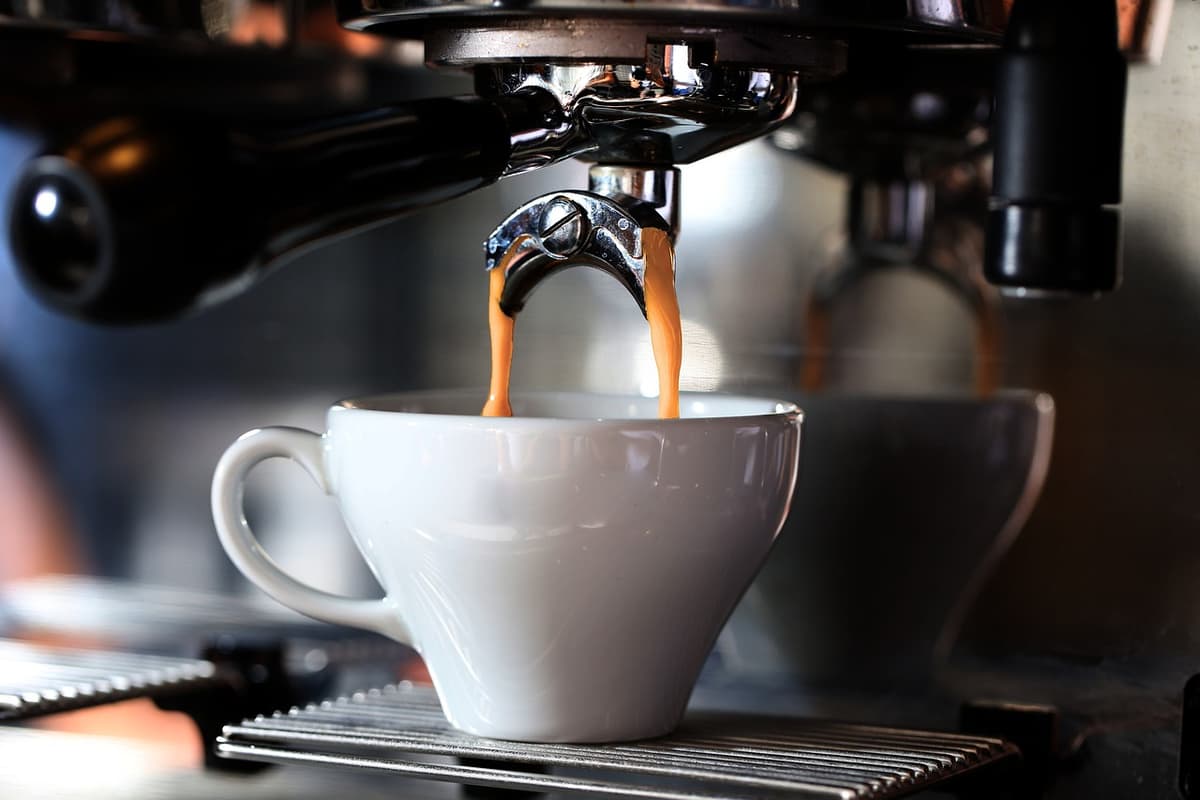
 Italian · 4 min · 4 kcal · Vegan
 Japanese · 8 min · 4 kcal · Vegan
 Indonesian · 6 min · 39 kcal · Vegan
Italian · 8 min · 3 kcal · Vegan
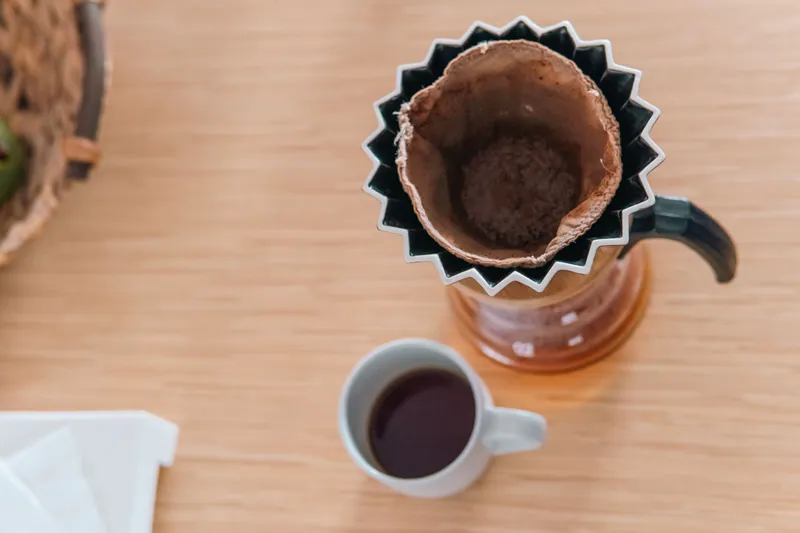
International · 7 min · 5 kcal · Vegan
Coffee Studio
Build your own coffee — beans, roast, grind, brew method, strength, milk, sweetness, flavours and serving — and get a practical recipe with dose, ratio, temperature and time.
Open Coffee Studio