
Fruits · Melons
Watermelon
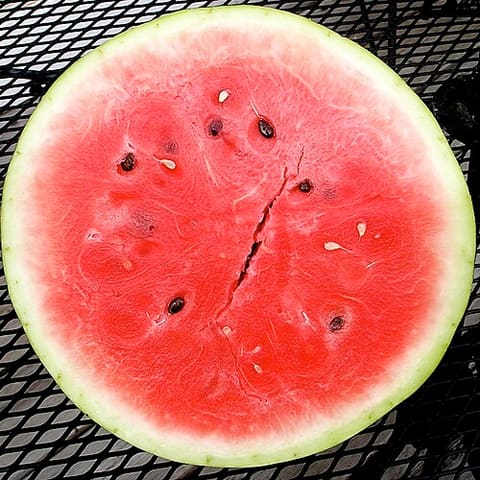
Huge, green-striped melon with sweet, crisp, watery red flesh; eaten chilled, in salads and drinks.
Also called: karpuz, tarbooz, sandía
Photo: liz west from Boxborough, MA, USA, via Wikimedia Commons (CC-BY-2.0)
What it is
Watermelon has a thick, hard green rind, often striped, around very juicy red or yellow flesh with black or white seeds (seedless types have only soft pale ones). It is crisper and more watery than other melons. A ripe one sounds hollow when tapped and has a creamy-yellow ground spot.
Citrullus lanatus
How it’s used
- Eaten in chilled wedges
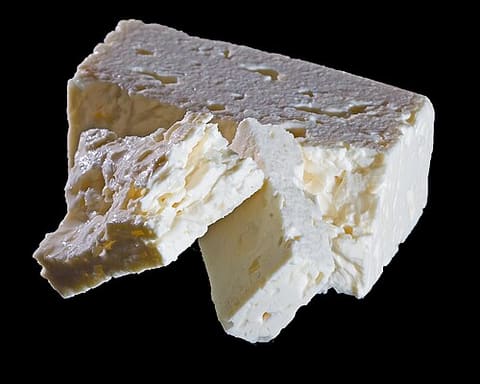
- Cubed with feta and mint in salads
- Blended into juices and agua fresca
- Rind pickled in the Southern US
Characteristics
- Taste
- Sweet, fresh and mild.
- Texture
- Crisp, grainy and very juicy.
- Sold as
- fresh
- Cooking uses
- Usually eaten raw
- Common in
- Turkish, Mexican, Southern US, Greek, Indian, Thai, Middle Eastern
Storage
At room temperature. Keep whole at room temperature for about a week; refrigerate cut pieces covered and eat within a few days.
Diet, allergens and safety
No major allergens in typical versions.
- Vegetarian
- Vegan
- Dairy-free
- Egg-free
- Gluten-free
- Nut-free
- Soy-free
- Caffeine-free
- Wash the rind before cutting so surface bacteria are not carried into the flesh; refrigerate cut melon.
Nutrition per 100 g
- Energy
- 30 kcal
- Protein
- 0.61 g
- Carbohydrate
- 7.55 g
- Fat
- 0.15 g
- Fibre
- 0.4 g
- Sugars
- 6.2 g
USDA FoodData Central: Watermelon, raw.
Related ingredients

Recipes with watermelon
Fruta picada con chile
 Mexican · 15 min · 133 kcal · Vegan
Grilled halloumi with watermelon and mint
 Cypriot · 10 min · 260 kcal · Vegetarian
Mohabbat ka sharbat
 Indian · 10 min · 203 kcal · Vegetarian
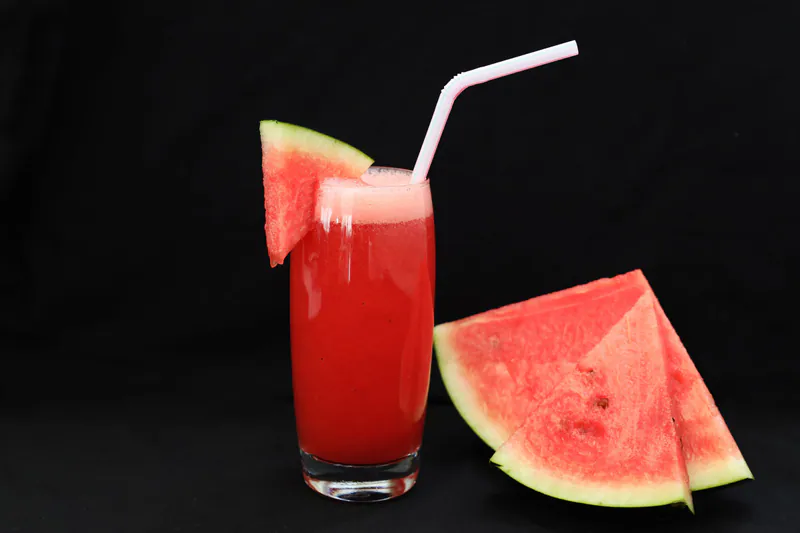
Watermelon juice
International · 10 min · 73 kcal · Vegan
Watermelon Mint Cooler
International · 10 min · 94 kcal · Vegan