
Cookware & bakeware · Bakeware
Springform pan
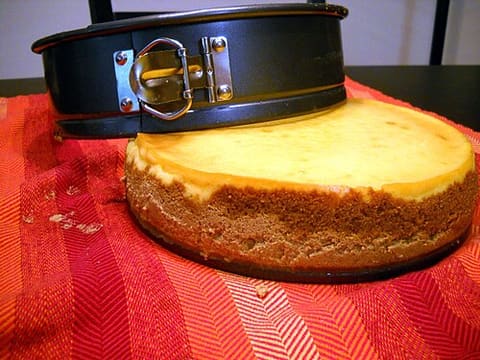
A round cake tin whose side unclips from the base, so cheesecakes and delicate cakes come out intact.
Specialist · No power needed · 7 recipes
Photo: RibbonsOfIndecision, via Wikimedia Commons (CC-BY-SA-3.0)
What it is
A round tin, often 20–26 cm, made of a flat base and a separate ring with a latch. Closing the latch tightens the ring around the base; opening it releases the side so the cake can be served on the base without inverting. It differs from a loose-bottomed tart tin by being much deeper.
What it’s for: Unmoulding fragile or chilled cakes that cannot be turned upside down.
How to use it
- Fit the base in the ring and close the latch; line with baking paper.
- Wrap the outside in foil if baking in a water bath, as the seam can leak.
- Fill and bake or chill as the recipe directs.
- Run a knife round the edge, open the latch and lift the ring away.
Good to know
- Tasks
- baking cheesecakes, making torte and mousse cakes, baking deep-dish pizza, setting no-bake desserts
- Cooking methods
- Oven-baked, No-cook
- Materials
- non-stick steel, aluminium, glass base
- Care and cleaning
- Wash both parts, dry well and keep the latch clean of batter. Store closed so the ring stays round.
- Limitations
- Thin batters may leak at the base seam.
Safety
- The latch can be hot; open it after cooling a little.
If you don’t have one
Equipment guide
How it works: A ring held closed by a clamp around a separate base. Opening the clamp widens the ring so delicate cakes such as cheesecakes can be released without inverting. Heat transfer is the same as any metal cake tin.
| Material | Good | Watch out |
|---|---|---|
| Non-stick (PTFE or ceramic sol-gel coating on aluminium) | Eggs, fish and pancakes release with little fat; easy to clean; forgiving for beginners. | Coatings wear out (ceramic often faster than PTFE); PTFE should not be heated empty or above about 260 °C; poor at building fond; needs non-metal utensils. |
| Glass base | Can serve on it; non-reactive. | Heavier; slower heating base. |
| Aluminium (plain or hard-anodised) | Light, conducts heat about 15 times better than stainless steel and heats quickly; anodising hardens the surface and stops reaction with acids. | Plain aluminium reacts with acidic and alkaline foods and can discolour them; thin gauges warp; not magnetic, so it needs a steel base for induction. |
- Standard springform
- 20–26 cm; cheesecakes, tortes.
- Leak-proof springform
- Sealed base for water baths.
Buying guidance
Starting out: A 23 cm springform; wrap the outside in foil for water baths.
- Tight seal between ring and base
- Sturdy clamp
- Flat base with a lip that can be used either side
No brands or prices — check current reviews before buying.
Techniques:Baking
Related tools
Recipes that use it
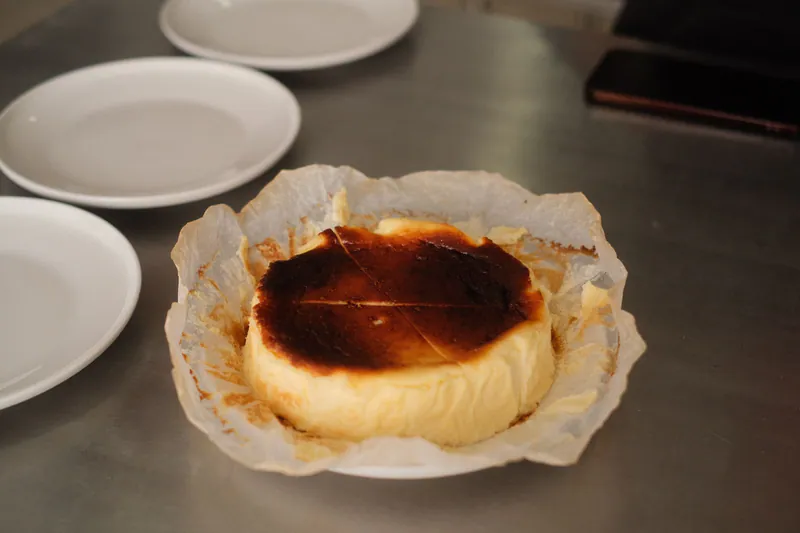
Basque burnt cheesecake
 Spanish · 4 h 10 min · 494 kcal · Contains egg
Kladdkaka
 Swedish · 58 min · 256 kcal · Contains egg
New York cheesecake
 American · 7 h 45 min · 527 kcal · Contains egg
Sachertorte
 Austrian · 3 h 40 min · 490 kcal · Contains egg
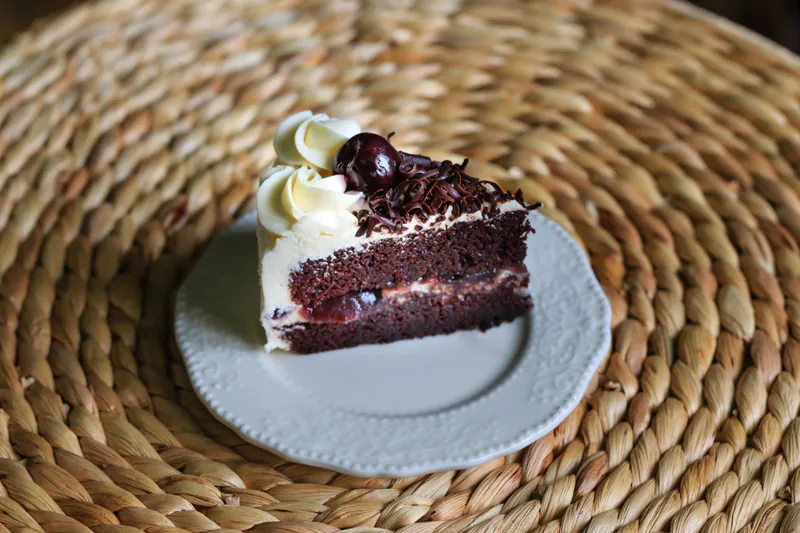
Schwarzwälder Kirschtorte
 German · 4 h 25 min · 422 kcal · Contains egg
Torta caprese (chocolate almond cake)
 Italian · 2 h 5 min · 489 kcal · Contains egg
Versunkener Apfelkuchen
German · 1 h 35 min · 268 kcal · Contains egg