
Baking essentials · Leavening
Fresh yeast
Moist, crumbly, beige blocks of live yeast; perishable but favoured by bakers for flavour and vigorous rise.
Also called: compressed yeast, cake yeast, baker's yeast
A kind of dried yeast
What it is
Fresh (compressed or cake) yeast is living yeast pressed into a soft, putty-like block with a clean, slightly beery smell. It contains about 70% water, so you need more by weight than dried yeast: roughly 2.5–3 times the weight of instant or twice that of active dry. It is crumbled into lukewarm liquid or rubbed into the flour. It should crumble cleanly; if it is dry, brown, slimy or sour-smelling, discard it.
Saccharomyces cerevisiae
How it’s used
- Bakery-style breads and baguettes
- Enriched doughs such as brioche, babka and panettone
- Pizza dough
- Doughnuts and buns
Characteristics
- Aroma
- Pleasant, yeasty, slightly beery.
- Texture
- Moist and crumbly like soft putty.
- Sold as
- fresh
- Cooking uses
- Used for leavening, Suitable for baking
- Common in
- French, German, Italian, Polish, Scandinavian
Storage
Refrigerated. Keep wrapped in the fridge and use within a couple of weeks; it can be frozen, though it loses some vigour.
Diet, allergens and safety
No major allergens in typical versions.
- Vegetarian
- Vegan
- Dairy-free
- Egg-free
- Gluten-free
- Nut-free
- Soy-free
- Caffeine-free
Nutrition per 100 g
- Energy
- 105 kcal
- Protein
- 8.4 g
- Carbohydrate
- 18.1 g
- Fat
- 1.9 g
- Fibre
- 8.1 g
- Sugars
- 0 g
USDA FoodData Central: Leavening agents, yeast, baker's, compressed.
Substitutes
Optional — what works if you don’t have it, and how it changes the dish.
- Instant yeast — Use about one third of the fresh yeast weight, mixed into the flour.
Related ingredients
Recipes with fresh yeast
No recipe in the catalogue uses it yet.
More leavening
Leavening
Baking powder
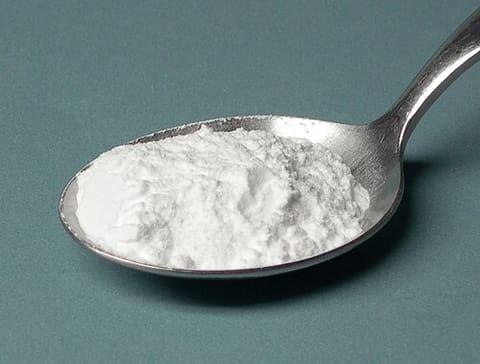
Ready-mixed chemical raising agent of baking soda, a dry acid and starch; needs only moisture and heat to release gas.
77 recipes
Leavening
Baking soda
Pure sodium bicarbonate: a strong alkaline raising agent that needs an acid in the recipe to work. Also browns and tenderises.
55 recipes
Leavening
Dried yeast
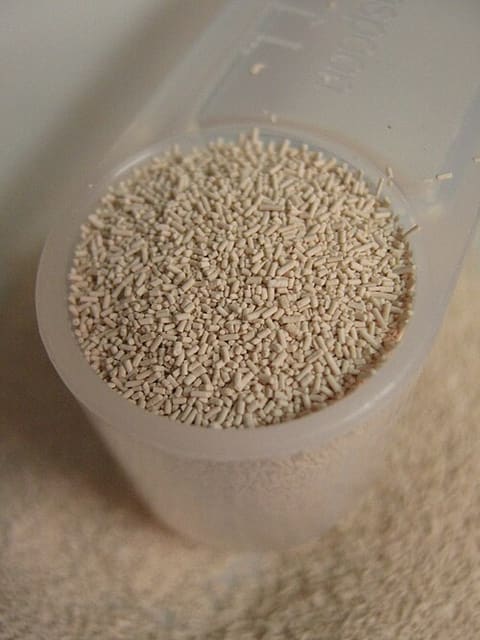
Dried baker's yeast granules that ferment sugars into gas and flavour; covers both active dry and instant.
102 recipes
Leavening
Instant yeast
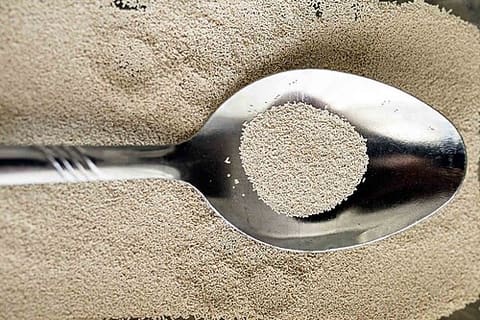
Fine dried yeast that can be mixed straight into flour; strongest of the dried yeasts and quick to start.
50 recipes
Leavening
Active dry yeast
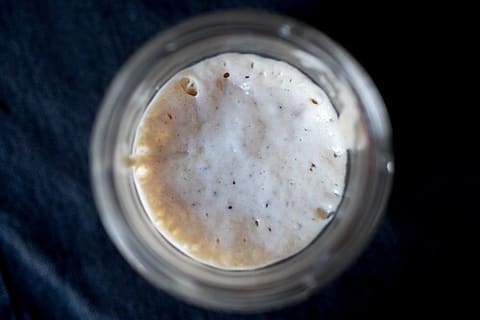
Dried yeast in larger granules, traditionally dissolved in warm water before use; slightly slower than instant.
No recipes yet
Leavening
Sourdough starter
Living culture of flour and water hosting wild yeasts and lactic acid bacteria; leavens and sours bread.
5 recipes
Leavening
Cream of tartar
Acidic white powder (potassium bitartrate) that stabilises egg whites and pairs with baking soda as a leavener.
No recipes yet