
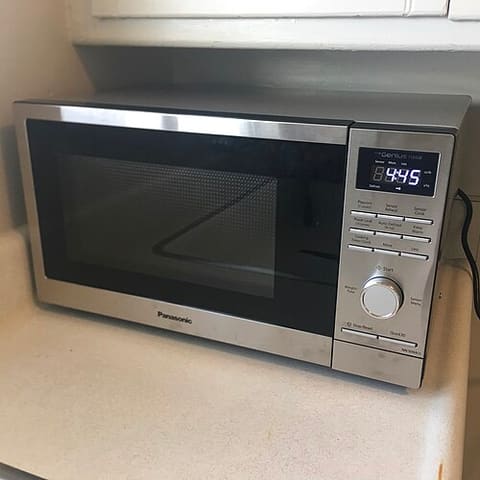
Kitchen equipment · Microwave oven
Microwave
A countertop appliance that heats food quickly by making the water inside it vibrate with microwaves.
Useful to have · Electric · 3 recipes
Photo: Mrbeastmodeallday, via Wikimedia Commons (CC-BY-SA-4.0)
What it is
A metal box with a turntable and door screen, powered by a magnetron that sends microwaves through food. They excite water molecules, heating food from within a few centimetres of the surface. It does not brown or crisp food unless it has a separate grill or convection function.
What it’s for: Fast reheating, defrosting and simple cooking of moist foods.
How to use it
- Use a microwave-safe dish and loosely cover it to hold steam and stop splatters.
- Set power and time; start with short bursts.
- Stir or turn food halfway so it heats evenly.
- Let it stand a minute to even out hot spots, then check it is piping hot throughout.
Good to know
- Tasks
- reheating leftovers, defrosting, steaming vegetables, melting butter and chocolate, cooking jacket potatoes, softening tortillas
- Cooking methods
- Microwaved, Steamed
- Materials
- steel cavity, glass turntable
- Care and cleaning
- Wipe spills promptly; microwave a bowl of water with lemon for a few minutes to loosen grime. Keep the door seal clean.
- Limitations
- No browning or crisping, uneven heating, and pastry and bread go soggy or tough.
Safety
- No metal, foil or metallic-rimmed plates unless the maker allows it.
- Water can superheat and erupt; stir before and after heating.
- Eggs in shells and sealed containers can burst.
- Reheat leftovers until steaming hot all the way through.
If you don’t have one
- Saucepan — Reheat sauces and soups on the hob.
- Double boiler / bain-marie — For gently melting chocolate.
Equipment guide
How it works: A magnetron produces microwaves at about 2.45 GHz that make water molecules in food rotate back and forth, generating heat by friction. Microwaves penetrate only a few centimetres, so the centre of thick food heats by conduction from the outer layers; uneven heating and cold spots are normal, which is why stirring and standing time matter. Food does not brown because the surface stays moist and near 100 °C.
| Material | Good | Watch out |
|---|---|---|
| Enamel or painted steel interior | Cheap and common. | Chips can rust. |
| Stainless steel interior | Durable, easy to clean. | Shows marks. |
- Solo microwave
- Reheating and defrosting.
- Grill microwave
- Adds a grill element for browning.
- Combination microwave
- Adds convection oven heating.
- Inverter microwave
- Delivers lower power continuously rather than cycling on and off, for more even defrosting.
Buying guidance
Starting out: A 20–25 litre solo microwave with about 800 W output.
Keen cook: A combination model can replace a small second oven.
- Output power: about 700–1,200 W (recipes are usually written for 800–1,000 W)
- Capacity: 20–32 litres
- Turntable diameter fits your plates
- Inverter control for even defrosting
No brands or prices — check current reviews before buying.
Techniques:Steaming
Related tools
Recipes that use it
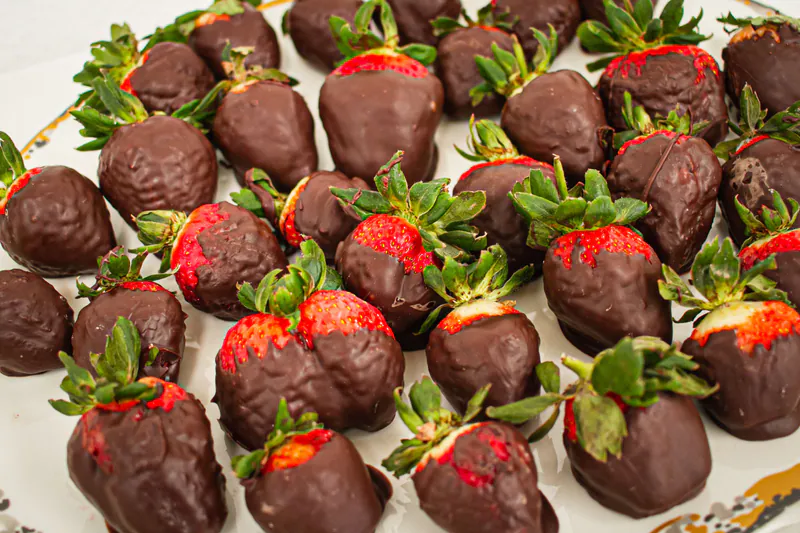
Dark Chocolate-Dipped Strawberries
International · 32 min · 182 kcal · Vegan
Eggless Chocolate Mug Cake
International · 6 min · 384 kcal · Vegetarian
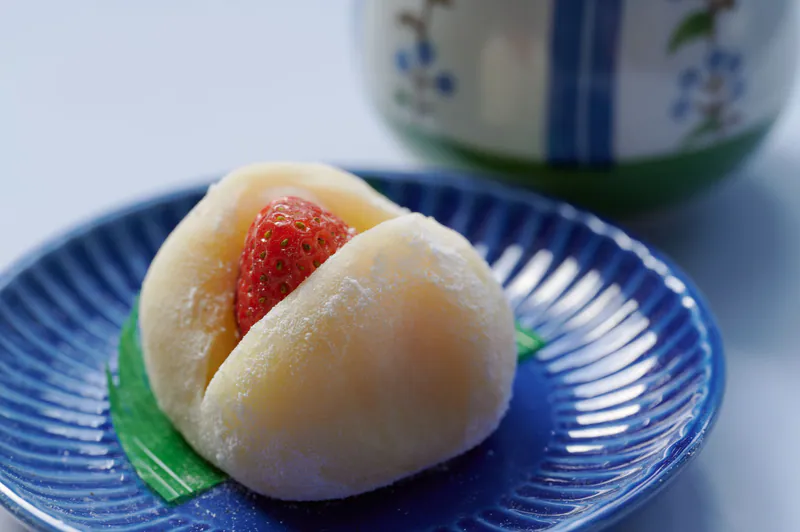
Ichigo daifuku (strawberry mochi)
 Japanese · 29 min · 171 kcal · Vegan