
Fish & seafood · Dried fish
Dried anchovies (ikan bilis)
Small dried anchovies, fried crisp for nasi lemak and sambal or simmered into a savoury stock.
Also called: ikan bilis, dried anchovies, teri, ikan teri, dried anchovy, myeolchi, niboshi
Around the world: ikan bilis (ms) · ikan teri (id)
A kind of anchovies
What it is
Ikan bilis (teri in Indonesia) are tiny anchovies that are salted, boiled and sun-dried. They are sold whole or split, with the heads removed. Fried until crunchy they are a key topping for Malaysian nasi lemak and are stir-fried with peanuts and sambal; whole dried anchovies also make a quick, savoury stock for soups and noodles across Southeast Asia and Korea.
How it’s used
- Fried crisp for nasi lemak
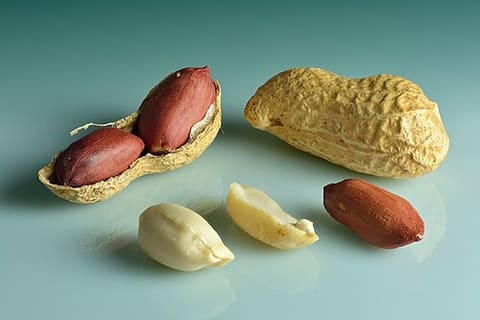
- Sambal ikan bilis with peanuts
- Anchovy stock for soups and noodles
- Korean myeolchi bokkeum (stir-fried with soy)
Characteristics
- Taste
- Salty, savoury and fishy.
- Texture
- Crisp when fried; soft when simmered.
- When cooked
- Rinse and drain well before frying; remove heads and gut lines for stock to avoid bitterness.
- Sold as
- dried
- Cooking uses
- Commonly cooked, Suitable for frying, Mainly a seasoning
- Common in
- Malaysian, Singaporean, Indonesian, Korean, Bruneian
Storage
Refrigerated. Keep in an airtight container in the fridge or freezer; they keep for months.
Diet, allergens and safety
Contains Fish.
- Vegetarian
- Vegan
- Dairy-free
- Egg-free
- Gluten-free
- Nut-free
- Soy-free
- Caffeine-free
- Contains fish, a common allergen.
- High in salt.
Nutrition per 100 g
- Energy
- 210 kcal
- Protein
- 28.89 g
- Carbohydrate
- 0 g
- Fat
- 9.71 g
- Fibre
- 0 g
- Sugars
- 0 g
USDA FoodData Central: Fish, anchovy, european, canned in oil, drained solids (a close stand-in).
Substitutes
Optional — what works if you don’t have it, and how it changes the dish.
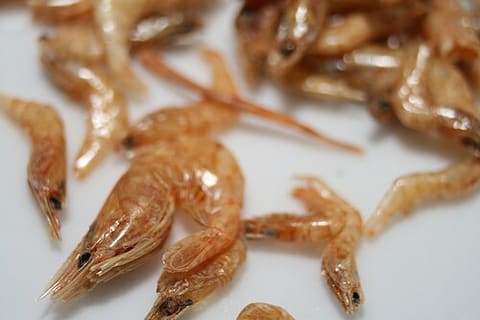
- Dried shrimp — For stock and sambal.
- Maldive fish (dried tuna) — For a savoury, fishy depth in sambals.
Related ingredients

Recipes with dried anchovies (ikan bilis)
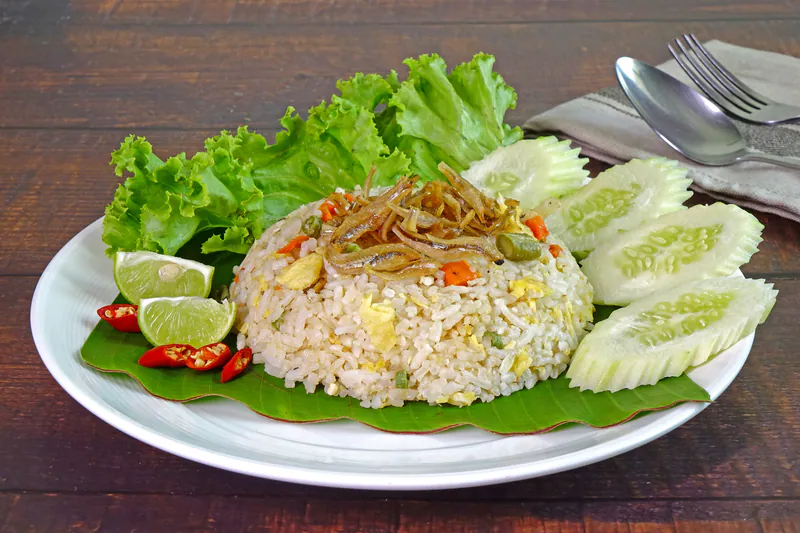
Nasi goreng kampung (village-style fried rice)
 Malaysian · 30 min · 1034 kcal