
Meat · Cured meats
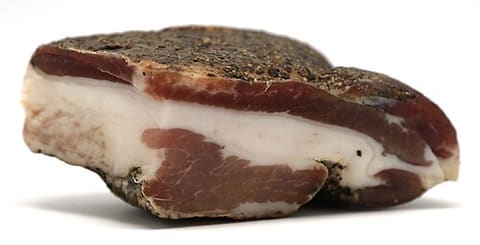
Guanciale (cured pork cheek)
Salt-cured, air-dried pork cheek from central Italy; the fatty, savoury meat in carbonara, amatriciana and gricia.
Also called: cured pork cheek, cured pork jowl, guanciale amatriciano
Around the world: guanciale (it)
A kind of pork
Photo: Popo le Chien, via Wikimedia Commons (CC-BY-SA-4.0)
What it is
The jowl (cheek) of the pig, rubbed with salt, pepper and sometimes herbs, then dried for several weeks. It is fattier than pancetta, with a thick layer of creamy white fat and thin streaks of lean meat, and it is not usually smoked. Rome's classic pasta dishes are built on its rendered fat.
How it’s used
- Cut into batons and rendered for carbonara, amatriciana and pasta alla gricia
- Sliced paper-thin and eaten as a cured meat
- Used to flavour beans, peas and braised greens
Characteristics
- Taste
- Deeply savoury and porky, slightly sweet fat, peppery rind.
- Texture
- Fat turns translucent and crisp-edged when rendered; the lean stays chewy.
- When cooked
- Releases a lot of fat when cooked slowly from a cold pan, which becomes the base of the sauce.
- Sold as
- cured, whole
- Cooking uses
- Commonly cooked, Suitable for frying
- Common in
- Italian
Storage
Refrigerated. Wrap in paper and then loosely in a bag; it keeps for weeks in the fridge. Cut pieces can be frozen.
Diet, allergens and safety
No major allergens in typical versions.
- Vegetarian
- Vegan
- Dairy-free
- Egg-free
- Gluten-free
- Nut-free
- Soy-free
- Caffeine-free
Nutrition per 100 g
- Energy
- 655 kcal
- Protein
- 6.38 g
- Carbohydrate
- 0 g
- Fat
- 69.61 g
- Fibre
- 0 g
- Sugars
- 0 g
USDA FoodData Central: Pork, fresh, variety meats and by-products, jowl, raw (a close stand-in).
Substitutes
Optional — what works if you don’t have it, and how it changes the dish.
Related ingredients
Recipes with guanciale (cured pork cheek)
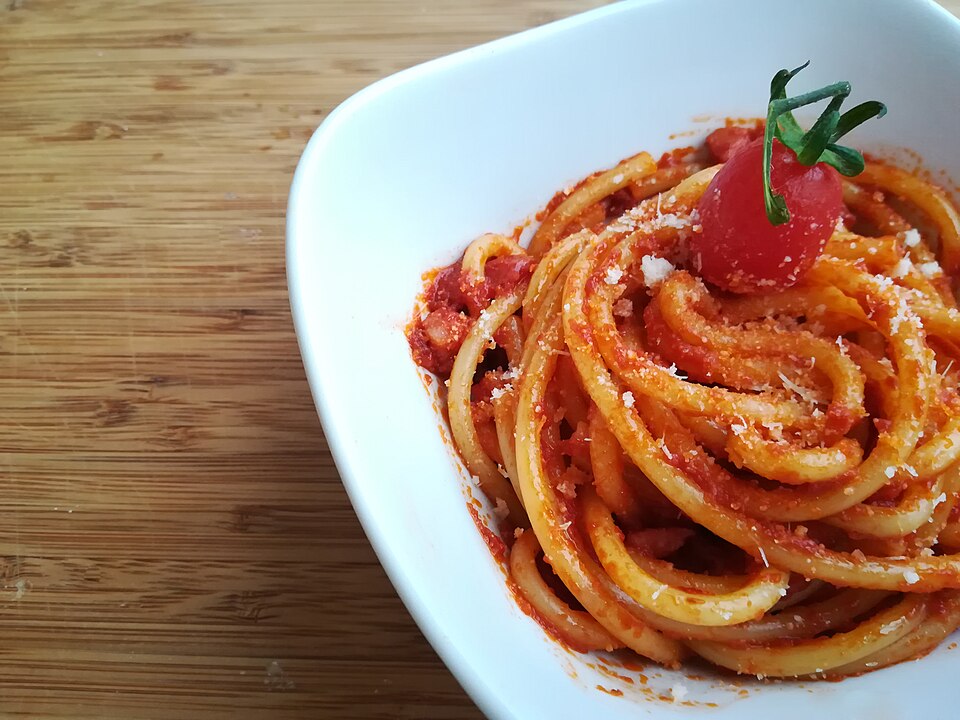
Bucatini all'amatriciana
 Italian · 35 min · 691 kcal
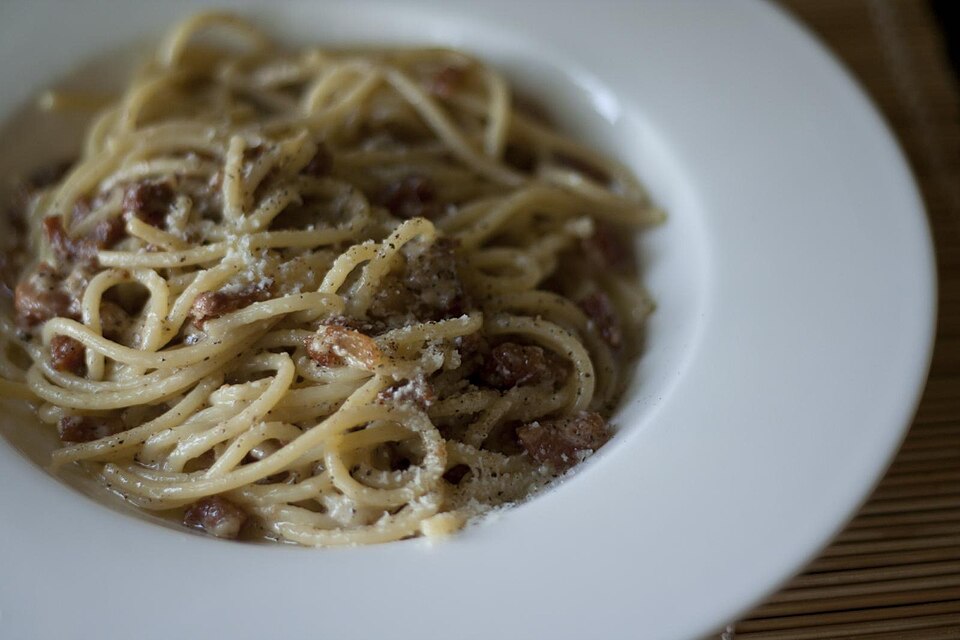
Pasta alla gricia
Italian · 25 min · 696 kcal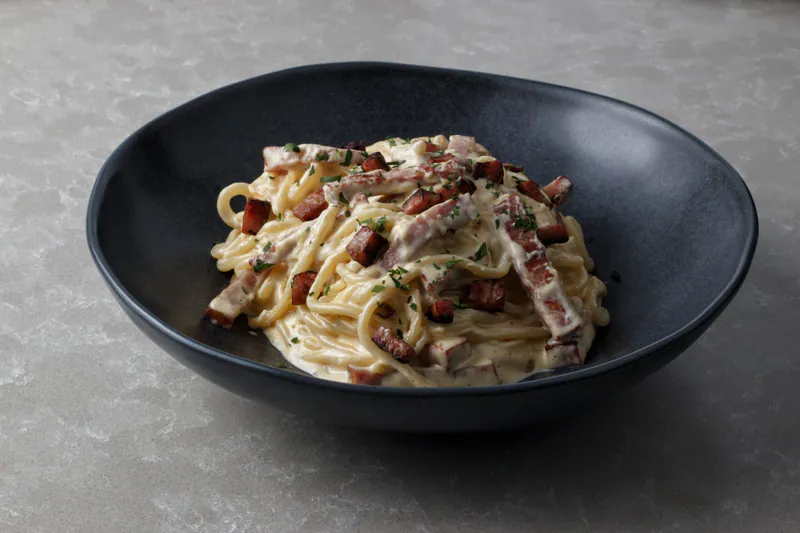
Spaghetti carbonara
Italian · 25 min · 750 kcal