
Eggs & dairy · Creams
Clotted cream
A very thick, golden, buttery cream from Devon and Cornwall, spread on scones with jam for a cream tea.
Also called: Cornish clotted cream, Devonshire cream, scalded cream
A kind of cream
Protected varieties: Cornish clotted cream (PDO), Devonshire clotted cream
What it is
Clotted cream is made by gently heating full-fat milk or cream for several hours, then cooling it slowly so a thick, yellow crust of cream rises to the top. It is about 55–64% fat, thicker than double cream and almost as rich as butter. Cornish clotted cream has protected status.
How it’s used
- Cream tea with scones and jam
- Spooned onto fruit crumbles and pies
- Ice cream and fudge
- Stirred into sauces and mash
Characteristics
- Taste
- Rich, buttery and nutty.
- Texture
- Very thick and spreadable, with a crust.
- Appearance
- Pale yellow with a golden crust.
- Sold as
- fresh
- Cooking uses
- Usually eaten raw, Suitable for baking
- Common in
- British
Storage
Refrigerated. Keep chilled and use within a few days of opening.
Diet, allergens and safety
Contains Milk.
- Vegetarian
- Vegan
- Dairy-free
- Egg-free
- Gluten-free
- Nut-free
- Soy-free
- Caffeine-free
- Contains milk (allergen).
Nutrition per 100 g
- Energy
- 544 kcal
- Protein
- 4.544 g
- Carbohydrate
- 4.544 g
- Fat
- 57.728 g
- Fibre
- 0 g
- Sugars
- 4.672 g
USDA FoodData Central: Cream, fluid, heavy whipping × 1.6 (a close stand-in).
Substitutes
Optional — what works if you don’t have it, and how it changes the dish.
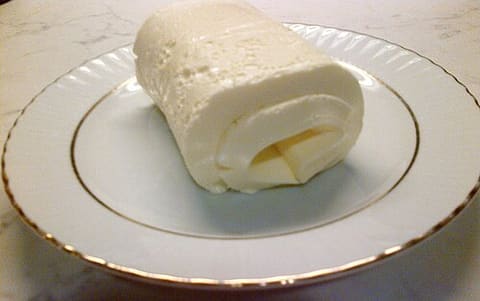
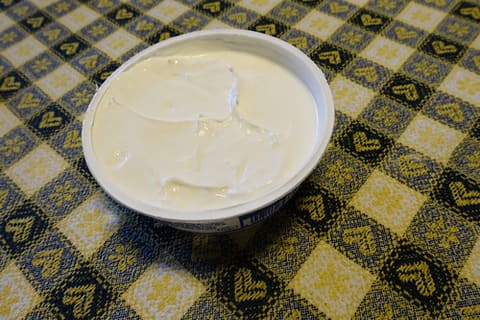
- Mascarpone — Mixed with a little double cream; similar thickness.
- Kajmak — The closest equivalent.
Related ingredients
Recipes with clotted cream
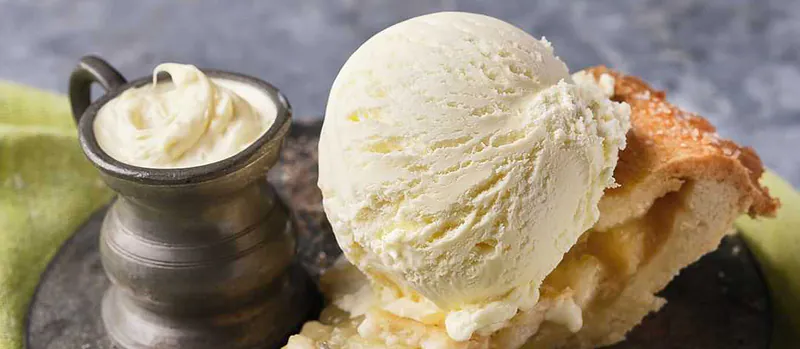
Clotted cream ice cream
 British · 6 h 25 min · 443 kcal · Contains egg
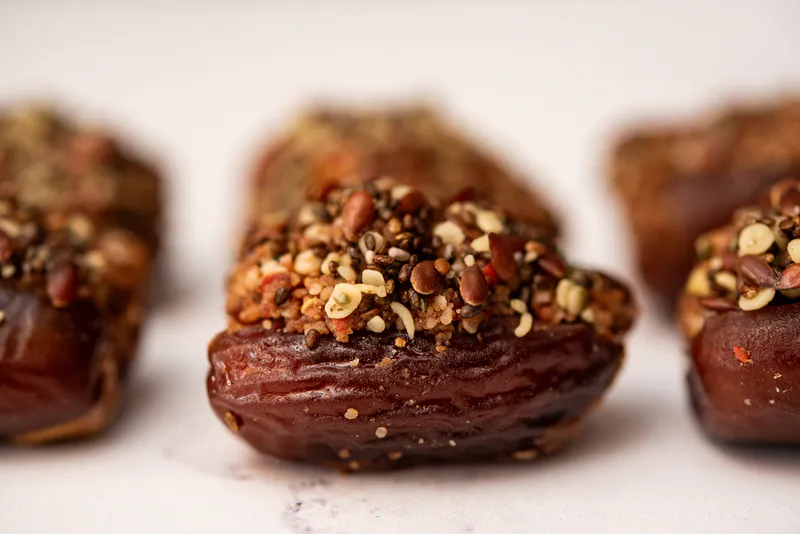
Tamr mahshi (stuffed dates)
 Saudi Arabian · 30 min · 97 kcal · Vegetarian