
Fresh herbs · Leafy herbs
Utazi leaves
Bitter, faintly peppery West African leaves, sliced thinly and used sparingly to garnish nkwobi, ugba and pepper soups.
Also called: utazi, arokeke, bush buck leaves, Gongronema latifolium
Around the world: utazi (ig) · arokeke (yo)
A kind of fresh herbs
What it is
Utazi is a climbing plant of West African forests (arokeke in Yoruba) whose heart-shaped green leaves are prized in Igbo cooking. They are strongly bitter with a sweet aftertaste, so only a few leaves are used, finely shredded over palm-oil dishes and soups. It is also widely used in traditional medicine, though its health claims are not well established.
Gongronema latifolium
How it’s used
- Garnish for nkwobi and isi ewu
- Abacha and ugba (African salad)
- Pepper soups and yam pottage
- A few leaves stirred in at the end of soups
Characteristics
- Taste
- Sharply bitter at first, then slightly sweet and peppery.
- Aroma
- Fresh and green.
- When cooked
- Roll and slice into fine ribbons; add raw or right at the end, as long cooking deepens the bitterness.
- Sold as
- fresh, dried
- Cooking uses
- Usually eaten raw, Used as a garnish
- Common in
- Nigerian
Storage
Refrigerated. Wrap in a damp paper towel and refrigerate for up to 5 days; sliced leaves freeze well.
Diet, allergens and safety
No major allergens in typical versions.
- Vegetarian
- Vegan
- Dairy-free
- Egg-free
- Gluten-free
- Nut-free
- Soy-free
- Caffeine-free
- Very bitter: a few leaves season a whole dish. Its traditional medicinal uses are not a substitute for medical advice.
Substitutes
Optional — what works if you don’t have it, and how it changes the dish.
- Bitter leaf — Use a small amount of washed bitter leaf.
- Rocket (arugula) or dandelion leaves — Milder bitterness; use a little more.
Related ingredients
Recipes with utazi leaves
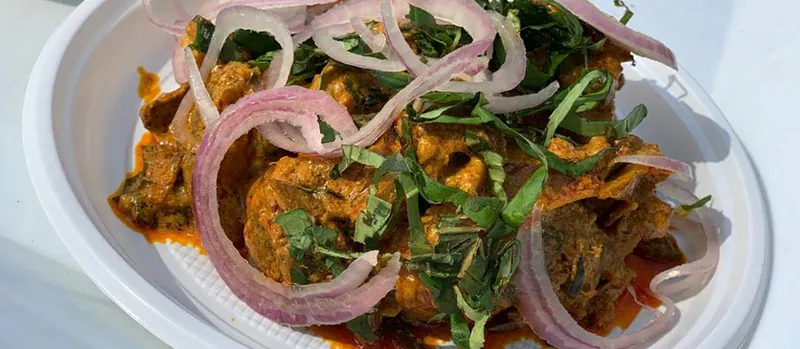
Nkwobi (Igbo spicy cow foot in palm oil sauce)
 Nigerian · 2 h 40 min