
Vegetables · Pods, beans & sprouts
Broad beans (fresh or frozen)
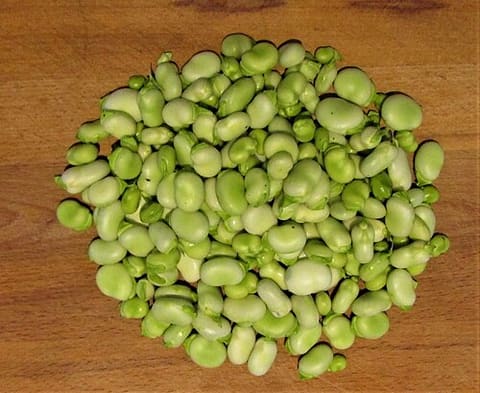
Fresh or frozen green broad (fava) beans, podded and often skinned, for salads, dips, risottos and stews.
Also called: fresh fava beans, frozen broad beans, gaardebounen, dicke bohnen, favas
Around the world: Gaardebounen (lb) · Dicke Bohnen, Saubohnen (de) · favas (pt) · habas tiernas (es)
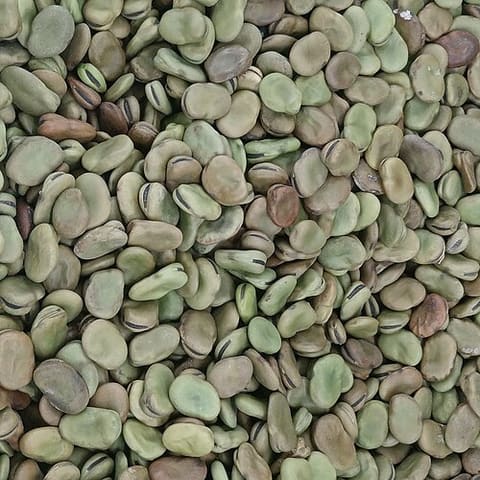
A kind of fava beans (dried)
Photo: Unknown author, via Wikimedia Commons (CC-BY-SA-4.0)
What it is
Broad beans are the flat, pale-green seeds from large, fuzzy-lined pods. Young beans are sweet and tender; older ones have a tough grey-green skin that is slipped off after blanching to reveal bright-green beans. Dried fava beans are a separate pantry pulse used for ful medames and falafel.
Vicia faba
How it’s used
- Blanched and skinned for salads
- Mashed with mint and lemon on toast
- Stewed with artichokes and dill
- Stirred into risotto and pasta
- Luxembourg gaardebounen with bacon
Characteristics
- Taste
- Sweet, nutty and grassy.
- Texture
- Creamy and tender once skinned.
- When cooked
- Cook a few minutes; the skins loosen after blanching and pop off easily.
- Sold as
- fresh, frozen
- Cooking uses
- Commonly cooked, Suitable for boiling
Storage
Frozen. Keep frozen beans frozen; fresh beans in pods are best refrigerated and used within a couple of days.
Diet, allergens and safety
No major allergens in typical versions.
- Vegetarian
- Vegan
- Dairy-free
- Egg-free
- Gluten-free
- Nut-free
- Soy-free
- Caffeine-free
- People with G6PD deficiency can have a serious reaction (favism) to fava beans.
Nutrition per 100 g
- Energy
- 72 kcal
- Protein
- 5.6 g
- Carbohydrate
- 11.7 g
- Fat
- 0.6 g
- Fibre
- 4.2 g
- Sugars
- — g
USDA FoodData Central: Broadbeans, immature seeds, raw.
Substitutes
Optional — what works if you don’t have it, and how it changes the dish.
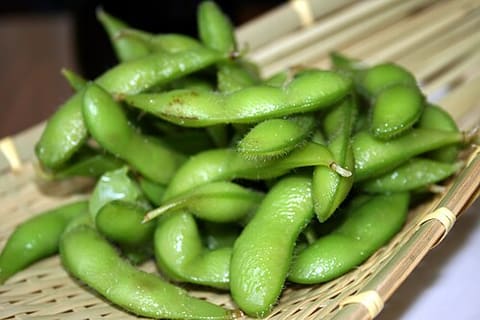
- Edamame — No skinning needed; firmer.
- Green peas — Sweeter and softer.
Related ingredients
Recipes with broad beans (fresh or frozen)
Judd mat Gaardebounen
 Luxembourgish · 2 h 20 min · 713 kcal
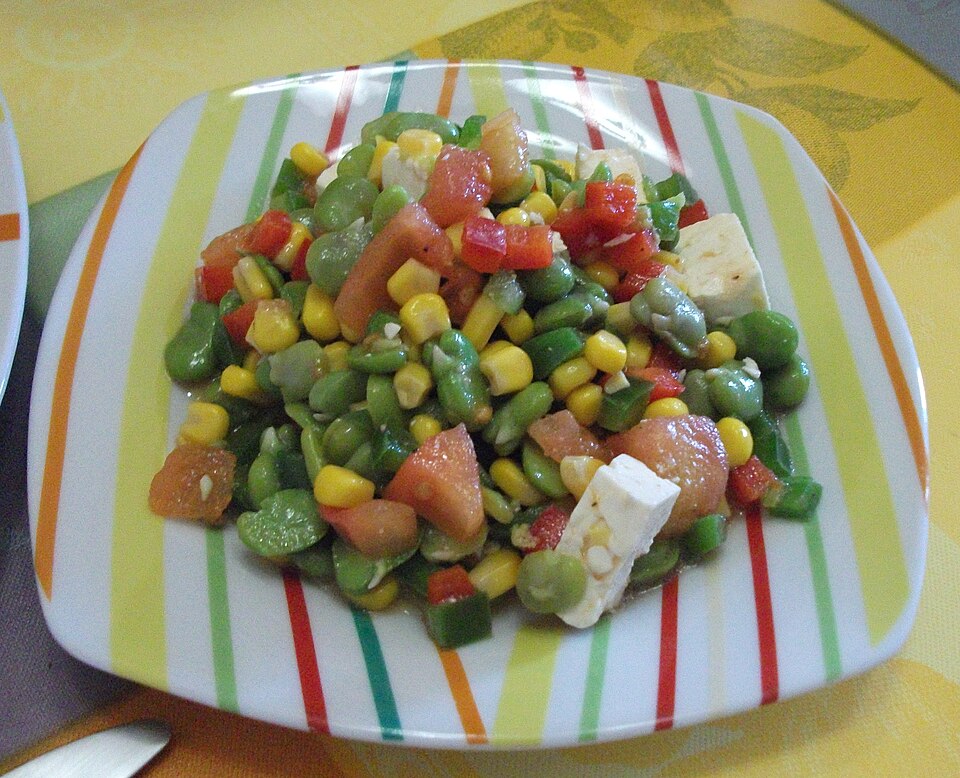
Solterito arequipeño
 Peruvian · 43 min · 384 kcal · Vegetarian
More pods, beans & sprouts
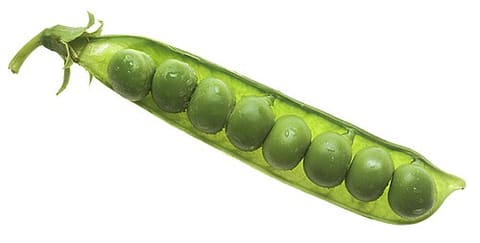
Pods, beans & sprouts
Green peas
Small, sweet green seeds from pea pods, usually sold frozen; added to curries, rice, pasta and soups.
30 recipes
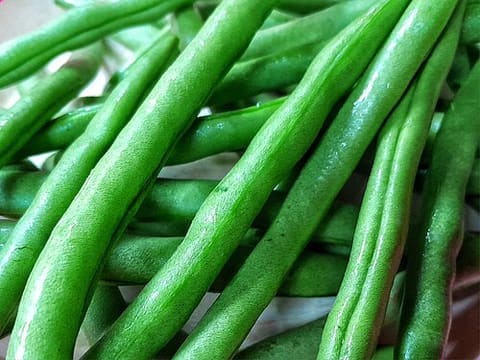
Pods, beans & sprouts
Green beans
Slender green pods (French beans) eaten whole, blanched, stir-fried or stewed.
43 recipes
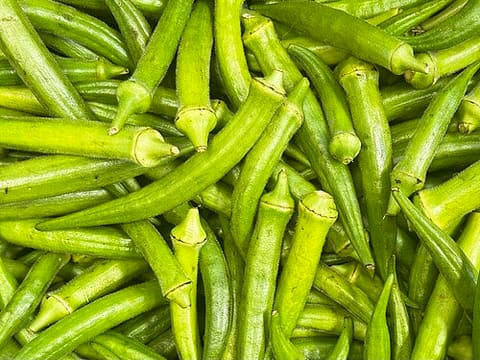
Pods, beans & sprouts
Okra
Ridged green pods (bhindi) with tender seeds; fried crisp or stewed, where they thicken the sauce.
20 recipes
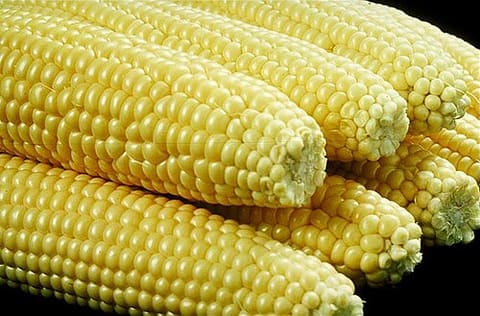
Pods, beans & sprouts
Sweet corn
Sweet yellow kernels on the cob or loose (fresh, frozen or canned), grilled, boiled or added to salads and soups.
30 recipes
Pods, beans & sprouts
Bean sprouts
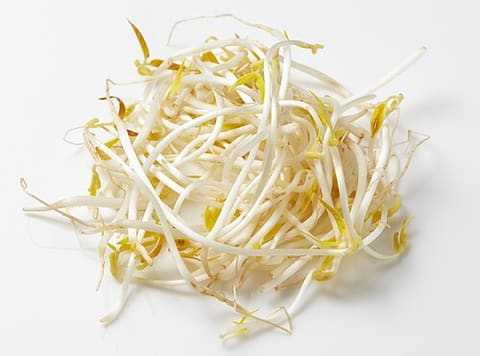
Crunchy white mung bean sprouts with tiny yellow-green heads, added raw or briefly cooked to noodles and stir-fries.
27 recipes
Pods, beans & sprouts
Soybean sprouts
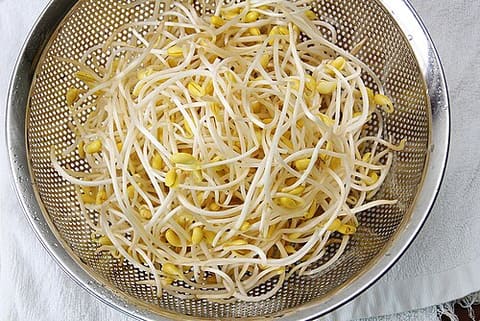
Sprouted yellow soybeans with crunchy stems and big nutty heads; central to Korean namul and soups.
2 recipes