
Pasta, noodles & bread · Rusks
Barley rusk (paximadi)
Hard, twice-baked Greek barley bread (paximadi); soaked with tomato and oil for dakos.
Also called: paximadi, paximadia, dakos rusk, cretan rusk, kritiko paximadi, koukouvagia
Around the world: παξιμάδι, κριθαροκουλούρα (el)
A kind of bread
What it is
Paximadi are rusks made by baking barley or wheat bread then slicing and drying it at low heat until rock hard. They keep for months, which made them a staple in Crete. They are softened with water, tomato or oil before eating.
How it’s used
- Cretan dakos with tomato, myzithra and olive oil
- Dunked in coffee or soup
- Broken into salads
Characteristics
- Taste
- Nutty, earthy and wholesome.
- Texture
- Very hard and dry; softens when soaked.
- Sold as
- dried
- Cooking uses
- Usually eaten raw
- Common in
- Greek
Storage
Pantry-stable. Keep in a sealed container; keeps for months.
Diet, allergens and safety
Contains Gluten, Wheat. May contain Sesame — check the label.
- Vegetarian
- Vegan
- Dairy-free
- Egg-free
- Gluten-free
- Nut-free
- Soy-free
- Caffeine-free
- Contains wheat (gluten), so it is not suitable for people with coeliac disease or a wheat allergy.
- May contain sesame.
Nutrition per 100 g
- Energy
- 345 kcal
- Protein
- 10.5 g
- Carbohydrate
- 74.52 g
- Fat
- 1.6 g
- Fibre
- 10.1 g
- Sugars
- 0.8 g
USDA FoodData Central: Barley flour or meal (a close stand-in).
Substitutes
Optional — what works if you don’t have it, and how it changes the dish.
- Crusty bread / baguette — Toast until very dry.
Related ingredients
Recipes with barley rusk (paximadi)
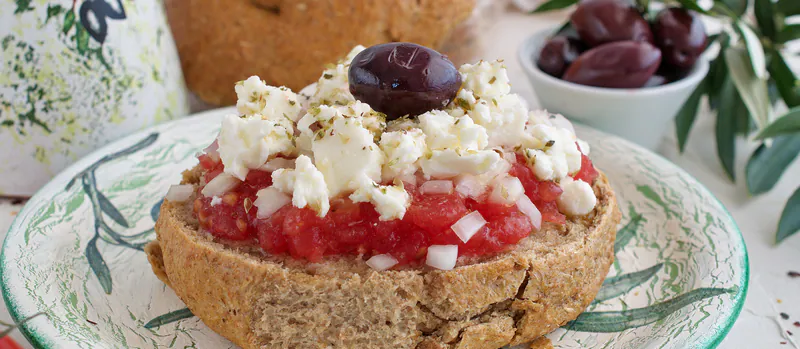
Dakos (Cretan barley rusk salad)
 Greek · 20 min · 439 kcal · Vegetarian