
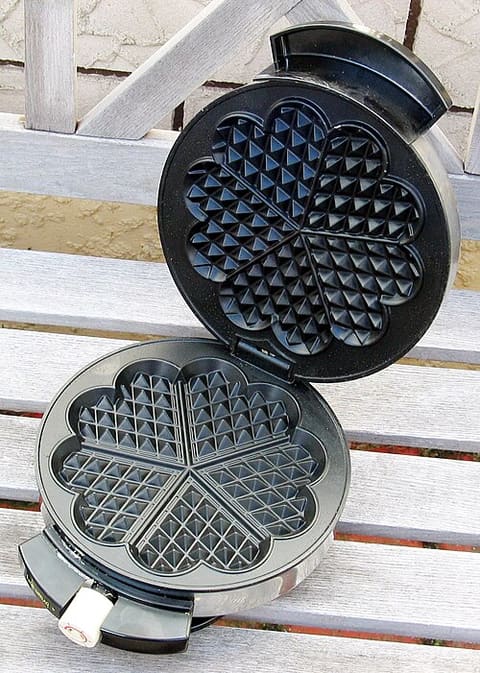
Kitchen equipment · Waffle maker
Waffle iron
A hinged pair of hot, grid-patterned plates that cooks batter or dough into crisp waffles.
Specialist · Electric · 3 recipes
Photo: Donovan Govan., via Wikimedia Commons (CC-BY-SA-3.0)
What it is
Two hinged metal plates with a deep grid pattern that close over batter and cook it from both sides. Most home versions are electric with non-stick plates and a thermostat; older stovetop irons are cast iron or aluminium with long handles. Belgian irons have deeper pockets than thinner American or Scandinavian ones.
What it’s for: Cooking waffles evenly on both sides at once, giving a crisp outside, a tender inside and deep pockets for toppings.
How to use it
- Heat the iron fully, until the ready light comes on or a drop of water sizzles.
- Brush the plates lightly with butter or oil, even if non-stick.
- Ladle in enough batter to just cover the grid, or place a ball of Liège dough in the centre, and close the lid.
- Cook without opening until steam slows and the waffle is deep golden, then lift out with a wooden or silicone tool.
Good to know
- Tasks
- making Belgian and Liège waffles, making buttermilk waffles, making potato or savoury waffles
- Cooking methods
- Oven-baked
- Materials
- non-stick coated aluminium, cast iron, cast aluminium
- Care and cleaning
- Unplug and let it cool, then wipe the plates with a damp cloth or soft brush; never immerse an electric iron in water. Removable plates can be washed by hand.
- Limitations
- One or two waffles at a time; overfilling makes batter spill out of the sides.
Safety
- The plates and escaping steam are very hot; open the lid away from your face.
- Caramelised sugar from Liège waffles stays molten and burns badly.
If you don’t have one
- Stovetop cast-iron waffle iron — Works on gas or induction; turn it over halfway through cooking.
Equipment guide
How it works: Two hinged, gridded plates heated by elements press batter between them. The deep grid increases the surface area that touches hot metal, so the outside crisps and browns while steam inside sets a light centre.
| Material | Good | Watch out |
|---|---|---|
| Non-stick (PTFE or ceramic sol-gel coating on aluminium) | Eggs, fish and pancakes release with little fat; easy to clean; forgiving for beginners. | Coatings wear out (ceramic often faster than PTFE); PTFE should not be heated empty or above about 260 °C; poor at building fond; needs non-metal utensils. |
| Cast iron (bare, seasoned) | Very high heat capacity, so it holds temperature when cold food goes in; excellent for searing; oven-safe; lasts generations. | Heavy and slow to heat; heats unevenly on small burners; needs seasoning and drying; long simmering of acidic sauces can strip seasoning and give a metallic taste. |
- Belgian (deep-pocket) waffle maker
- Thick, airy waffles.
- Thin or American waffle maker
- Thinner, crisper waffles.
- Rotating waffle maker
- Flips to spread batter evenly.
- Stovetop waffle iron
- Cast iron; used over a burner.
Buying guidance
Starting out: An electric non-stick model with adjustable browning and a ready light.
- Power: about 700–1,200 W
- Adjustable thermostat
- Removable plates for easy cleaning
- Overflow channel
No brands or prices — check current reviews before buying.
Techniques:Baking
Related tools
Recipes that use it
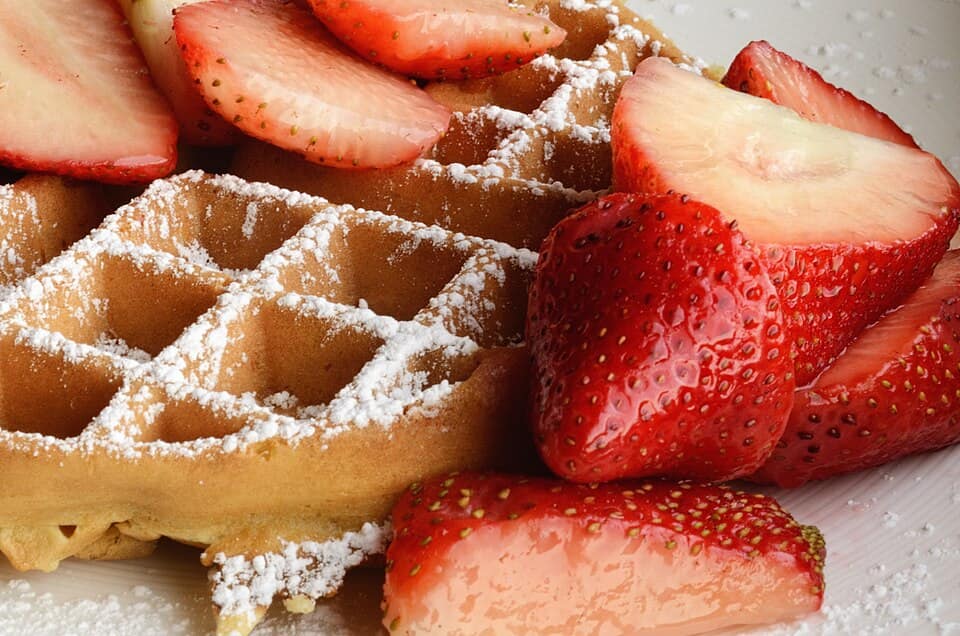
Belgian waffles (Brussels-style)
 Belgian · 1 h 40 min · 359 kcal · Contains egg
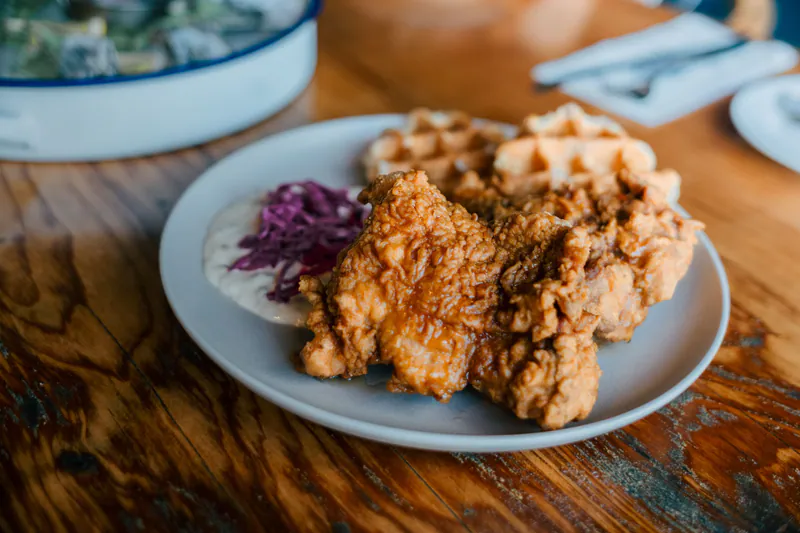
Chicken and waffles
 Southern US · 1 h · 1025 kcal
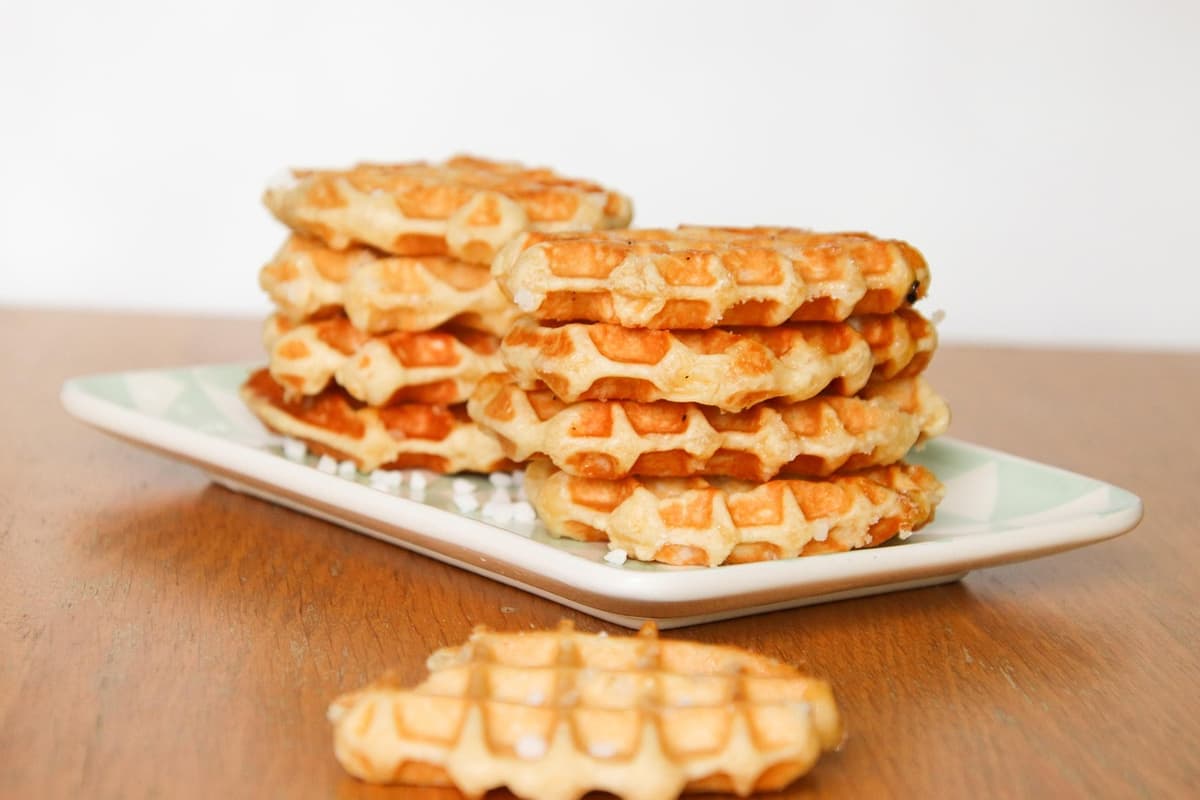
Liège waffles
Belgian · 2 h 25 min · 335 kcal · Contains egg