
Eggs & dairy · Semi-hard cheese
Trappista cheese
Hungary's everyday mild, semi-hard cheese; grated over lángos and melted into pasta, toasts and fried cheese.
Also called: trappist cheese, trapista, trappista sajt
Around the world: trappista sajt (hu)
A kind of cheese
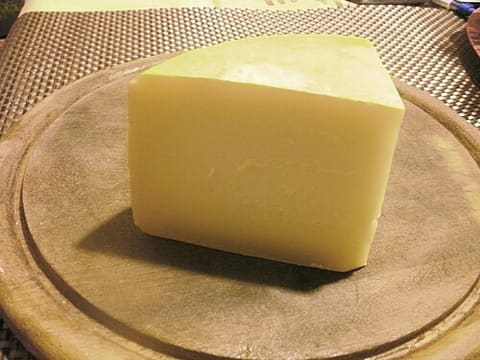
Photo: Shabicht, via Wikimedia Commons (CC-BY-SA-4.0)
What it is
A pale yellow, smooth cow's-milk cheese with small holes, related to Gouda and originally made by Trappist monks in Bosnia. In Hungary and neighbouring countries it is the standard sandwich and cooking cheese, sold in blocks and slices.
How it’s used
- Grated generously over lángos with sour cream
- Breaded and fried as rántott sajt
- Melted on toasts, pasta and casseroles
Characteristics
- Taste
- Mild, milky and slightly sweet.
- Texture
- Supple and smooth; melts evenly.
- Sold as
- whole
- Cooking uses
- Usually eaten raw, Commonly cooked, Suitable for baking
- Common in
- Hungarian
Storage
Refrigerated. Wrap closely; keeps for 2–3 weeks once cut.
Diet, allergens and safety
Contains Milk.
- Vegetarian
- Vegan
- Dairy-free
- Egg-free
- Gluten-free
- Nut-free
- Soy-free
- Caffeine-free
Nutrition per 100 g
- Energy
- 356 kcal
- Protein
- 24.94 g
- Carbohydrate
- 2.22 g
- Fat
- 27.44 g
- Fibre
- 0 g
- Sugars
- 2.22 g
USDA FoodData Central: Cheese, gouda (a close stand-in).
Substitutes
Optional — what works if you don’t have it, and how it changes the dish.
Related ingredients

Recipes with trappista cheese

Lángos
 Hungarian · 1 h 40 min · 601 kcal · Vegetarian