
Grains, rice & flours · Starches
Tapioca pearls
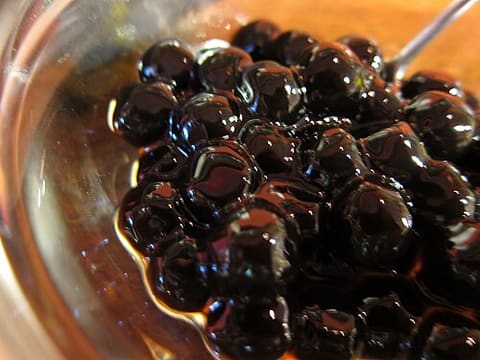
Balls of cassava starch that turn translucent and chewy when boiled; used for bubble tea and puddings.
Also called: boba, boba pearls, bubble tea pearls, black tapioca pearls, pearl tapioca, sago pearls
Around the world: 珍珠, 粉圓, zhenzhu (zh)
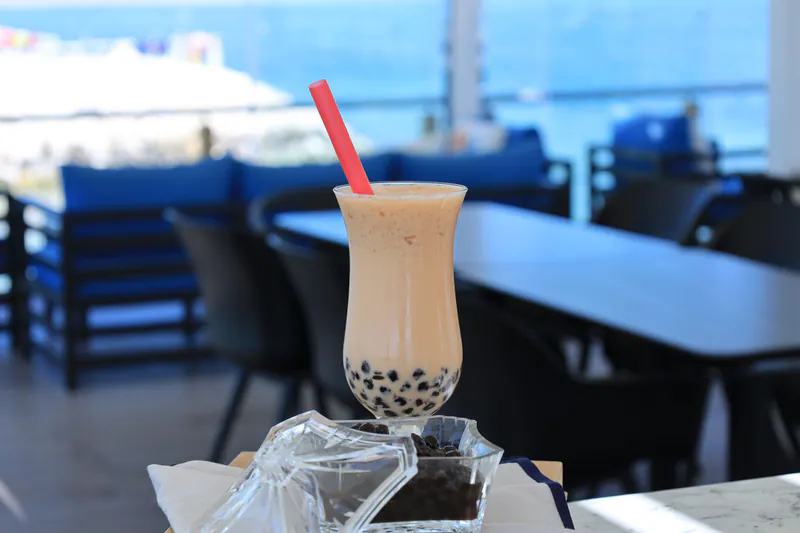
Photo: Sophie, via Wikimedia Commons (CC-BY-2.0)
What it is
Tapioca pearls are cassava starch formed into small (2–3 mm) or large (8–10 mm) balls and dried. Boiled, they turn glassy and chewy. Large black boba are coloured with brown sugar or caramel and are made for bubble tea. In South and Southeast Asia, small pearls are often called sago, although true sago comes from the sago palm.
How it’s used
- Bubble tea (boba)
- Tapioca pudding with milk or coconut milk
- Sabudana khichdi and vada (soaked small pearls)
- Che and other Southeast Asian sweets
Characteristics
- Texture
- Chewy, bouncy and slippery.
- When cooked
- Drop into plenty of boiling water and stir so they don't stick; large pearls harden again within hours, so cook them fresh.
- Sold as
- dried
- Cooking uses
- Commonly cooked, Suitable for boiling
Storage
Pantry-stable. Dry pearls keep airtight in the pantry. Cooked pearls are best eaten the same day; they firm up in the fridge.
Diet, allergens and safety
No major allergens in typical versions.
- Vegetarian
- Vegan
- Dairy-free
- Egg-free
- Gluten-free
- Nut-free
- Soy-free
- Caffeine-free
- Large chewy pearls can be a choking hazard for young children.
Nutrition per 100 g
- Energy
- 358 kcal
- Protein
- 0.19 g
- Carbohydrate
- 88.69 g
- Fat
- 0.02 g
- Fibre
- 0.9 g
- Sugars
- 3.35 g
USDA FoodData Central: Tapioca, pearl, dry.
Related ingredients
Recipes with tapioca pearls
Bubble milk tea
 Taiwanese · 35 min · 266 kcal · Vegetarian