
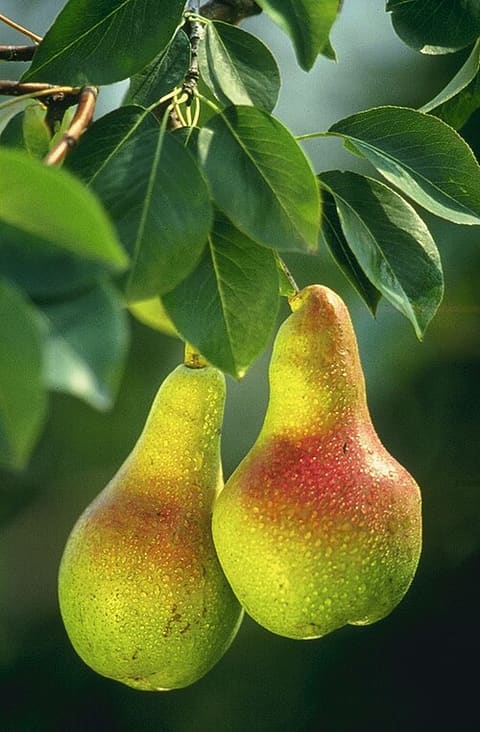
Fruits · Orchard fruit
Pear
Sweet, juicy orchard fruit with a narrow neck; eaten ripe and soft, or poached and baked while firm.
Also called: pears, armut, nashpati
Photo: Keith Weller, via Wikimedia Commons (public-domain)
What it is
Pears are tree fruits, usually wider at the base and narrowing to the stem, with thin green, yellow, red or russet skin. Most European pears ripen off the tree and soften from the neck; Asian (nashi) pears are round, crisp and eaten firm. They are softer, grainier and more perfumed than apples.
Pyrus communis
How it’s used
- Poached in wine or syrup
- Baked into tarts, frangipane and crumbles
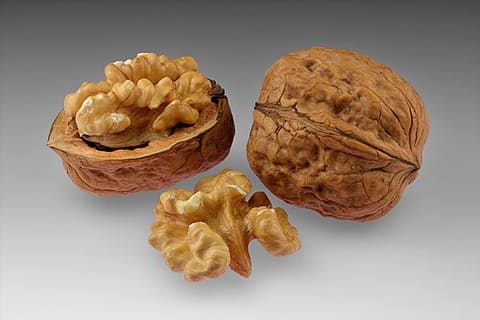
- Sliced with blue cheese, walnuts and salads
- Grated into Korean marinades to tenderise meat
Characteristics
- Taste
- Sweet, floral and mildly acidic.
- Texture
- Juicy and buttery when ripe, sometimes slightly gritty.
- When cooked
- Use slightly underripe pears for poaching and baking so they hold their shape.
- Sold as
- fresh, canned, dried
- Cooking uses
- Usually eaten raw, Suitable for baking, Commonly cooked
Storage
At room temperature. Ripen at room temperature until the neck gives slightly to pressure, then refrigerate for a few days.
Diet, allergens and safety
No major allergens in typical versions.
- Vegetarian
- Vegan
- Dairy-free
- Egg-free
- Gluten-free
- Nut-free
- Soy-free
- Caffeine-free
Nutrition per 100 g
- Energy
- 57 kcal
- Protein
- 0.36 g
- Carbohydrate
- 15.23 g
- Fat
- 0.14 g
- Fibre
- 3.1 g
- Sugars
- 9.75 g
USDA FoodData Central: Pears, raw.
Substitutes
Optional — what works if you don’t have it, and how it changes the dish.
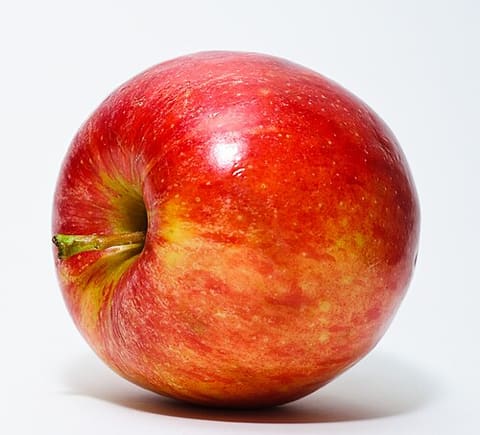
- Apple — In bakes; firmer and tarter.
Related ingredients
Recipes with pear
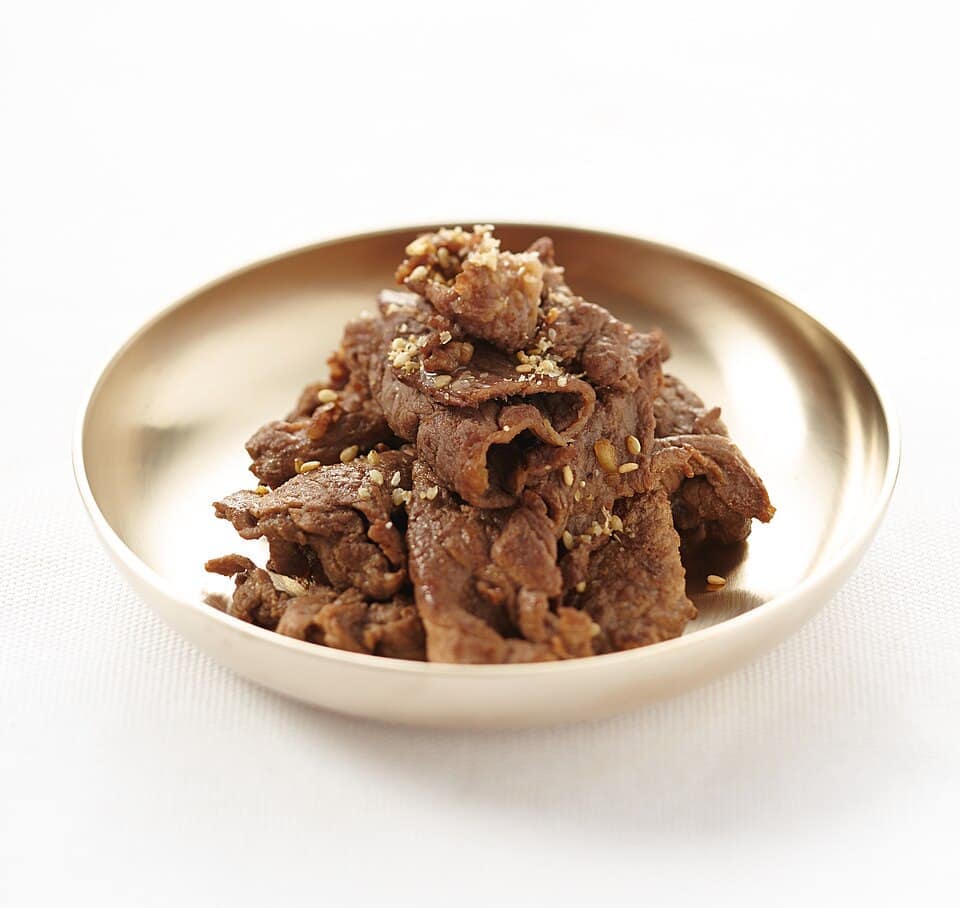
Beef bulgogi
 Korean · 55 min · 288 kcal
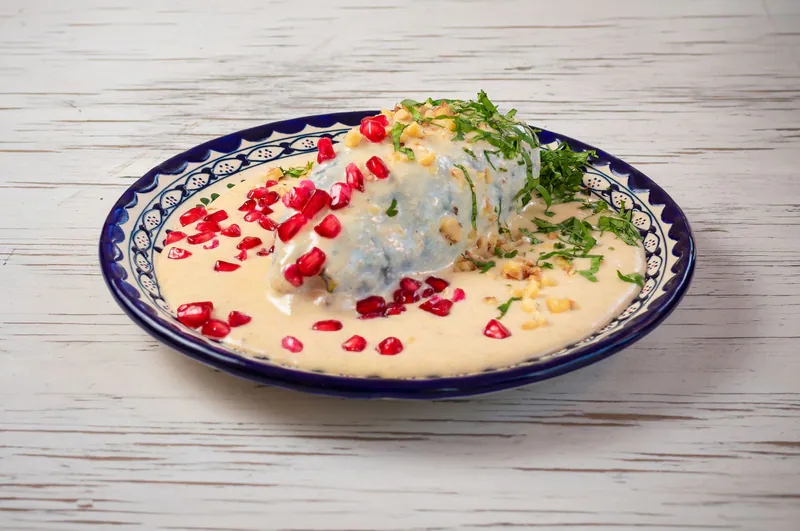
Chiles en nogada
 Mexican · 1 h 55 min · 734 kcal
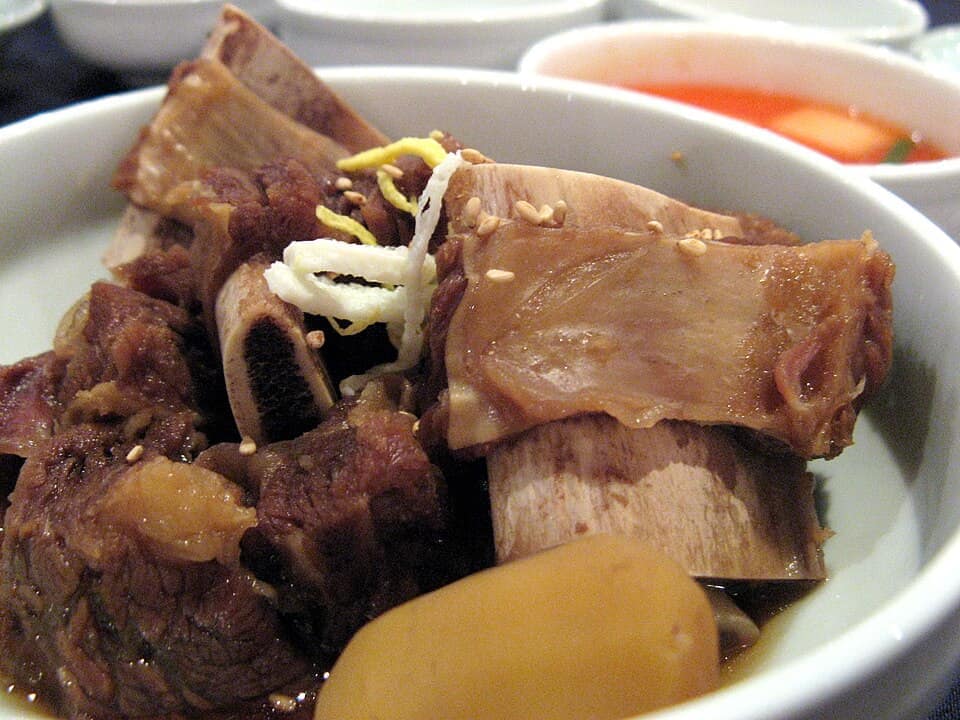
Galbi-jjim
Korean · 2 h 40 min · 599 kcal