
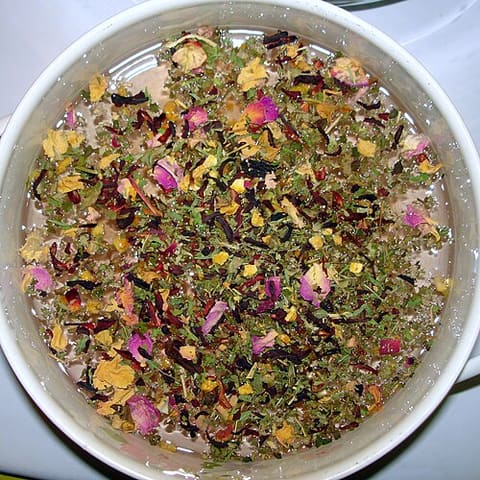
Drinks & liquids · Herbal teas
Herbal tea
Caffeine-free infusions of herbs, flowers, fruit or spices, such as mint, rooibos, ginger or hibiscus.
Also called: herbal infusion, tisane
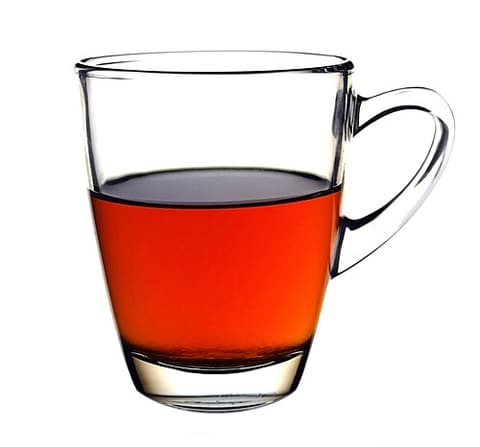
Photo: Violette79 from Brooklyn, NY, USA, via Wikimedia Commons (CC-BY-2.0)
What it is
A herbal tea (tisane) is any infusion made without the tea plant, Camellia sinensis. Common types include peppermint, chamomile, rooibos, ginger, lemon verbena, hibiscus and fruit blends. Most are caffeine-free, unlike black and green tea; yerba mate and guayusa are exceptions that do contain caffeine.
How it’s used
- Drinking hot or iced
- Poaching fruit
- Flavouring syrups, jellies and sorbets
- Mocktails and punches
Characteristics
- Taste
- Varies with the herb: minty, floral, fruity or spicy.
- Appearance
- Pale gold to deep red, depending on the herb.
- Sold as
- dried, liquid
- Cooking uses
- Suitable for boiling
- Common in
- International, Turkish, Moroccan, South African, German, Mexican
Storage
Cool, dry and dark. Keep dry herbs and bags airtight away from light; brewed tisane is best fresh or refrigerated for a day.
Diet, allergens and safety
No major allergens in typical versions.
- Vegetarian
- Vegan
- Dairy-free
- Egg-free
- Gluten-free
- Nut-free
- Soy-free
- Caffeine-free
- Some herbs are not recommended in pregnancy or with certain medicines; check specific herbs. Yerba mate and guayusa contain caffeine.
Nutrition per 100 g
- Energy
- 1 kcal
- Protein
- 0 g
- Carbohydrate
- 0.2 g
- Fat
- 0 g
- Fibre
- 0 g
- Sugars
- 0 g
USDA FoodData Central: Beverages, tea, herb, other than chamomile, brewed.
Substitutes
Optional — what works if you don’t have it, and how it changes the dish.
- Black tea (brewed) — If caffeine is fine; different flavour.
Related ingredients
Recipes with herbal tea
No recipe in the catalogue uses it yet.